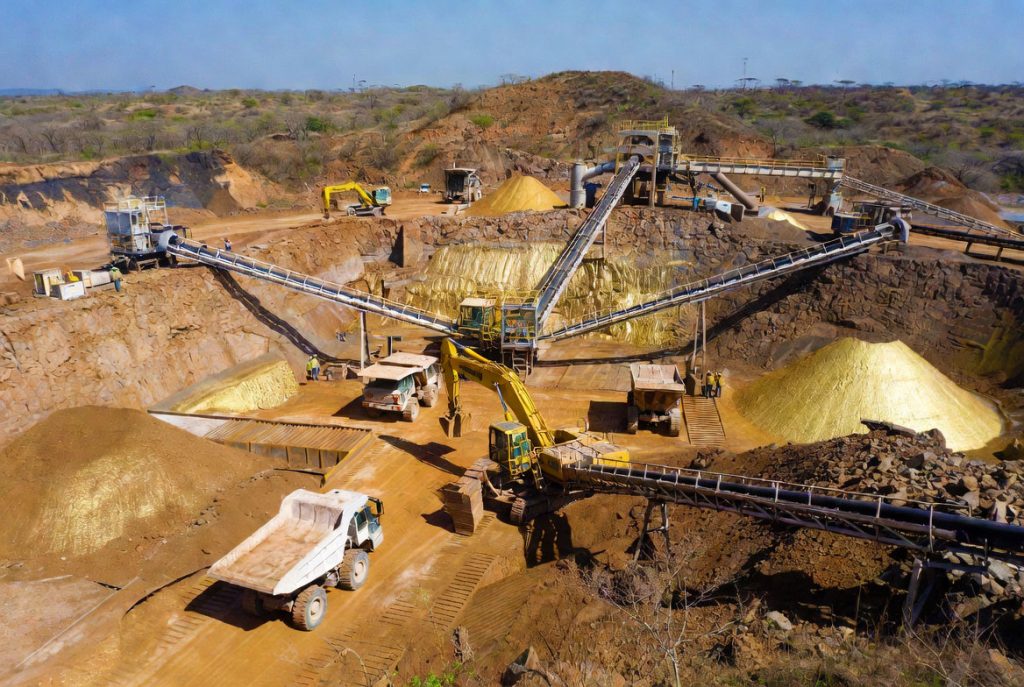
In a significant boost to India’s mineral sector and efforts to reduce dependence on gold imports, the Jonnagiri Gold Mine in Kurnool district has commenced full-scale commercial operations, positioning the state as an emerging hub for precious metal extraction. Operated by Geomysore Services India Pvt Ltd (GMSI), the project represents the country’s first large-scale private gold mining venture since independence.
The mine, spread across approximately 598 hectares in Tuggali mandal, covering villages such as Jonnagiri, Erragudi, and Pagidirayi, officially began production in early May 2026 following successful trial runs.
Andhra Pradesh Chief Minister Chandrababu Naidu linked the facility with the state’s Swarna Andhra 2047 vision for mineral development. The village has been renamed Swarnagiri to reflect its new identity.
What is the economic impact?
Officials project an initial output of around 400 kg of gold in the 2026-27 fiscal year, with potential to scale up to nearly one tonne annually in subsequent years through expansion.
The project, which has attracted investments exceeding ₹405 crore, is expected to generate employment for about 700 people, with a significant majority being local residents from the Rayalaseema region.
The state government stands to benefit through a 4% royalty on the value of gold produced, potentially yielding annual revenues of around ₹57 crore at current production levels, rising further with increased output. Additional contributions via district mineral foundations and other statutory payments will support local infrastructure and community development.
Jonnagiri’s certified gold resources are estimated at 13.1 tonnes, with further exploration indicating potential up to 42.5 tonnes. The processing plant is fully operational, and a second unit is in the planning stages to enhance capacity. Water requirements of about 0.021 TMC are being met through the Handri Neeva Sujala Sravanthi scheme via an 18-km pipeline.
Why is this important?
This development comes at a time when India imports over 800 tonnes of gold annually, exerting pressure on foreign exchange reserves. Jonnagiri aims to contribute substantially to domestic production, which has historically been limited, primarily through public sector entities like Hutti Gold Mines. The project is seen as a game-changer in promoting self-reliance in the gold sector amid global economic uncertainties.
Environmental clearances and public consultations were completed prior to operations, with the Andhra Pradesh Pollution Control Board granting consent to operate. The initiative aligns with broader national goals under Aatmanirbhar Bharat, focusing on responsible mining practices and local economic growth.
As Jonnagiri establishes itself, the state government is preparing to auction additional gold-bearing blocks in districts like Chittoor and Ananthapuramu, signaling a renewed push for investment in the mining sector. With production underway, Jonnagiri not only adds to India’s mineral wealth but also sets a precedent for private participation in strategic resource development.