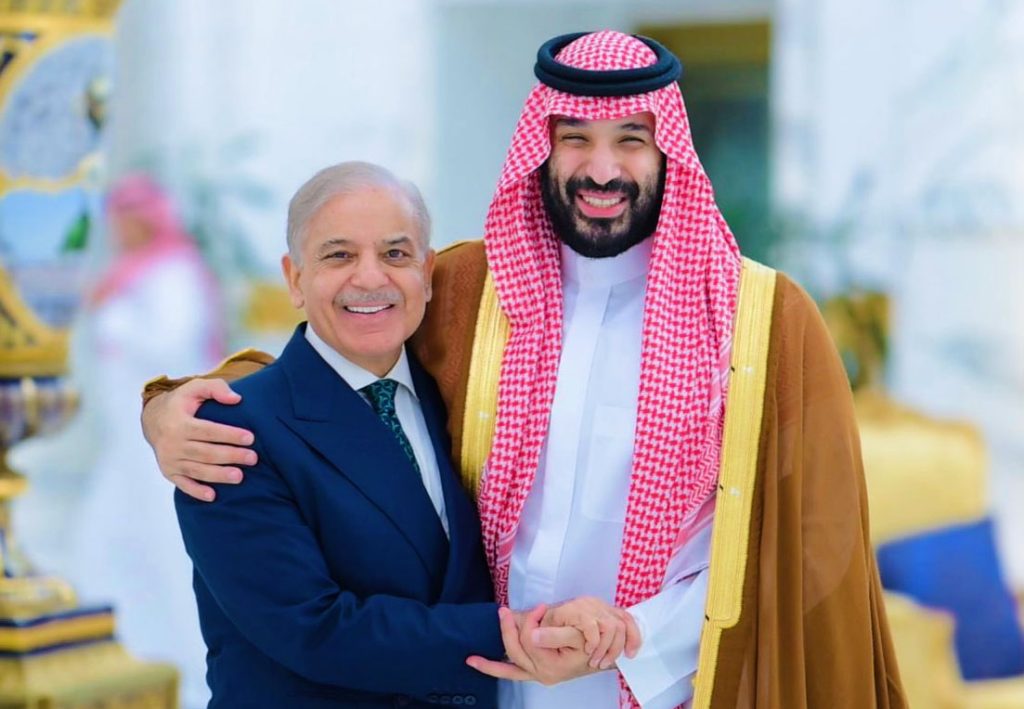
The trilateral Mecca Joint Defense Agreement, signed on August 7 in the Saudi holy city by Saudi Crown Prince Mohammed bin Salman, Turkish President Recep Tayyip Erdoğan, and Pakistani Prime Minister Shehbaz Sharif, has drawn measured but largely positive assessments from Russian analysts and commentators.
The pact includes a collective defense clause treating an armed attack on one signatory as an attack on all, prompting some observers to label it a potential ‘Sunni NATO’ or ‘Muslim NATO.’
While the full legal text remains unpublished and operational mechanisms are still being formalized, Russian perspectives emphasize its value in complicating US strategy and advancing a multipolar order.
Why Russia sees advantages
Russian strategic thinking, as articulated by Valdai Club Program Director Timofey Bordachev in an analysis published by RT, frames the Mecca grouping through the lens of historical buffer dynamics. Moscow has long benefited when independent regional powers absorb the attention and resources of potential adversaries without coordinating against Russian interests. Each of the three members – Saudi Arabia, Turkey, and Pakistan- could independently pose challenges in the South Caucasus, Central Asia, or the broader Muslim world. However, their divergent priorities, competing partnerships, and lack of a unified hierarchy make sustained joint action against Russia improbable.
The agreement is viewed as weakening the post-1991 US-centric security order in the Middle East. By enabling major regional states to discuss and arrange their own security rather than relying solely on Washington, it encourages greater independence and limits American capacity to impose a singular political framework. This aligns with Russia’s broader push for multipolarity.
Bordachev notes that Russia does not require the trio to become formal allies; their mere existence as an independent pole diverts Western focus and resources at a time when Moscow’s primary military effort remains concentrated on Ukraine, constraining deeper intervention further south.
Importantly, the pact is not expected to coalesce into a coherent anti-Iran front, as Iran remains a significant partner for Russia because of internal disagreements among the signatories over regional ambitions and external relationships. Turkish, Saudi, and Pakistani officials have repeatedly stated the agreement targets no specific country and is purely defensive, open to potential expansion (with Egypt often mentioned).
Russian commentary sees this ambiguity as further reassurance: the grouping creates friction for US and Israeli policy without forming a monolithic bloc hostile to Moscow’s interests. Broader Russian engagement with the Islamic world – through the Russia–Islamic World strategic vision group, economic forums in Kazan, Hajj facilitation for Russian Muslims, and strengthened bilateral ties with Saudi Arabia (including visa-free progress and direct flights) provides additional context.
Moscow has cultivated pragmatic relations across the Gulf and beyond, viewing greater autonomy among Muslim-majority states as compatible with its own diversification away from Western markets and institutions.
Implications for Russia-India relations
India-Russia ties, rooted in decades of defense cooperation, energy trade, and shared multipolar rhetoric, are unlikely to face significant disruption from the Mecca Alliance. Bilateral trade has expanded substantially in recent years, driven largely by Indian purchases of discounted Russian oil, while defense partnerships continue even as New Delhi diversifies suppliers.
Both countries emphasize strategic autonomy and resist exclusive alignments. Pakistan’s inclusion raises understandable sensitivity in New Delhi. The pact could enhance Islamabad’s regional standing through closer institutional links with Riyadh and Ankara, potentially complicating India’s cross-border counterterrorism options or influencing Gulf dynamics where India maintains growing economic and diaspora interests.
Some Indian analyses note risks to projects like the India-Middle East-Europe Economic Corridor if regional polarizations deepen, and Turkey’s existing defense ties with Pakistan add another layer.
Yet these concerns are primarily bilateral or regional for India rather than a direct bilateral issue with Russia. Moscow has consistently balanced relations with both India and Pakistan without allowing one to dictate the other. Russia’s warm engagement with Saudi Arabia and Turkey does not contradict its special and privileged strategic partnership with India.
Indian multi-alignment is evident in continued energy and defense links with Moscow alongside deeper ties to the United States, Israel, the UAE, and others and mirrors Russia’s own diversified approach. Analysts assessing Russia-India dynamics have described the relationship as resilient and steady, with economic dimensions strengthening even amid global pressures. Any secondary effects would more likely appear in India’s independent Gulf diplomacy or its responses to Pakistan’s enhanced networks, rather than in core Russia-India channels.
Moscow has no incentive to jeopardize a relationship that provides diplomatic legitimacy in the Global South, a major energy market, and a counterweight to over-reliance on China. New Delhi, for its part, has shown capacity to manage parallel partnerships without zero-sum outcomes.
Russia’s welcoming of the Mecca Alliance stems from its perceived contribution to multipolarity, distraction of Western resources, and low risk of coordinated anti-Russian activity. For India-Russia relations, the development registers as a peripheral regional factor rather than a structural challenge.