Republican Congressman Riley Moore of West Virginia publicly criticized proposed amendments to India’s Foreign Contribution (Regulation) Act (FCRA), describing them as a ‘clear attack against Christians’ and cautioning that the measure could become a significant point of friction in US-India relations if advanced in its current form.
Mr. Moore made the remarks in a post on social media on August 4. He referenced the long presence of Christianity in India, noting its roots dating to the arrival of St. Thomas the Apostle on the Malabar Coast in the decades after the resurrection of Jesus Christ. He then argued that India’s Parliament was considering changes that would allow government takeovers of churches and religious charities. ‘This is a clear attack against Christians. If this bill proceeds in this way, it would be a point of major concern in our bilateral relationship with India,’ Moore wrote.
What are the proposed changes to the FCRA?
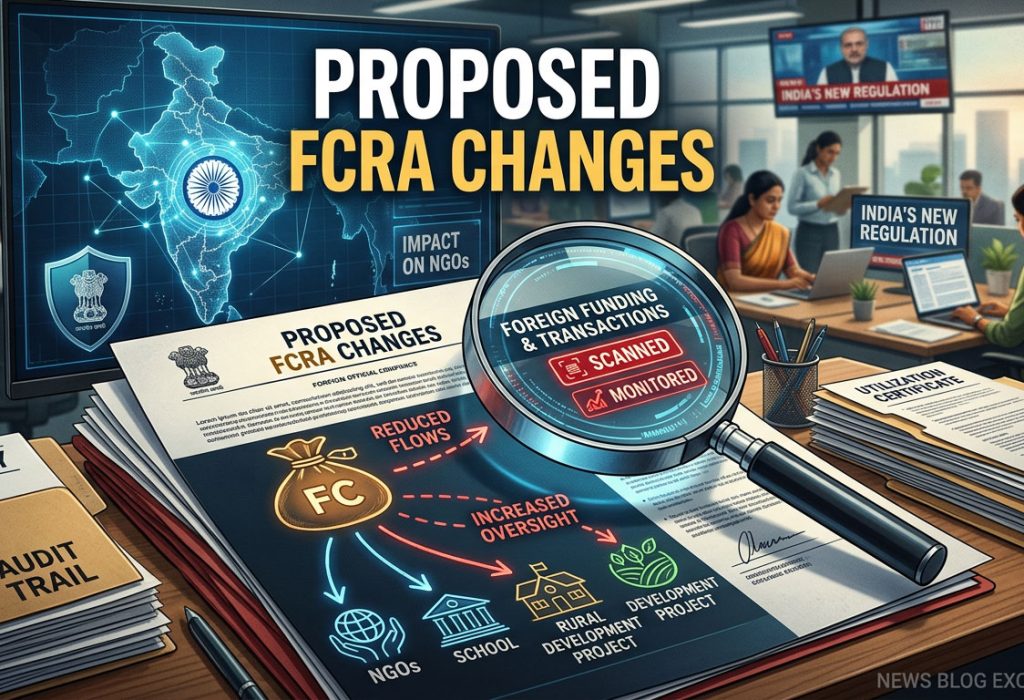
The comments target the Foreign Contribution (Regulation) Amendment Bill, 2026, which was introduced in the Lok Sabha in March 2026 and remains under discussion during the monsoon session of Parliament. The legislation would create a ‘Designated Authority’ empowered to manage foreign contributions and assets built with those funds in cases where an organization’s FCRA registration is cancelled, surrendered, or allowed to lapse without renewal.
Officials have noted that the bill includes a safeguard requiring the authority to preserve the religious character of any place of worship among such assets. It also proposes reducing the maximum prison term for FCRA violations from five years to one year.
As of mid-July 2026, India had 14,449 active FCRA registrations. Government figures also recorded 22,498 cancelled registrations and 15,212 that had expired. Between 2019 and 2022, FCRA-registered organizations received foreign contributions totaling approximately ₹55,741 crore. The FCRA framework itself requires organizations seeking foreign funds, including NGOs, educational institutions, and religious entities, to obtain and periodically renew registration from the Ministry of Home Affairs.
Internal matter, says India
Mr. Moore’s intervention drew a firm response from India’s Ministry of External Affairs on August 7. Spokesperson Randhir Jaiswal stated that legislative matters concerning India are internal affairs decided by Parliament. He further observed that several countries, including the United States, regulate the inflow of foreign funds. ‘Legislative matters concerning India are its internal affairs. Decisions on such issues are taken by the Parliament of India,’ Mr. Jaiswal said.
The bill applies uniformly to all FCRA-registered entities regardless of religious affiliation and does not single out Christian organizations. Critics of the proposed changes, including some domestic voices and Christian community leaders who have engaged with Indian officials, have raised concerns about potential government oversight of assets linked to foreign funding after registration ends.
Supporters of tighter regulation have long argued that the FCRA is necessary to ensure transparency, prevent misuse of foreign money, and protect national sovereignty over civil society activities.
Mr. Moore, a first-term Republican, framed his critique around religious freedom and the historic Christian presence in India. His warning about bilateral ties comes against the backdrop of generally strong and expanding US-India strategic, economic, and defense cooperation in recent years. Whether the comments will translate into broader congressional scrutiny remains unclear, as does the final shape of the bill once parliamentary debate concludes.