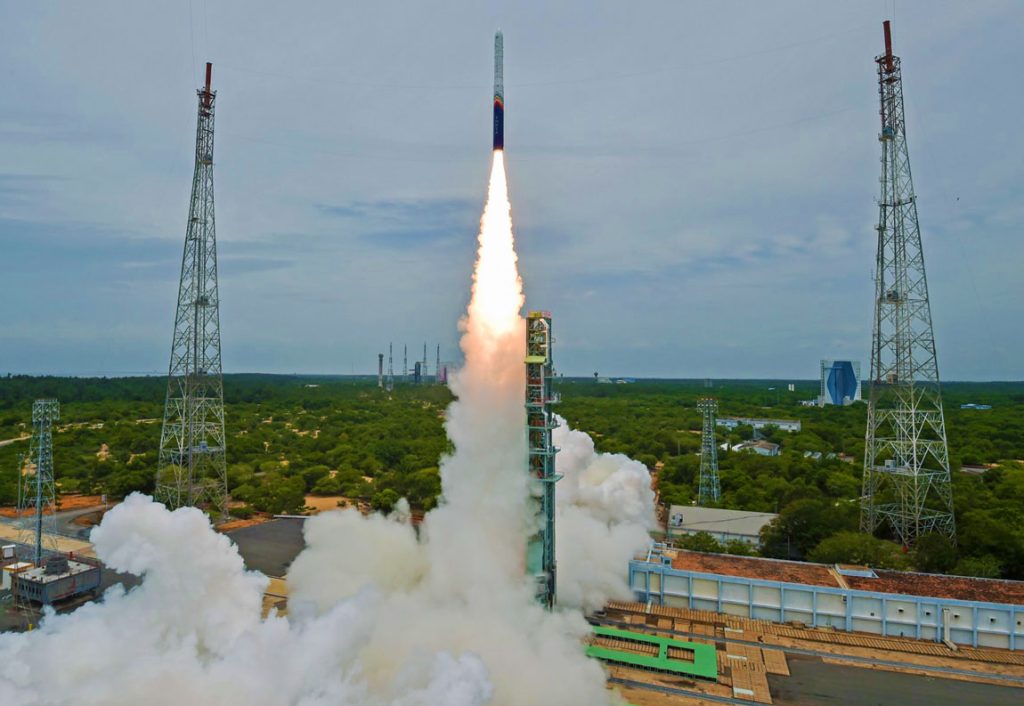
Hyderabad-based Skyroot Aerospace has rapidly risen to prominence in India’s private space sector following the successful maiden orbital flight of its Vikram-1 rocket on July 18, 2026. The launch from the Satish Dhawan Space Centre in Sriharikota marked the first time a privately developed Indian rocket reached orbit, making India only the third country after the United States and China to achieve this milestone through a domestic private firm.
Founded in 2018 by former ISRO engineers Pawan Kumar Chandana and Naga Bharath Daka, Skyroot first gained attention in November 2022 with the suborbital Vikram-S mission, India’s first privately built rocket to fly. Building on that foundation, the company developed Vikram-1, a multi-stage vehicle designed to carry payloads of up to 350 kilograms to low Earth orbit.
Mission Aagaman successfully deployed customer payloads and technology demonstration satellites into a roughly 450-kilometer orbit, validating the rocket’s propulsion, guidance, and separation systems on its first attempt.
The achievement followed a $60 million funding round in May 2026 that valued Skyroot at $1.1 billion, establishing it as India’s first space-tech unicorn. Investors included Sherpalo Ventures, Singapore’s GIC, and funds affiliated with BlackRock. In the weeks after the orbital success, the company has attracted renewed interest, with reports indicating it is seeking bids for a fresh raise at a valuation near $2 billion to support expanded manufacturing and higher launch cadence.
Skyroot has outlined ambitious plans to conduct a second Vikram-1 flight by the end of 2026, potentially followed by commercial operations. The company aims for monthly launches in the longer term and is advancing development of the larger Vikram-2 vehicle, targeted for introduction around the end of 2027 with greater payload capacity. Its Hyderabad facility is being positioned to support increased production rates.
The success has been widely welcomed by Indian space agencies and political leaders as evidence of the country’s maturing private space ecosystem. With nearly 400 space startups operating in India and the sector valued at several billion dollars, Skyroot’s progress highlights the growing commercial opportunities in small-satellite launch services for both domestic and international customers.