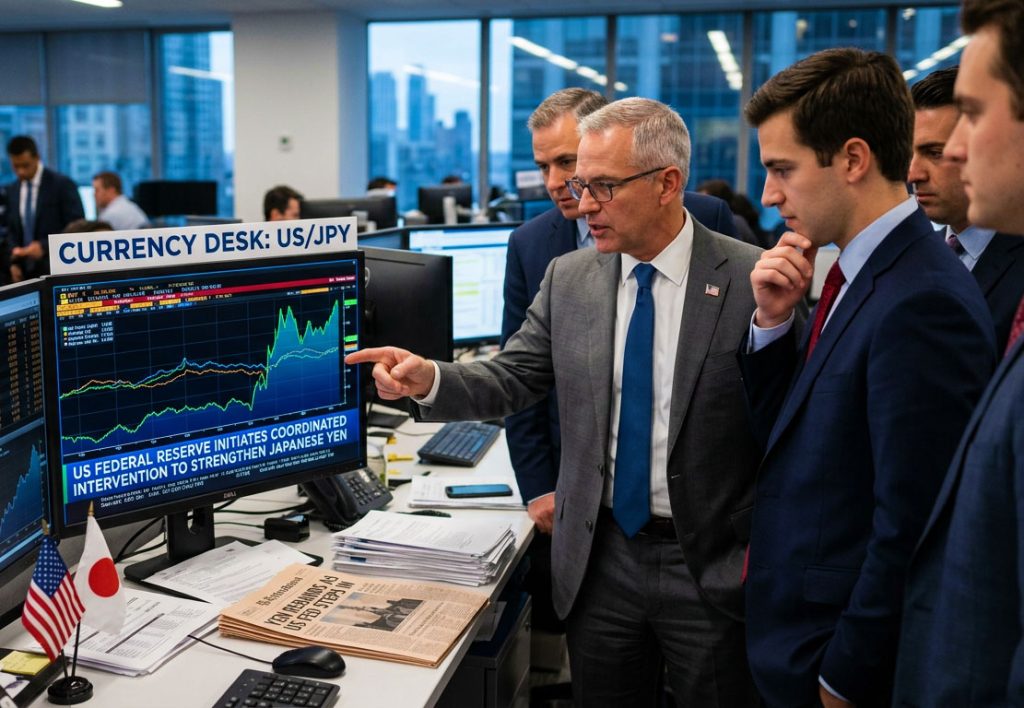
Washington and Tokyo carried out a coordinated foreign-exchange operation to halt the Japanese currency’s sharp decline, marking the first joint yen-buying intervention by the two countries in nearly three decades.
The move came after the currency approached a 40-year low against the US dollar, briefly trading near 164 yen per dollar.
US Treasury Secretary Scott Bessent confirmed that American authorities participated alongside Japanese counterparts, describing the action as necessary to counter excessive volatility and disorderly market movements.
President Donald Trump later characterized the support as a gesture of alliance, stating that the United States stands ready to assist Japan. Japanese Finance Minister Satsuki Katayama and other officials in Tokyo similarly affirmed the joint effort and indicated readiness for further action if required.
The intervention involved US purchases of yen, with reports indicating that the Federal Reserve Bank of New York executed sales of euros for yen on behalf of the Treasury through major banks. Estimates of Japan’s own spending in the preceding days reached tens of billions of dollars. The operation was notable not only for its rarity – the last comparable yen-support move by the US dated to 1998, but also for the political signaling and use of available liquidity tools, including references to the Federal Reserve’s Foreign and International Monetary Authorities repo facility.
Market reaction was immediate. The yen strengthened notably in the days following the intervention, climbing as far as around 155 per dollar at one point. However, by August 7 the currency had surrendered nearly half of those gains, trading near 158 against the dollar amid ongoing pressures from interest-rate differentials, Japan’s fiscal challenges, and broader geopolitical and energy-related uncertainties.
Analysts noted that the joint step that was taken to stabilize Asian currency markets and to limit potential spillover risks, including any forced sales of US Treasury holdings by Japanese institutions. Mr. Bessent emphasized that a substantially undervalued yen posed risks to regional and global financial stability, while stressing that Japan would also need supportive domestic policies.
Officials on both sides have left open the possibility of additional coordinated operations.The episode highlights the sensitivity of major economies to rapid currency swings and the willingness of the United States to deploy rarely used tools in support of a key ally when disorderly moves threaten wider market confidence.