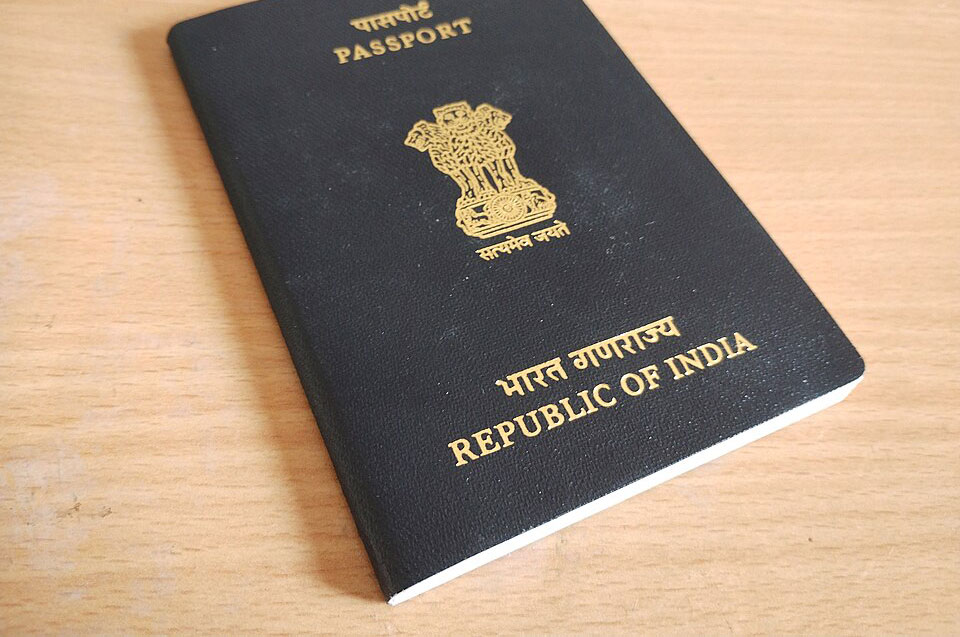
In late June 2026, a statement from a senior Ministry of External Affairs (MEA) official ignited widespread debate across India. Speaking around Passport Seva Divas on June 24, the official emphasized that an Indian passport is ‘primarily a travel document’ and should not be treated as conclusive proof of citizenship.
While the passport attests to nationality for international travel, citizenship itself is governed by the Citizenship Act, 1955, not the Passports Act, 1967.
This clarification arose in the context of queries about using passports to challenge exclusions from voter lists during the Special Intensive Revision (SIR) of electoral rolls in several states. The response was straightforward: even while abroad, the passport attests to nationality but does not serve as a definitive citizenship document.
Legal foundation: Not a new policy
Far from a sudden policy shift under the current government, this reflects a long-standing legal reality.
The Passports Act, 1967, enacted during Indira Gandhi’s tenure, explicitly allows the Central Government under Section 20 to issue passports or travel documents to non-citizens ‘in the public interest.’ Passports are issued only after verification for Indian citizens, but the document itself does not confer or irrefutably prove citizenship.
Indian courts, including Bombay High Court rulings from 2013, have upheld that a passport provides evidence of nationality but is not conclusive proof of citizenship status. Government sources reiterated that this position has been held for decades, with no new decision made in the last 12 years.
India lacks a single, universal citizenship document for all its roughly 1.4 billion people. Most citizens acquire status by birth or descent and never receive a formal citizenship certificate, which is typically issued only for naturalization or registration. Citizenship is established through a combination of records: birth certificates, parental documents, school records, and other evidence verifiable under the Citizenship Act.
Documents like Aadhaar, PAN cards, voter IDs, and even passports serve specific purposes such as identity, taxation, voting, or travel, but none alone conclusively proves citizenship in legal disputes. The Supreme Court has previously declined to treat Aadhaar as standalone proof for electoral purposes.
Criticism
The timing of the MEA clarification, amid ongoing electoral roll revisions and broader debates over citizenship verification exercises (such as the National Register of Citizens in Assam and the Citizenship Amendment Act), has fueled suspicion.
Opposition figures like Kapil Sibal questioned what document would then suffice for voter lists, warning of potential disenfranchisement. AIMIM leader Asaduddin Owaisi and others sarcastically highlighted the absence of any foolproof everyday proof, with some interpreting it as enabling arbitrary challenges to citizenship.
Critics argue the statement, while legally accurate, risks creating unnecessary anxiety and confusion among ordinary citizens who view their passport as the ultimate emblem of Indian identity. For millions, securing a passport involves rigorous documentation and police verification, making the ‘not conclusive’ label feel like bureaucratic hair-splitting or a prelude to stricter identification drives. In a country with uneven record-keeping, especially in rural areas, relying on granular birth and parental records places a heavy burden on vulnerable populations.
Supporters and legal experts, including former Solicitor General Harish Salve in related discussions, countered that the distinction protects the integrity of citizenship determination. A fraudulently obtained passport should not automatically grant citizenship rights, and courts must retain the ability to examine underlying evidence. The passport remains strong evidence of nationality for practical purposes like consular services abroad.
Confusion
This episode exposes deeper systemic issues in India’s approach to identity and citizenship. The absence of a robust, accessible national citizenship registry or certificate for birth-based citizens creates ambiguity that fuels political polarization. In an era of migration, border security concerns, and electoral integrity drives, such clarifications are inevitable, but poorly communicated ones risk eroding public trust.
The government’s position aligns with global norms. Many countries treat passports as travel documents rather than absolute proofs of citizenship. However, India’s scale, diversity, and history of citizenship disputes (e.g., Assam NRC) demand clearer public education and streamlined processes for proving status when challenged.
Ultimately, the MEA statement is a reminder of a basic truth – citizenship is a legal status rooted in the Constitution and statutes, not a plastic booklet. For most Indians, their passport will continue functioning as reliable proof of nationality in daily life and international travel. Yet in contested scenarios, deeper verification applies – a reality that is legally sound but administratively and politically challenging in the world’s largest democracy.