The Strait of Hormuz, the narrow chokepoint linking the Persian Gulf to the Gulf of Oman and carrying roughly one-fifth of global oil and liquefied natural gas trade, has become the central battlefield in the renewed US-Iran confrontation. Neither side seems to hold undisputed dominance, with the United States leveraging superior naval power and air strikes to protect shipping and enforce blockades, while Iran relies on geographic proximity, asymmetric tactics, and persistent threats to assert authority.
Iran’s Geographic Leverage
Iran controls the northern shoreline of the strait and maintains a network of strategically positioned islands, including Qeshm, Hormuz, Larak, and others. These assets allow it to monitor traffic closely and deploy fast-attack boats, anti-ship missiles, drones, and naval mines from coastal and island positions.
Iranian officials, including parliamentarians and Foreign Ministry spokespeople, continue to insist that Tehran must retain oversight, with some advocating for approved routes near their coast and potential fees.
In recent weeks, Iran’s Islamic Revolutionary Guard Corps (IRGC) has attacked or warned vessels attempting southern routes closer to Oman, declaring unauthorized passages risky and at times announcing temporary closures. Incidents included strikes on tankers and container ships, such as those reported in early to mid-July, which disrupted traffic and forced rerouting or halts. Iran has also used the threat of mines and direct action to deter non-compliant shipping, viewing control of the strait as a core deterrent and economic lever.
Despite these efforts, Iran’s capabilities have been degraded by months of US and allied strikes targeting missile sites, drone facilities, radar, fast-attack craft, and coastal infrastructure. US assessments indicate significant reductions in Iran’s naval mine inventory and overall ability to sustain prolonged disruptions.
US Naval Power
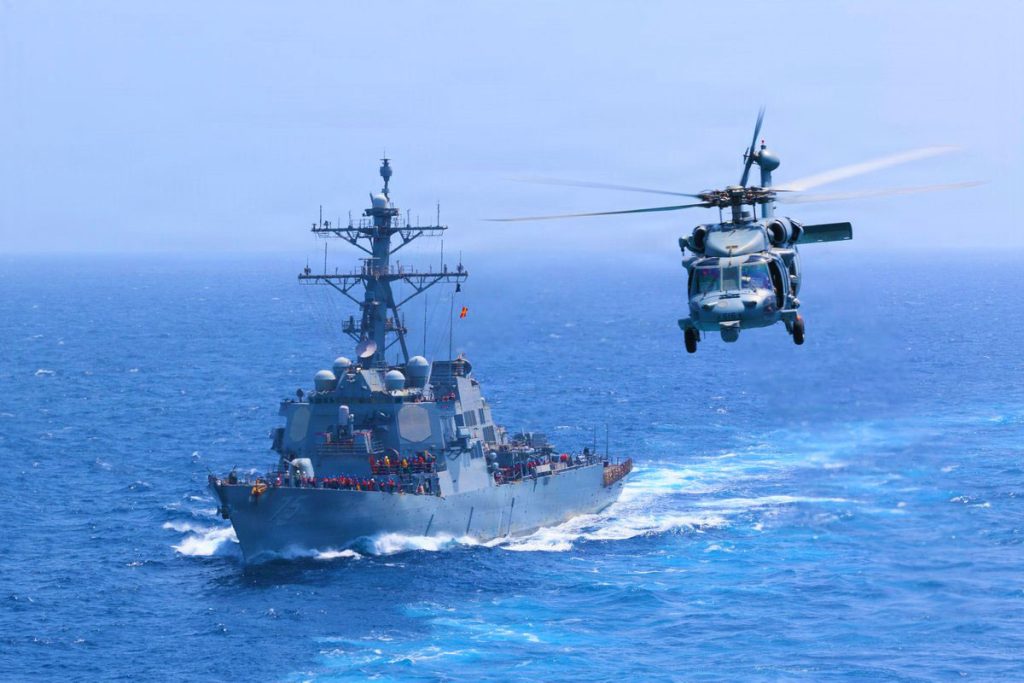
The United States, through US Central Command (CENTCOM), maintains a robust naval presence in the region, including carrier strike groups, destroyers, minesweepers, and supporting aircraft. CENTCOM has repeatedly stated that ‘Iran does not control the Strait of Hormuz,’ emphasizing successful facilitation of hundreds of commercial vessel transits and millions of barrels of oil despite threats. US forces have conducted multiple rounds of strikes, hitting over 170 targets in some operations, aimed at degrading Iran’s ability to threaten shipping.
Key US measures included reimposing and maintaining a naval blockade on Iranian ports to curb oil smuggling and military resupply, guiding commercial traffic along alternative southern corridors near Omani waters, and intercepting attacks on US and partner assets while responding with targeted strikes on Iranian command, coastal, and launch sites.
President Trump has publicly positioned the US as a ‘guardian’ of the strait, at one point proposing fees for security provisions (later pivoted toward trade deals with Gulf states) and affirming that the waterway remains open with or without Iranian cooperation. Traffic continues at reduced levels, with vessels using both routes amid risks.
What’s the actual situation now?
As of July 26, Iran continued issuing claims of control and mine threats to steer vessels toward approved paths, even as US forces boarded sanctioned tankers in the Arabian Sea to uphold the blockade.
Ongoing exchanges of strikes have kept tensions high, with Iran retaliating against US facilities in the Gulf and the US focusing on Iranian military infrastructure.
Oman has played a mediating role, proposing dual-corridor management ideas, but talks remain stalled. Shipping data shows sharply lower transits compared to pre-conflict norms, with insurance costs elevated and many operators exercising caution. Oil prices have fluctuated in response to attacks and blockade enforcement.
Control is effectively contested rather than absolute. Iran can generate localized disruptions and risks through asymmetric means, leveraging its proximity for quick responses. The US, backed by overwhelming conventional naval and air superiority, can protect select passages, degrade Iranian assets, and sustain pressure through blockades and strikes, but at the cost of high operational tempo and regional resource allocation.
A full resolution likely requires diplomatic breakthroughs involving Gulf states, with any long-term arrangement needing to balance freedom of navigation against Iran’s security concerns.