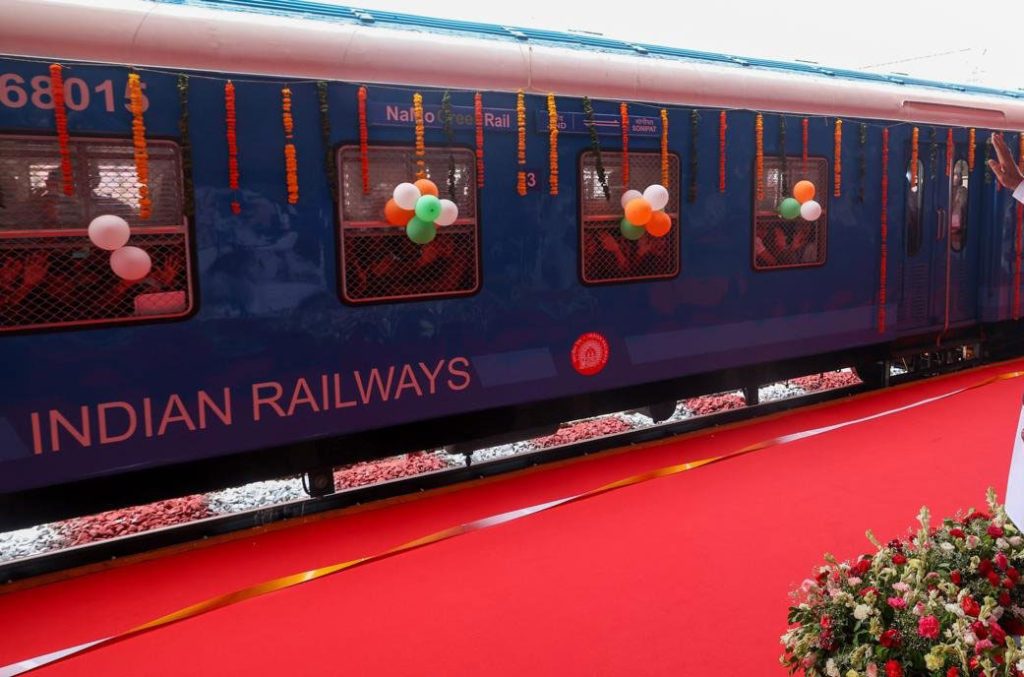
India has taken a significant leap in green rail transportation with its first Hydrogen fuel cell trainset now actively operating and accumulating impressive mileage on its inaugural route. Flagged off by Prime Minister Narendra Modi on July 17 from Jind in Haryana, the train has already covered more than 1,200 kilometers in seamless trial and initial operations between Jind and Sonipat, saving over 3,200 liters of diesel in the process while emitting nothing but water vapor.
How the hydrogen train works
The 10-coach broad-gauge trainset features two Hydrogen Driving Power Cars (one at each end), each delivering 1,200 kW for a combined 2,400 kW output, the most powerful hydrogen rail configuration on broad gauge worldwide. Onboard fuel cells generate electricity through a chemical reaction between hydrogen and oxygen, with lithium iron phosphate batteries providing supplementary power. The only byproducts are water vapor and heat, resulting in true zero tailpipe carbon emissions.
The trainset, converted from a diesel-electric unit, boasts a design speed of 110 km/h but operates at a maximum of 75 km/h on its current 89-km route for safety and optimization. It offers a passenger capacity of around 2,600, far exceeding smaller hydrogen trains in other countries.
A dedicated hydrogen ecosystem supports operations at Jind, including India’s first railway-specific green hydrogen production, storage, and refueling facility. It can store up to 3,000 kg of hydrogen at pressures up to 500 bar, with dispensing at 350 bar. The setup incorporates a proton exchange membrane electrolyzer and ensures compliance with strict safety standards from the Petroleum and Explosives Safety Organisation (PESO).
Indigenous train
Indian Railways developed the project indigenously under the Atmanirbhar Bharat initiative, with the Integral Coach Factory in Chennai handling manufacturing and integration. Hyderabad-based Medha Servo Drives led the propulsion retrofit in partnership with Canada’s Ballard Power Systems for the fuel cell technology.
Safety and performance
Engineers equipped the train with multiple independent safety layers, including hydrogen leak detectors, flame and smoke sensors, automatic shut-off systems, and continuous ventilation to prevent any buildup.
Trials confirmed robust performance, with a high-speed run reaching 120 km/h in late June, alongside thorough checks on braking, stability, vibration, and emergency systems. The Jind-Sonipat section—serving stations such as Jind City, Gohana, and multiple halts serves as the ideal pilot for non-electrified or challenging routes. The train typically completes the journey in about two hours, demonstrating reliability under regular conditions.
Future plans
This project aligns with Indian Railways’ ‘Hydrogen for Heritage’ initiative, targeting routes difficult to electrify and potentially expanding to heritage lines like Kalka-Shimla. Union Minister Ashwini Vaishnaw highlighted that India has retained intellectual property rights, opening doors for future technology exports and positioning the country as a leader in sustainable rail.
Following strong performance on the Haryana route, trials on the Delhi corridor are slated to begin soon, paving the way for broader deployment. The initiative not only cuts emissions and fossil fuel dependence but also fosters a complete domestic hydrogen rail supply chain, from production to propulsion.