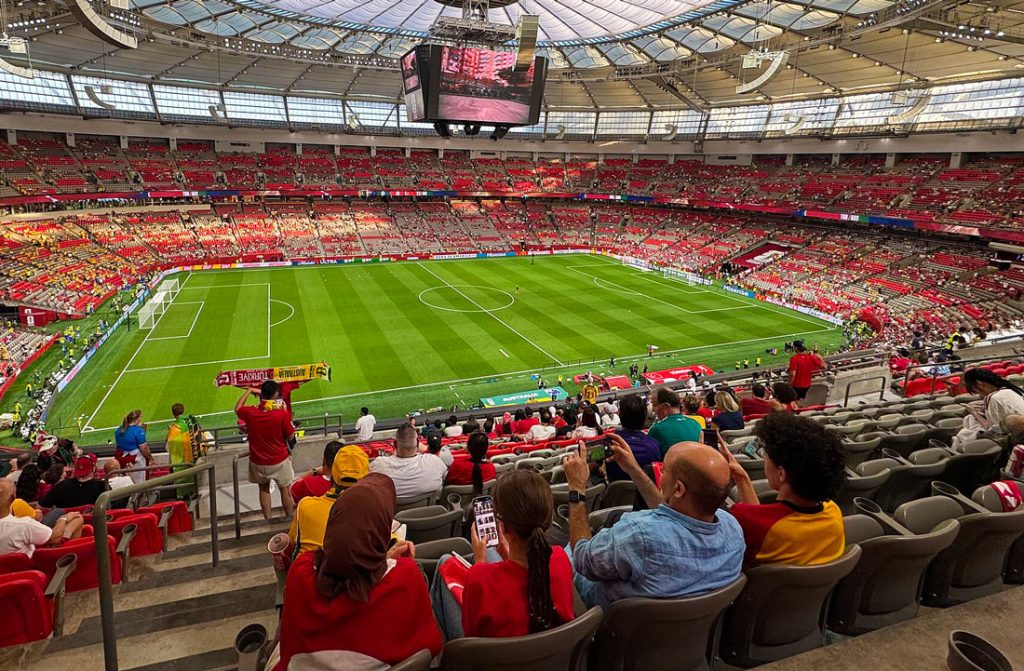
The expanded 48-team FIFA World Cup 2026, co-hosted by the United States, Canada, and Mexico, has delivered a whirlwind of drama, blowout victories, and Cinderella stories just 11 days after kicking off on June 11 at Mexico City’s Estadio Azteca. With 72 group-stage matches underway across 16 venues in three nations, the tournament is already living up to its promise of unpredictability and record-breaking feats.
Mexico, one of the hosts, got the party started with a commanding 2-0 win over South Africa and followed it up with a gritty 1-0 victory against South Korea, securing top spot in Group A with six points and a +3 goal difference. The co-hosts have energized packed stadiums and positioned themselves strongly for the knockout rounds.
Fellow hosts Canada made history in Group B, thrashing Qatar 6-0 for their first-ever World Cup victory after opening with a draw against Bosnia and Herzegovina. The surge has Canadian fans dreaming of a deep run on home soil. The United States, in Group D, opened with a convincing win over Paraguay and added a solid 2-0 triumph against Australia, keeping their campaign on track as expectations run high for the American squad.
Powerhouses have largely asserted dominance, though not without surprises.
Spain dismantled Saudi Arabia 4-0, with teenage sensation Lamine Yamal shining brightly. The Netherlands hammered Sweden 5-1, while Germany ended a long knockout drought by defeating the Ivory Coast 2-1 in stoppage time, booking their place in the Round of 32 for the first time since 2014. England cruised past Croatia 4-2 in an entertaining clash featuring goals from Harry Kane, Jude Bellingham, and Marcus Rashford.
Underdogs have stolen headlines as well. Tiny Curacao, making their debut, earned a heroic goalless draw against Ecuador thanks to goalkeeper Eloy Room’s staggering 15-save performance, securing the Caribbean nation’s first-ever World Cup point. Cape Verde held Uruguay to a 2-2 draw, while other debutants and lower-ranked sides have produced resilient displays amid the expanded format.
The new 12-group structure, which advances the top two teams from each group plus the eight best third-placed sides to a 32-team knockout stage, has created both early clinchers and lingering tension. FIFA’s emphasis on head-to-head results as the primary tiebreaker has already sparked debate, as some groups saw mathematical eliminations earlier than in past tournaments.
Off the pitch, the tournament has drawn massive global audiences and filled stadiums, though challenges around ticketing, fan travel, and logistics in a vast three-country setup have drawn occasional criticism. On-field, the goal tally remains high, with several lopsided results highlighting the gap between established powers and some of the newer qualifiers.
As the group stage hurtles toward completion in the coming days, focus shifts to the final matchdays and the shaping of the Round of 32 bracket. Host nations are thriving, European and South American giants are finding form, and surprise packages continue to defy odds, setting the stage for what promises to be a memorable knockout phase beginning in late June. The road to the July 19 final at MetLife Stadium in New Jersey is wide open, with plenty more twists expected before the champion is crowned.