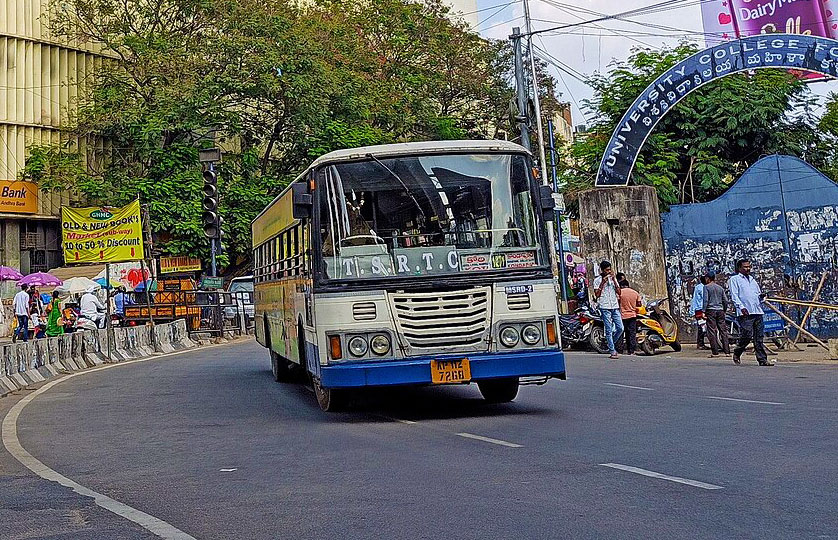
The three-day indefinite strike by Telangana State Road Transport Corporation (TGSRTC) employees ended late Friday night after intensive negotiations between the state government and the Joint Action Committee (JAC) of unions, bringing relief to millions of stranded commuters across the state.
Bus services are expected to resume from Saturday morning, restoring public transport that had been severely disrupted since the strike began at midnight on April 22.
The breakthrough came after nearly 12 hours of high-level discussions at the Secretariat, chaired by Deputy Chief Minister Mallu Bhatti Vikramarka. The JAC, representing over 38,000 workers, agreed to withdraw the agitation following concrete assurances on most of their 32-point charter of demands. These include salary revisions, clearance of long-pending dues such as provident fund and cooperative society payments, and progress toward merging the corporation with the state government, which is a key long-standing promise that would bring RTC staff on par with government employees.
The RTC has long grappled with financial sustainability, employee absorption into government service, and service efficiency. While the previous BRS regime had promised a merger, implementation stalled, carrying over into the Congress government.
The strike, which grounded more than 6,000 buses and affected an estimated 60-65 lakh daily passengers, had already caused significant hardship, particularly for daily wage earners, students, and women commuters in both urban and rural areas. Metro and MMTS services continued during the disruption, but the absence of RTC buses created chaos at major bus stations and on key routes.
The decision to call off the strike also follows a deeply tragic incident that heightened tensions and added urgency to the talks. On April 23, K. Shankar Goud, a 55-year-old driver from the Narsampet depot in Warangal district, set himself ablaze in front of the depot during protests. He suffered extensive burn injuries (reported between 60-80 per cent) and was rushed first to a local hospital in Warangal before being shifted to Apollo DRDO Hospital in Hyderabad. Shankar Goud succumbed to his injuries in the early hours of April 24.
The incident sparked widespread outrage, with workers staging protests and opposition parties accusing the government of negligence. Reports also emerged of two other drivers attempting self-harm in separate incidents amid the escalating frustration. Chief Minister Revanth Reddy expressed shock over the driver’s death and assured full government support to the bereaved family.
Transport Minister Ponnam Prabhakar had earlier stated that the government had accepted 29 of the 32 demands in principle, with the more complex issues, including the full merger and conduct of union elections, requiring structured examination and legal processes.
For commuters, normalcy returns just in time for the weekend, though full fleet deployment may take a day or two as drivers and staff report back. The JAC has described the agreement as a partial victory, vowing to monitor implementation closely, particularly on pay fitment, clearance of the dues, and the merger roadmap.