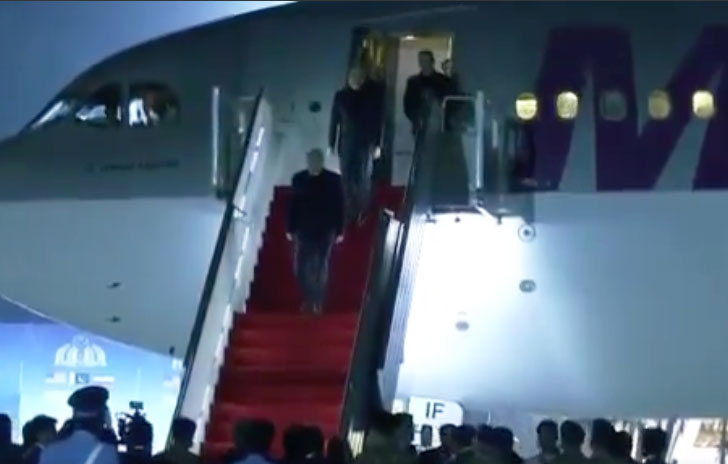
Delegations from the United States and Iran have converged on Pakistan’s capital for talks aimed at transforming a fragile two-week ceasefire into a lasting end to the six-week-old conflict that has roiled the Middle East and disrupted global energy markets.
Hosted in Islamabad under tight security, the negotiations mark the highest-level face-to-face engagement between Washington and Tehran since 1979 and the first in-person discussions since the 2015 nuclear deal. The sessions, which Pakistani officials describe as ‘make or break,’ follow intense behind-the-scenes diplomacy that secured the ceasefire just days ago.
Vice President JD Vance is leading the US side, accompanied by special envoy Steve Witkoff and senior adviser Jared Kushner. Iran’s delegation, numbering around 71 officials and technical experts, is headed by Parliament Speaker Mohammad Bagher Ghalibaf and Foreign Minister Abbas Araghchi. Both teams arrived in Islamabad overnight and early this morning, greeted by Pakistan’s Chief of Army Staff General Asim Munir and Foreign Minister Mohammad Ishaq Dar.
Pakistan’s emergence as the venue and facilitator surprised many observers. Long viewed as a bridge between rival powers due to its 920-kilometer shared border with Iran, deep religious and cultural ties, and decades of cooperation on security and refugee issues, the country leveraged personal rapport at the highest levels. General Munir, whom President Donald Trump has publicly called his ‘favourite field marshal,’ played an early role through prior US-Pakistan deals on critical minerals and financial technology. Prime Minister Shehbaz Sharif and Deputy Prime Minister Ishaq Dar conducted a marathon outreach to leaders in Washington, Tehran, Beijing, Moscow, and Gulf capitals, culminating in the ceasefire agreement announced on April 8.
A two-day public holiday has been declared in Islamabad, with some 10,000 security personnel deployed and parts of the city effectively locked down to ensure the safety of the high-profile visitors. Streets around the negotiation venue in the Blue Area commercial district were unusually quiet as advance teams from both sides held preliminary meetings.
The talks come against a backdrop of cautious optimism mixed with significant hurdles. The ceasefire halted direct US-Iran airstrikes and reopened limited shipping in the Strait of Hormuz, through which one-fifth of the world’s oil passes, but it has not ended fighting elsewhere.
Iran insists any comprehensive deal must include an immediate ceasefire in Lebanon, where Israeli operations continue, along with sanctions relief, compensation for wartime damage, and recognition of its regional security interests. Mr. Ghalibaf has publicly signaled openness to genuine engagement while stressing Tehran’s bottom lines. Mr. Vance, speaking before his departure, struck a balanced tone. He expressed willingness to negotiate in good faith but warned that any attempt by Iran to ‘play’ the process would meet firm resistance.
President Trump has reiterated that the Strait of Hormuz must reopen fully and has cautioned that failure could prompt resumed military action ‘with even more intensity.’ Pakistani leaders have hailed their mediation as a national achievement that averted wider catastrophe. ‘The next phase will determine whether a lasting ceasefire can be secured,’ Mr. Sharif said, underscoring the high stakes for regional stability.