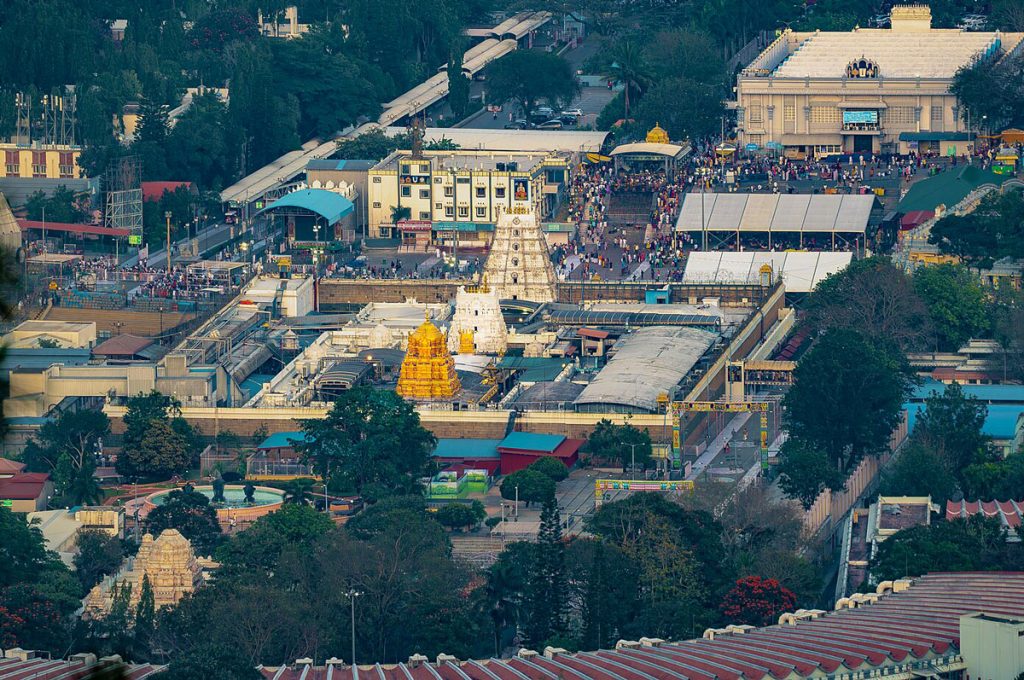
The Tirumala Tirupati Devasthanams (TTD), the governing body of the revered Sri Venkateswara Swamy Temple in Tirumala, is embracing cutting-edge artificial intelligence (AI) technologies to revolutionize the pilgrimage experience for millions of devotees.
With the temple attracting up to 100,000 visitors daily during peak seasons, TTD aims to streamline operations, reduce waiting times, and enhance security through a multi-faceted AI-driven approach, as announced in recent board meetings and official statements.
Under the leadership of TTD Chairman B.R. Naidu and Executive Officer J. Syamala Rao, the temple administration is collaborating with technology leaders, including reputed firms like Google and TCS, to deploy AI solutions tailored to the unique challenges of managing one of the world’s busiest religious sites. The initiative, part of TTD’s Vision 2047, focuses on improving crowd management, expediting darshan (the act of viewing the deity), and ensuring a seamless, spiritually fulfilling experience for devotees.
AI-Powered queue management to slash waiting times
One of the most ambitious goals of TTD’s AI strategy is to reduce darshan waiting times from the current 20–30 hours during peak periods to just 2–3 hours. To achieve this, TTD is developing an AI-based queue management system in partnership with experts from the Indian Institute of Technology (IIT) and industry specialists. The system leverages real-time data from surveillance cameras, RFID trackers, and ticketing systems to monitor pilgrim inflow and outflow, predict crowd surges, and dynamically allocate darshan slots. ‘By analyzing variables like crowd density and flow rates, our AI system will optimize schedules and minimize bottlenecks,’ said EO J. Syamala Rao in a recent statement.
Devotees will receive time-slotted darshan tokens integrated with facial recognition technology, ensuring quick verification and preventing duplicate bookings. The system cross-references each pilgrim’s facial data against a database of approximately 10 lakh images from the past 30 days, rooting out fraudulent activities and ensuring equitable access to darshan.
Facial Recognition for enhanced security and efficiency
TTD is installing AI-powered facial recognition cameras across key areas of the temple complex, including queue lines, compartments, and entry points. These cameras will not only authenticate genuine pilgrims but also track visitor numbers in real-time, enabling precise estimation of darshan wait times. This data-driven approach allows TTD to notify devotees via SMS or a dedicated mobile app about their expected darshan time, helping them plan their visit more effectively.
Beyond crowd management, facial recognition technology will bolster security by identifying potential intruders or suspicious activities at exact locations within the sprawling Tirumala complex. ‘Our goal is to create a secure and transparent environment without compromising the sanctity of the pilgrimage,’ Mr. Rao emphasized. The technology is expected to extend to other TTD services, such as accommodation and transportation, in the near future.
AI Chatbots and Mobile Integration for Devotee Convenience?
In a bid to enhance transparency and accessibility, TTD is also exploring the introduction of an AI-powered chatbot to assist devotees with real-time information on darshan schedules, accommodation availability, and other services.Integrated with a new TTD mobile app, the chatbot will provide personalized updates, such as queue status and temple activities, reducing reliance on manual assistance and unofficial sources.
This aligns with TTD’s advisory urging devotees to rely only on its official website and verified social media channels for accurate information. The AI system’s multi-layered architecture includes a Data Layer that aggregates historical and real-time data, a Processing Layer that employs machine learning to predict crowd patterns, and an Output Layer that delivers actionable insights to temple staff and pilgrims. This holistic approach aims to minimize human intervention while ensuring scalability, particularly during festivals like Brahmotsavam, when pilgrim footfalls surge.
Addressing the challenges and concerns
While TTD’s AI initiatives have been praised, they have also sparked a debate. Critics, including former TTD officials, have questioned the practicality of implementing such advanced technologies in a traditional setting, citing potential technical glitches or privacy concerns.
In response, TTD has emphasized its commitment to robust data encryption and compliance with privacy regulations to safeguard devotees’ personal and biometric data. Collaborations with reputed tech firms and rigorous testing phases are underway to ensure seamless implementation.
A Model for Global Religious Sites
TTD’s adoption of AI is poised to set a global benchmark for managing large-scale religious sites. By blending tradition with technology, the temple administration aims to preserve the spiritual essence of the darshan experience while addressing modern challenges. Additional initiatives, such as anti-drone technology for enhanced security and infrastructure upgrades like a third Vaikuntam Queue Complex, complement the AI strategy, ensuring a holistic improvement in pilgrim services.
‘This is a transformative step toward making Lord Venkateswara’s darshan accessible and dignified for all,’ said Chairman B.R. Naidu. As TTD moves forward with technical consultations and system design, devotees can look forward to a more efficient, secure, and spiritually enriching pilgrimage experience in the coming months. For the latest updates, devotees are encouraged to visit TTD’s official website or download the forthcoming TTD app, ensuring they benefit from the temple’s tech-driven innovations.