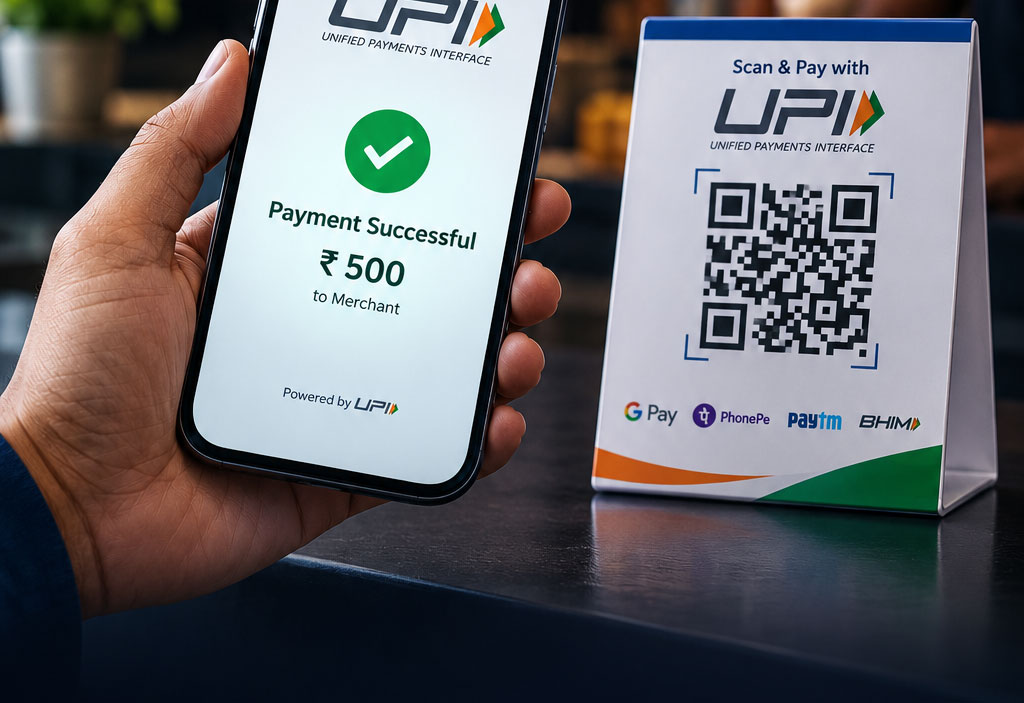
The government’s September 14 gazette notification protecting UPI transactions up to ₹2,000 and all RuPay debit card payments from bank or system-provider charges looks, on the surface, like a consumer-friendly clarification. In reality, it is a carefully engineered half-measure that removes previous blanket safeguards and creates legal space for merchant discount rates (MDR) on higher-value payments. The decision, following the Taxation and Other Laws (Amendment) Bill passed in August, deserves closer scrutiny for what it enables, what it leaves ambiguous, and the risks it introduces to one of India’s most successful public digital infrastructures.
The Narrow Shield and the Wide Door
By explicitly shielding only UPI payments of ₹2,000 or less (and RuPay debit cards across the board), the Finance Ministry has defined the zone of protection with precision. Everything above that threshold now sits outside statutory free-of-charge guarantees. Officials insist this is merely an ‘enabling provision,’ that consumers will never pay, that person-to-person transfers remain free, and that any future MDR will be modest and limited to large merchants. Finance Minister Nirmala Sitharaman has repeated these assurances.
Yet the notification itself contains no affirmative ban on charges above ₹2,000, nor does it lock in exemptions for small merchants or specify timelines. That silence is deliberate and consequential. High-value person-to-merchant transactions represent only about 4–5% of UPI volume but roughly two-thirds of total value. Targeting them is economically rational if the goal is revenue without disrupting mass usage. Industry discussions of a 0.25–0.40% MDR, with banks taking the largest share, suggest meaningful income could flow to banks and app providers. The question is whether that income will be extracted cleanly or whether costs will quietly migrate downstream through higher prices, reduced discounts, or selective acceptance.
Sustainability versus Trust
UPI’s explosive growth, from roughly 1.78 crore transactions in FY17 to more than 24,000 crore in FY26, occurred precisely because it was free for users and largely free for most merchants. Zero-cost digital payments lowered barriers for kirana stores, street vendors, and everyday transfers in a way few global systems have matched. Introducing even selective MDR after a decade of free access risks eroding the psychological contract that made the system ubiquitous.
Surveys in recent years have shown strong user resistance to any fees; once the principle of free is breached for a significant share of value, public confidence can fray faster than policymakers expect.
The government’s sustainability argument is not without merit. Running a high-volume, real-time national payment rail is expensive. Banks and third-party apps have long complained about costs without corresponding revenue. Yet the chosen path, amending the law first, notifying a limited exemption later, and leaving the actual rate and scope to an NPCI-led committee, prioritizes flexibility for the industry over clarity for the public. Transparency has been partial at best. Citizens are told not to worry while the fine print is still being drafted.
Political Optics and Narratives
Opposition leaders, including Rahul Gandhi and Jairam Ramesh, have seized on the notification as evidence that the government is preparing to monetise UPI while denying it. Their claims of ‘surrender to U.S. pressure’ remain unproven and largely speculative, but the government’s dismissive responses have done little to close the perception gap. When a policy change creates an obvious pathway for fees on the majority of UPI’s economic value, simply repeating ‘consumers will not pay’ is insufficient. Indirect effects – higher merchant costs passed on to buyers are real possibilities that official statements have largely sidestepped.
The Road ahead looks murky?
The UPI and Services Steering Committee under NPCI is now expected to finalise rates and operational details. Until those rules appear, uncertainty persists. Will small merchants truly remain exempt in practice? Will large platforms absorb the MDR or pass it on? Will the threshold stay fixed at ₹2,000 or creep upward over time? These are not minor details; they determine whether the change remains surgical or becomes the first step toward broader monetisation.
India’s digital payments success is genuine and globally admired. Protecting its low-friction character while addressing legitimate cost recovery is a difficult balance. The current approach, however, leans heavily on assurances rather than airtight statutory protection.