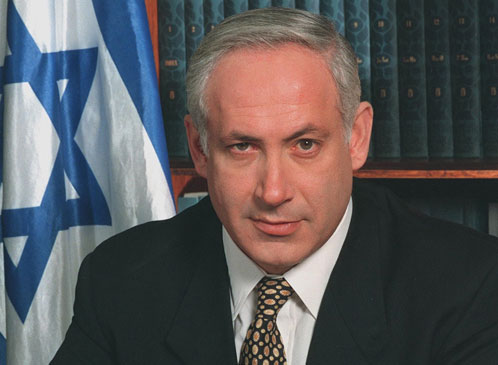
Israeli Prime Minister Benjamin Netanyahu referred to the United Kingdom as the ‘Islamic Republic of Britain’ during a recent podcast interview, drawing sharp criticism and highlighting ongoing strains in bilateral ties.
In remarks aired on the Israeli podcast Melech Blitzer Haim (hosted by Avi Harush and linked to Army Radio), Mr. Netanyahu contrasted historical British media coverage of Israel with the present climate.
He recalled that Randolph Churchill (son of former British Prime Minister Winston Churchill) and the younger Winston Churchill had reported favourably on Israel during the 1967 Six-Day War. ‘Try finding that in Britain today, in what is called the Islamic Republic of Britain,’ Mr. Netanyahu said.
When the interviewer suggested that much of Europe faced similar dynamics, the Israeli leader agreed and referenced a prior observation – ‘Someone said the first Islamic republic with nuclear weapons will be the Islamic Republic of Britain. We’re making sure there won’t be another one here, in Iran.’
The comments come amid cooler relations between Israel and the UK under the current Labour government. Differences have centred on British policy toward the conflict in Gaza, settlement activity, and related diplomatic pressure.
Mr. Netanyahu has previously expressed concern about demographic and cultural shifts in Europe contributing to reduced support for Israel. British Progressive Judaism leaders condemned the language as ‘dangerous and irresponsible,’ stating that Mr. Netanyahu ‘does not speak for British Jews’ at a time of heightened social tensions.
A UK government spokesperson described the remarks as ‘completely unacceptable’ and said the matter had been raised with Israeli counterparts. Some Israeli critics also questioned the diplomatic wisdom of the comments from a sitting prime minister.
Israeli PM Netanyahu’s phrasing reflects a longstanding view within parts of the Israeli right that Western European societies, including Britain, have undergone cultural and political changes, driven by immigration and shifting public opinion, and those changes erode traditional alliances with Israel.
By invoking Churchill-era support and linking the remark to Iran’s nuclear programme, he framed the comment as both a cultural critique and a security parallel. Critics argue the language recycles a far-right trope about ‘Islamification,’ risks alienating a key European partner, and overlooks the UK’s continued security, intelligence, and economic ties with Israel.
Supporters see it as an unfiltered expression of frustration with what they regard as increasingly hostile media and political climates in Europe.