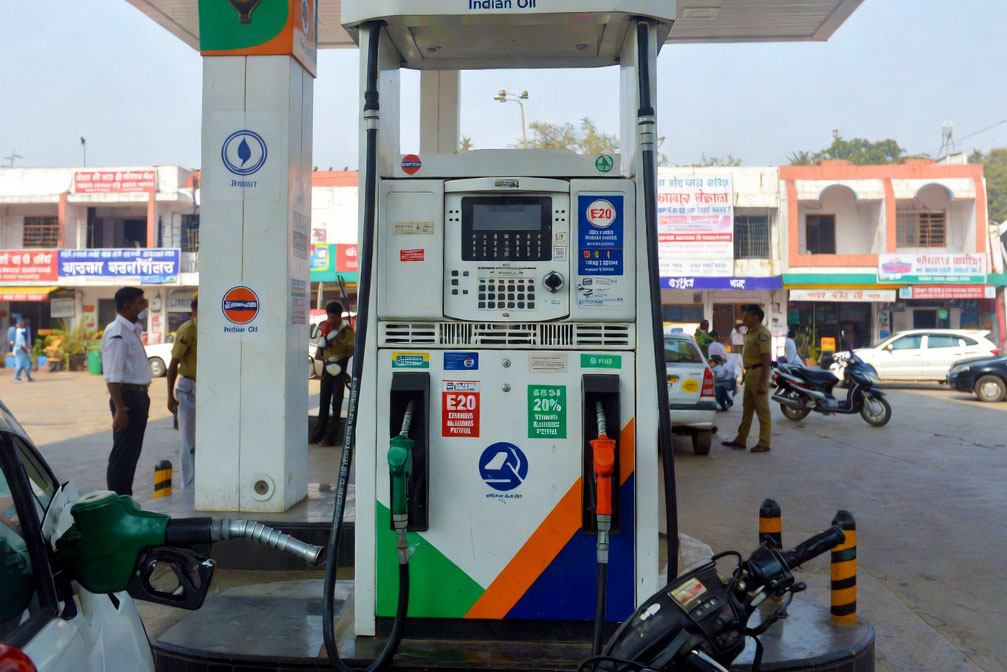
India quietly made 20% ethanol-blended petrol (E20) the default fuel across the country from April 2026. What began as a voluntary blending programme has now become a nationwide mandate, with regular petrol at virtually every pump containing 20% ethanol, whether consumers want it or not.
The government presents this as a major success story in reducing oil imports, supporting farmers, and cutting emissions. Officials highlight foreign exchange savings and record ethanol production. Yet, as the policy rolls out fully, questions about consumer choice, vehicle compatibility, mileage losses, and long-term costs are growing louder.
No real choice at the pump
Unlike many countries that offer both blended and unblended options, Indian motorists have little practical choice.
E20 is now the standard product dispensed nationwide. Pure petrol or lower blends are extremely difficult to find at most stations. While the government has begun preparations for multiple blends (E22, E25, E27, E30) in the future, for now, drivers must accept the mandated mix or hunt for scarce premium unblended variants.
Critics argue this removes consumer agency. Vehicle owners are effectively paying for ‘petrol’ while receiving a product diluted with ethanol, which has roughly 30% lower energy content than pure gasoline. Many report noticeable drops in mileage, leading to higher effective running costs despite any claims of environmental gains.
Vehicle compatibility and hidden costs
The government and automakers insist E20 is safe, citing trials by ARAI and others. Post-2023 vehicles are generally designed for it. However, millions of older cars and two-wheelers on Indian roads were built for E5 or E10 at best. While manufacturers claim many pre-2023 models can tolerate E20, independent reports and mechanics continue to flag concerns over accelerated wear on rubber seals, hoses, fuel pumps, and injectors due to ethanol’s corrosive and solvent properties.
The Supreme Court has also scrutinised the policy, with the government itself describing aspects of the E20 rollout as an ongoing ‘experiment’ whose full impact may not be clear until 2027. This raises uncomfortable questions: Who bears the cost if premature engine damage appears in older vehicles a few years down the line?
The ethical dilemma
At the heart of the criticism is a simple issue – transparency and consent.
Consumers filling their tanks are not clearly told they are buying a blended fuel with different performance characteristics. There is no prominent labelling at most pumps explaining the ethanol content, potential mileage loss, or suitability for their specific vehicle.
Supporters call it necessary nation-building that helps farmers and reduces dependence on oil. Detractors see it as a top-down decision that shifts costs onto ordinary motorists and two-wheeler owners while sugar mills and ethanol producers benefit.
Next target: Diesel
Having pushed E20 through, the government is now eyeing diesel. Direct ethanol blending in diesel proved technically challenging, so attention has turned to isobutanol, with plans for up to 15% blending under discussion. Early trials are underway, but diesel vehicle owners, already worried about mileage after seeing petrol’s experience, are watching nervously.
India’s ethanol programme reflects genuine ambition to achieve energy security in a country that imports over 85% of its crude oil. Yet the mandatory nature of E20, limited consumer options, and ongoing uncertainty for older vehicles have left many feeling that this grand transition is being imposed rather than introduced with adequate choice and preparation.
As higher blends loom and the diesel experiment begins, the coming year will test whether the benefits truly outweigh the hidden costs for India’s vast fleet of everyday vehicles.