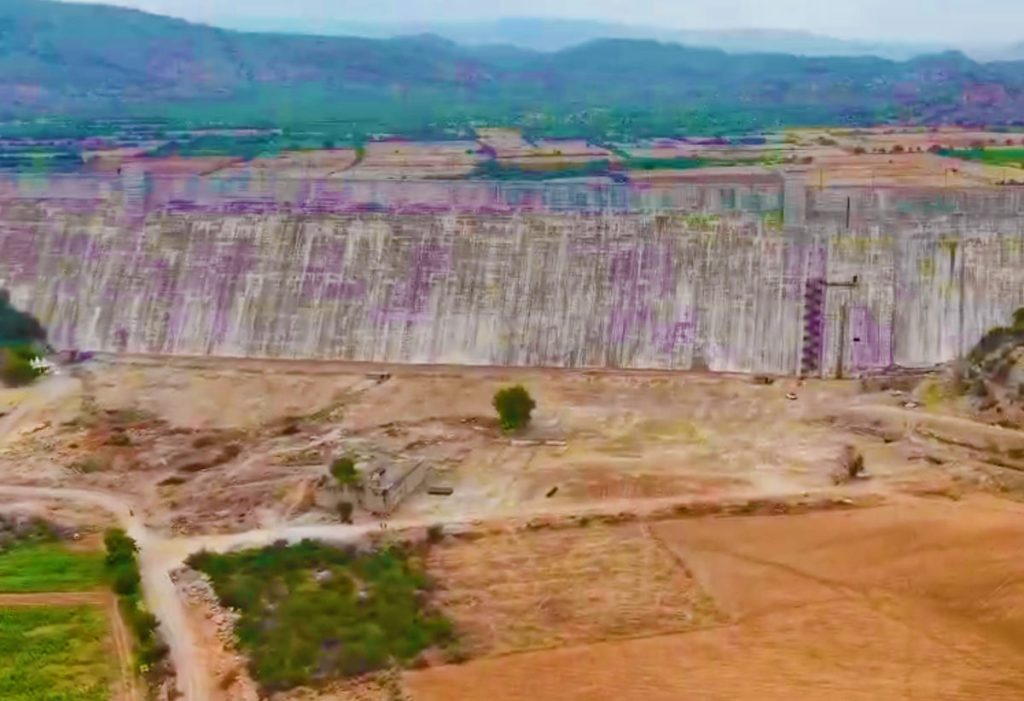
The inauguration of Phase-I of the Poola Subbaiah Veligonda Project has revived an old political question in Andhra Pradesh about who deserves the most credit for finally bringing the long-delayed irrigation project to reality. Is it the Telugu Desam Party (TDP) or the YSR Congress Party (YSRCP)?
The project is intended to address persistent water shortages in drought-prone parts of Andhra Pradesh, and is designed to divert Krishna water from the Srisailam reservoir toward the Nallamala Sagar system. Hence, it gives political mileage to those who contributed most to the project. So, let’s take a look at the timeline.
Chief Minister Chandrababu Naidu inaugurated Phase-I and released Krishna water into the project system on August 31, 2026. But the historical record makes one thing clear. Veligonda is not the achievement of one Chief Minister alone. Its story stretches across several governments, with different leaders contributing at different stages.
Which political party or chief minister gets the credit?
According to the Comptroller and Auditor General of India, the Andhra Pradesh government began assessing the feasibility of the project in February 1991, and a first Detailed Project Report was prepared in 1994. While Nedurumalli Janardhan Reddy was Chief Minister of AP in 1991, TDP Chief NT Rama Rao took office in late 1994.
Chief Minister Chandrababu Naidu laid the foundation stone for the project in March 1996. Thirty years later, as Chief Minister again, Naidu inaugurated its first phase in 2026. That gives the TDP leader a unique place in the project’s history, as he was present at both the beginning of the project’s journey and the latest commissioning milestone. However, laying the foundation stone and actually executing a large irrigation project are two different measures of credit.
The biggest shift came after YS Rajasekhara Reddy became Chief Minister in 2004. He changed the scale of the Veligonda project in 2005 on the basis of a revised DPR. His Congress government incorporated Veligonda into the large-scale irrigation push associated with Jalayagnam. Construction of the major components began during his government’s tenure, turning the project from a long-discussed proposal into a substantial infrastructure undertaking.
The twin tunnels that are crucial to the Veligonda project were completed during YS Jagan’s YSRCP government. The first tunnel was completed in 2021, while the second was completed in January 2024. Jagan inaugurated the twin tunnels on March 6, 2024. This part of the project’s completion gives the YSRCP a legitimate claim to a major part of the project’s construction history.
So, Mr. Jagan accuses Chandrababu Naidu of taking credit for work carried out by earlier governments. In a statement issued ahead of the 2026 Phase-I inauguration, Jagan argued that his father’s government gave Veligonda its comprehensive shape and that his own government completed the difficult twin tunnels.
But Chandrababu Naidu’s latest role also cannot be dismissed. When he returned to power in 2024, substantial works remained before Veligonda could deliver water effectively to the intended beneficiaries. His government accelerated work on the feeder canal and other infrastructure and pushed toward actual water delivery.
In February 2026, CM Chandrababu Naidu laid the foundation stone for ₹456 crore of feeder-canal lining works and said additional funds were being mobilised to complete the remaining works. By the end of August, his government announced that Phase-I had been completed at a cost of about ₹7,983 crore, with twin tunnels extending 18.8 km and feeder-canal works covering 21.8 km completed under the first phase. The government said Phase-I would store 10.70 TMC of Krishna water in Nallamala Sagar, provide irrigation to about 1.19 lakh acres and supply drinking water to roughly four lakh people.
So, who deserves the most credit for the Veligonda project? The answer depends on what exactly is being credited.