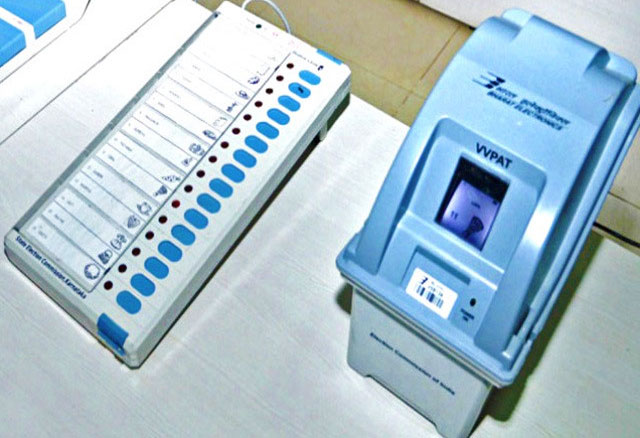
With the first phase of voting for the West Bengal Legislative Assembly just 12 days away, the state is witnessing an intense political showdown between the ruling Trinamool Congress (TMC) and the Bharatiya Janata Party (BJP).
The 294-member assembly will go to the polls in two phases on April 23 and April 29, with results expected on May 4. The contest is shaping up as one of the most closely watched in recent years, fueled by sharp disagreements over electoral rolls, government employee benefits, and governance promises.
The TMC, led by Chief Minister Mamata Banerjee, is seeking a fourth consecutive term after its decisive 2021 victory. Ms. Banerjee has announced that her party will contest 291 seats, leaving three in the Darjeeling hills for its ally, the Bharatiya Gorkha Prajatantrik Morcha.
The BJP, under state leader Suvendu Adhikari, has intensified its campaign with star campaigners including Prime Minister Narendra Modi and Union Home Minister Amit Shah. The party recently unveiled its ‘Sankalp Patra’ manifesto, promising zero tolerance on infiltration, financial aid for women and unemployed youth, support for farmers, and swift implementation of the 7th Pay Commission if it forms the government.
A major flashpoint in the run-up to polling has been the Election Commission’s Special Intensive Revision (SIR) of electoral rolls. Over 90 lakh names, roughly 91 lakh according to official figures, have been deleted from the state’s voter list, shrinking the electorate from about 7.66 crore to around 6.77 crore. Of the deletions, approximately 63% involved Hindus and 34% Muslims, a figure that has drawn criticism, given Muslims comprise only 27% of the state’s population per the 2011 Census. Further adjudication removed another 27 lakh names, with the highest numbers reported from Muslim-dominated areas like Murshidabad and parts of the Matua refugee belt. Both TMC and BJP have accused each other of manipulating the process, while anxious voters have queued at tribunals to seek reinstatement.The TMC has alleged systematic disenfranchisement, with Banerjee warning that voting rights are being ‘snatched’ and could lead to broader citizenship issues.
Compounding the tensions is the long-standing dearness allowance (DA) dispute involving nearly 20 lakh state government employees and pensioners. State employees currently receive DA at 22% of basic pay, far below the 55% for central government staff. A Supreme Court directive has pressured the state to clear arrears estimated at ₹41,000 crore. The TMC government announced that payments under the ROPA 2009 structure would begin from March 2026, a move Banerjee highlighted as fulfillment of a promise. The BJP, however, has seized on the issue, with Amit Shah pledging full DA clearance and 7th Pay Commission rollout within 45 days of forming a government. The controversy has become a potent campaign plank, especially among the large employee base.
Opinion polls paint a picture of a tight race. Recent surveys suggest the TMC holds a slight edge in vote share (around 44%) over the BJP (around 40%), though the BJP has made notable gains in several regions since 2021. The Left Front, wiped out in the previous assembly polls, is attempting a comeback without its former Congress ally, while the Congress is contesting independently across all seats.
Smaller players and independent candidates add further complexity in a state where local dynamics often decide outcomes. Security has been stepped up significantly, with central forces deployed to ensure free and fair voting amid past concerns over violence. Both major parties have traded sharp rhetoric, the TMC labeling the BJP’s approach as anti-Bengal, while the BJP accuses the ruling dispensation of mismanagement and ‘nirmam’ (ruthless) governance.
As campaigning reaches fever pitch, the coming weeks will test not only the organisational strength of the TMC and BJP but also the resilience of West Bengal’s democratic processes. With voter lists redrawn, employee discontent simmering, and national leaders fully engaged, the 2026 assembly elections promise to reshape the state’s political future.