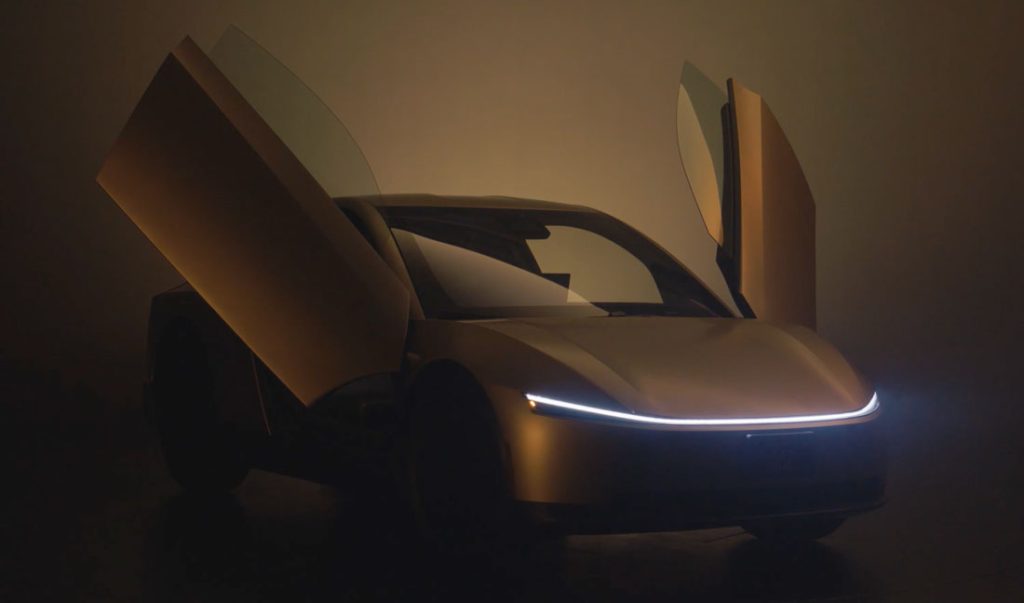
Tesla’s purpose-built Cybercab robotaxis, now entering public service in Austin as part of the company’s expanding autonomous ride-hailing fleet, feature a completely redesigned braking system that eliminates brake fluid, hydraulic lines, and a traditional master cylinder.
How it’s done
The two-seater vehicles rely on a dry electromechanical brake-by-wire setup. Each brake caliper is equipped with its own electronically controlled actuator that clamps the pads against the rotor on command from the vehicle’s autonomy software. There is no hydraulic circuit connecting the wheels and no fluid reservoir or plumbing routed through the chassis.
Tesla boss Elon Musk highlighted the advantage on X earlier this month, stating that electric brakes avoid ‘the complexity of a hydraulic system: no need to route plumbing all around the car.’
Because the Cybercab has no steering wheel, accelerator pedal, or brake pedal, braking demand originates entirely from the unsupervised full self-driving stack rather than a human driver. This makes the Cybercab the first Tesla production vehicle to forgo brake fluid entirely.
Conventional hydraulic systems require periodic fluid replacement due to moisture absorption and potential leaks; the new design removes that maintenance requirement, reduces the number of components, and simplifies high-volume manufacturing by allowing more parallel assembly without routing fluid lines. Independent control at each wheel also enables more precise, software-coordinated braking force distribution.
The Cybercab continues to use conventional brake discs and pads, with regenerative braking handling much of the everyday deceleration, particularly in urban environments. The electronic actuators provide the friction braking needed for stronger stops.
Tesla has begun deploying the vehicles for paid robotaxi rides in Austin, positioning the simplified architecture as a key enabler for high-utilization autonomous fleets.
While other manufacturers have introduced mixed electro-hydraulic systems, the Cybercab’s fully fluid-free approach marks a notable step in simplifying vehicle architecture for driverless operation. Regulators continue to review aspects of the vehicle’s certification for public roads, though the focus has primarily been on the absence of traditional driver controls rather than the braking system itself.
As Tesla scales its Robotaxi network, the elimination of brake fluid stands as one of the more significant engineering departures from conventional automotive design.