As India marked National Space Day, the official account of Prime Minister Narendra Modi’s Office amplified a clear message that domestically designed and manufactured semiconductor chips are now integral to the country’s flagship space missions, spanning lunar exploration, solar observation, satellites, and launch vehicles.
PM Modi posted on X, saying, ‘Chandrayaan-3 to Aditya-L1: Made-in-India chips power India’s space missions,’ signifying a tangible milestone in technological self-reliance.
Union Minister for Electronics and Information Technology Ashwini Vaishnaw earlier noted that ‘Made in India chips are powering Indian Space Missions.’
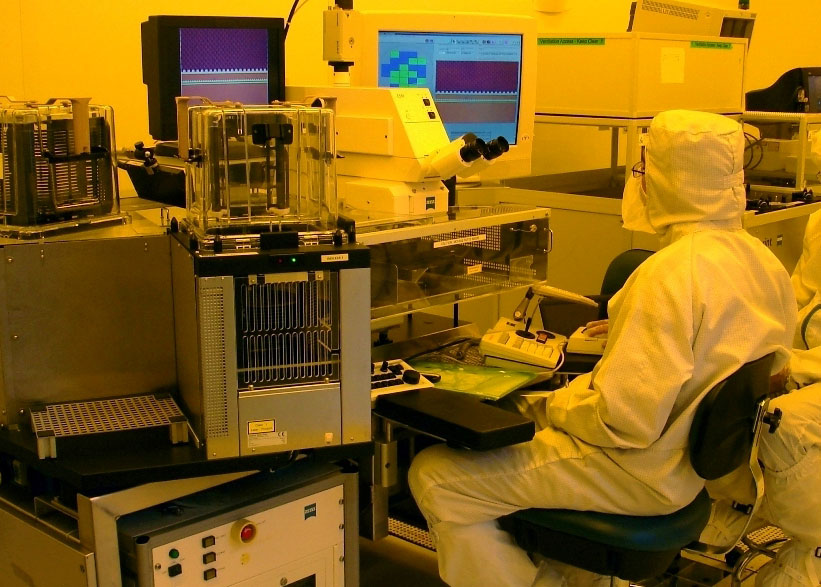
According to the Ministry of Electronics and Information Technology (MeitY), these components, developed primarily at the Semiconductor Laboratory (SCL) in Mohali, are flight-grade devices engineered to endure the extreme radiation, temperature swings, and vacuum of space. SCL’s portfolio includes radiation-hardened chips, electro-optical CCD and CMOS imagers, application-specific integrated circuits (ASICs), and sensors for pressure, acceleration, temperature, and acoustics.
Concrete applications illustrate the progress. The Chandrayaan-3 lunar lander, which achieved a historic soft landing near the Moon’s south pole in August 2023, carried an Indian-made camera chip from SCL Mohali for its imaging systems.
India’s solar observatory Aditya-L1, launched in 2023 and positioned at the L1 Lagrange point, relies on radiation-hardened analogue-to-digital converter (ADC) chips manufactured by SCL to support scientific observations of the Sun. Beyond payloads, SCL’s Vikram processor provides onboard computing for satellites and launch vehicles, handling navigation, guidance, and control functions critical during ascent and operations.
This development builds on earlier milestones. In 2025, the VIKRAM-3201, a fully indigenous 32-bit microprocessor qualified for harsh launch-vehicle environments, was unveiled by Prime Minister Narendra Modi at Semicon India. Developed jointly by ISRO’s Vikram Sarabhai Space Centre and SCL, it advances the earlier 16-bit VIKRAM-1601 that has flown since 2009.
Parallel efforts, including collaborations between ISRO and institutions like IIT Madras on RISC-V-based controllers, further expand the indigenous ecosystem.
Analytically, these chips represent more than technical substitution. Space-grade semiconductors have long been a strategic vulnerability due to reliance on foreign suppliers, potential export controls, and supply-chain risks. By producing radiation-hardened components domestically, India reduces dependency, shortens lead times, and retains control over critical intellectual property. This aligns with the broader Atmanirbhar Bharat and India Semiconductor Mission frameworks, which aim to build design-to-fabrication capabilities.
SCL’s role demonstrates that specialized, high-reliability production is feasible even as commercial-scale fabs (such as those under the Semicon India programme) continue to scale.
The implications extend to future missions. With ISRO shifting focus toward research and development while private players expand launch and satellite capabilities, indigenous electronics lower costs and enhance resilience for Gaganyaan human spaceflight, interplanetary probes, and expanded constellations. Officials note that growing domestic capacity strengthens technological independence across the space ecosystem.