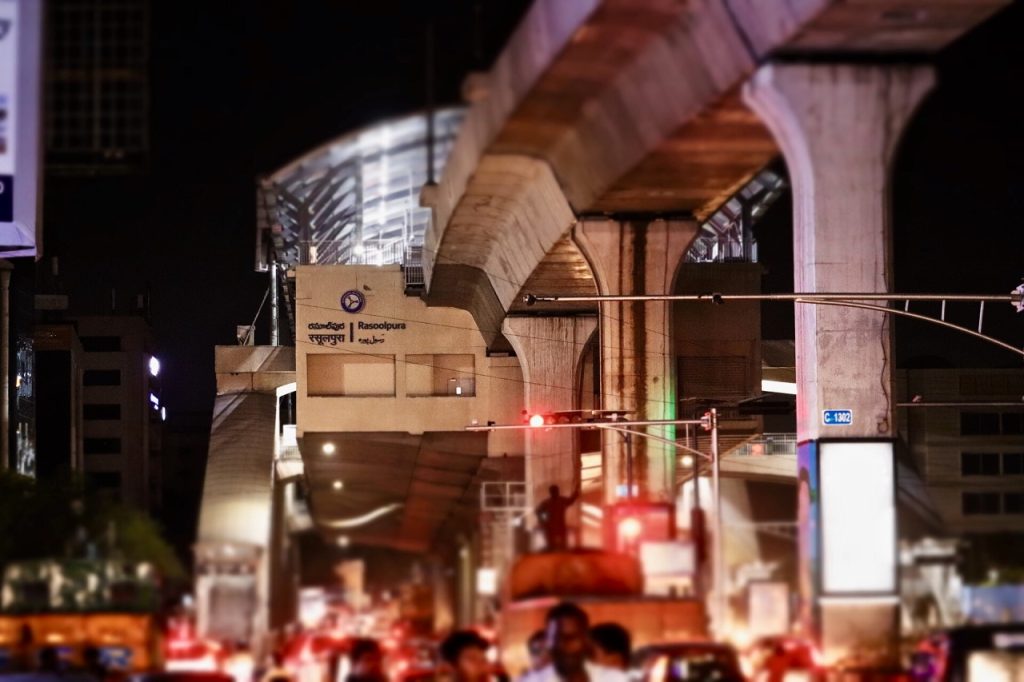
The Telangana government is advancing rapidly toward assuming complete ownership of the 69-kilometre Hyderabad Metro Rail Phase-I network, following the state cabinet’s approval of the acquisition from concessionaire Larsen & Toubro (L&T) Metro Rail Hyderabad Limited.
The landmark decision, cleared during a February 23 cabinet meeting chaired by Chief Minister Revanth Reddy, sets a firm target for the transition to conclude by March 31, 2026, ushering the iconic urban transit system into full public control.
The takeover encompasses the three operational corridors, Red Line (LB Nagar to Miyapur), Blue Line (Nagole to Raidurg), and Green Line (JBS to MGBS), which together serve lakhs of daily commuters across the sprawling capital region.
Valued at approximately ₹15,000 crore, the transaction includes the absorption of around ₹13,000 crore in existing debt obligations and a payment of roughly ₹2,000 crore to L&T for its equity stake. Independent assessments place the project’s asset value between ₹19,000 crore and ₹22,000 crore, meaning the state is securing the infrastructure at an effective discount of about 22 per cent.
The government’s takeover move stems from L&T’s decision to exit the ownership and operations segment of metro projects, coupled with the Centre’s condition that Phase-II expansion proceed under a unified entity.
Union Minister G. Kishan Reddy had earlier emphasised that central funding and approvals for the next phase, encompassing up to 162 kilometres across multiple corridors, hinge on the state first clarifying Phase-I ownership and submitting a robust Detailed Project Report (DPR).
With the takeover, Telangana aims to fast-track joint-venture negotiations with the Union government for Phase-II (A and B), which could add significant new lines at an estimated combined cost exceeding ₹43,000 crore.
To finance the acquisition, the state is exploring low-interest, long-term loans from institutions such as the Indian Railway Finance Corporation (IRFC) and plans to refinance high-cost commercial borrowings into more sustainable debt structures. Officials are also considering asset monetisation and other revenue-generation strategies to manage the fiscal load without disrupting services.
A key assurance for commuters is continuity. French operator Keolis, currently handling day-to-day operations and maintenance under contract with L&T, will continue in the same role post-takeover, with the agreement extended by one year beyond its November 2026 expiry.
The government has stressed that the shift will not affect fares, schedules, or safety standards, prioritising seamless public transport amid Hyderabad’s rapid urban growth.
Revenue Minister Ponguleti Srinivasa Reddy, briefing the media after the cabinet session, described the acquisition as a strategic step to remove ownership bottlenecks and accelerate metro expansion. ‘This will enable us to push Phases II and III more aggressively, with stronger central support,’ he said.
While the cabinet has directed immediate preparatory actions, including legal due diligence, asset-liability transfer protocols, and audit finalisation, some procedural details, such as comprehensive audit clearances, remain in progress. A high-level committee led by Deputy Chief Minister Bhatti Vikramarka is overseeing the process to ensure transparency and efficiency.
The takeover marks one of the largest state-level infrastructure acquisitions in recent Indian history and reflects the Revanth Reddy administration’s push to consolidate urban mobility under direct government stewardship. As the March 31 deadline approaches, focus now shifts to finalising financing, regulatory approvals, and the smooth handover that will position Hyderabad Metro for its next phase of growth.