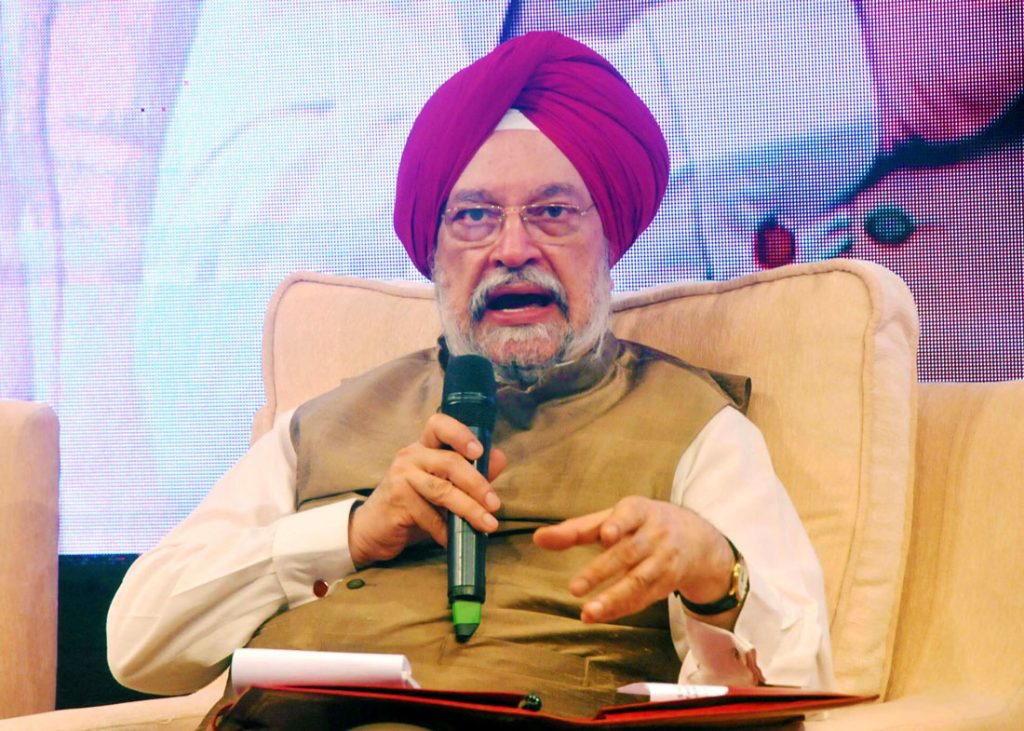
A fresh wave of controversy has engulfed India’s political landscape following the unsealing of additional emails from the late Jeffrey Epstein’s archives, which reveal communications involving Union Petroleum Minister Hardeep Singh Puri.
The disclosures, part of ongoing US court proceedings related to the convicted sex offender’s network, have prompted sharp denials from Mr. Puri and accusations of impropriety from opposition leaders, intensifying debates over transparency and associations with controversial figures.
The emails, dating back to 2014-2015, emerged from documents released by the US Justice Department in late January 2026, as part of a broader tranche that includes correspondence with influential individuals across the globe. At the time, Mr. Puri was not holding a ministerial position but was actively engaged in diplomatic and international affairs, including roles with organizations like the International Peace Institute (IPI).
The communications reportedly touch on professional topics, such as discussions around India’s digital initiatives, with no direct references to Epstein’s criminal activities.
However, the sheer volume and nature of the exchanges, ranging from one isolated email according to Mr. Puri’s initial statements to multiple interactions as detailed in the files, have raised eyebrows about the extent of their familiarity.
Minister Hardeep Puri addressed the allegations head-on during a press conference on February 11, 2026, firmly rejecting any suggestion of misconduct. He clarified that his interactions with Epstein were limited to 3-4 meetings as part of official delegations and emphasized that these were unrelated to the financier’s illicit operations, such as those on his infamous private island. ‘I met him in the context of an international organization’s work, and our exchanges were purely professional,’ Minister Puri stated, adding that Epstein had even described him as ‘two-faced’ in one message, which he dismissed as irrelevant to any wrongdoing.
The minister further accused critics of engaging in a smear campaign driven by political motives, particularly targeting Congress MP Rahul Gandhi for amplifying the issue in Parliament. The scandal gained momentum when Mr. Gandhi invoked the Epstein files during a Lok Sabha session earlier this week, questioning the government’s associations and demanding accountability. The opposition leader highlighted excerpts from the documents, alleging that Minister Puri’s name appeared in contexts that warranted scrutiny and linked it to broader concerns about influence peddling.
The Congress party escalated its offensive on February 11, posing six questions to Puri, including why he sought advice from Epstein on matters like Digital India and the implications of such consultations for national interests.
Social media has amplified these claims, with some unverified posts suggesting up to 430 emails between the two, though official records indicate a more modest number of exchanges.
Government allies have rallied behind Minister Hardeep Puri, portraying the opposition’s tactics as ‘buffoonery’ aimed at entertainment rather than substantive evidence. The Bharatiya Janata Party (BJP) countered by pointing out that the emails predate Puri’s entry into active politics and involve no criminal elements, urging a focus on factual context over sensationalism.
The incident is part of a larger international ripple from the Epstein files, which have implicated figures from various countries, including Australia, the UK, and Slovakia, in non-criminal but eyebrow-raising connections.