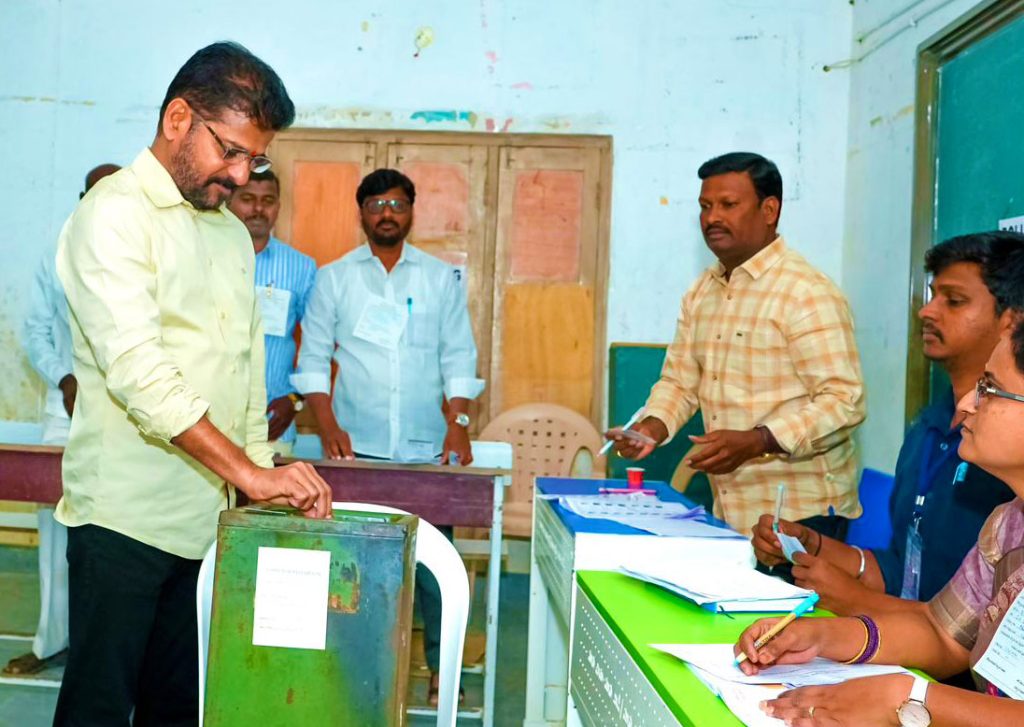
The Telangana municipal elections, covering 116 municipalities and seven municipal corporations, concluded peacefully on February 11, 2026, with voting for thousands of wards across the state.
Over 52 lakh eligible voters participated in the polls to elect councillors and corporators for 2,569 wards in municipalities and 412 wards in municipal corporations, totaling nearly 3,000 wards.
More than 13,000 candidates were in the fray, reflecting high stakes in urban local governance.
Polling stations operated from 7 AM to 5 PM, and the process was monitored through webcasting to ensure transparency and order.
The Telangana State Election Commission reported a healthy overall voter turnout of 73.01%. Turnout varied across regions, with some districts like Khammam exceeding 82% and others showing strong participation in places such as Kothagudem.
No major incidents of violence or irregularities were reported, and authorities confirmed no need for repolling at any booths.
The elections saw a keen contest primarily among the ruling Congress party, the Bharat Rashtra Samithi (BRS), the Bharatiya Janata Party (BJP), and the All India Majlis-e-Ittehadul Muslimeen (AIMIM).
Exit polls released shortly after polling ended painted an optimistic picture for Congress. Surveys, including one from People’s Pulse, projected the ruling party securing victories in 68 to 76 of the 116 municipalities, potentially controlling a majority of these bodies.
In the seven municipal corporations, estimates suggested Congress could win around five, with the BJP possibly taking two.
The BRS was expected to retain influence in 29 to 36 municipalities, while the BJP and others were projected to secure fewer seats. Ward-level projections indicated Congress leading with an estimated 1,210 to 1,290 wards, followed by BRS at 860 to 930, BJP around 250 to 270, and AIMIM in the range of 35 to 44 in its stronghold areas.
Vote share estimates placed Congress at about 36%, BRS at nearly 30%, and BJP at around 19%.
State Election Commissioner Rani Kumudini praised the smooth conduct of the elections, highlighting the role of technology and administrative oversight in maintaining fairness.
Counting of votes is scheduled for February 13, 2026, when the full results will determine control of these urban local bodies and set the tone for local governance. Indirect elections for positions such as mayors, deputy mayors, chairpersons, and vice-chairpersons are expected shortly thereafter.
These polls mark an important test for the ruling Congress government under Chief Minister Revanth Reddy, coming amid ongoing administrative changes, including the recent reorganization of the Greater Hyderabad Municipal Corporation area into three separate entities for more efficient urban management.
The outcomes will influence civic development, infrastructure projects, and everyday services in Telangana’s growing towns and cities.