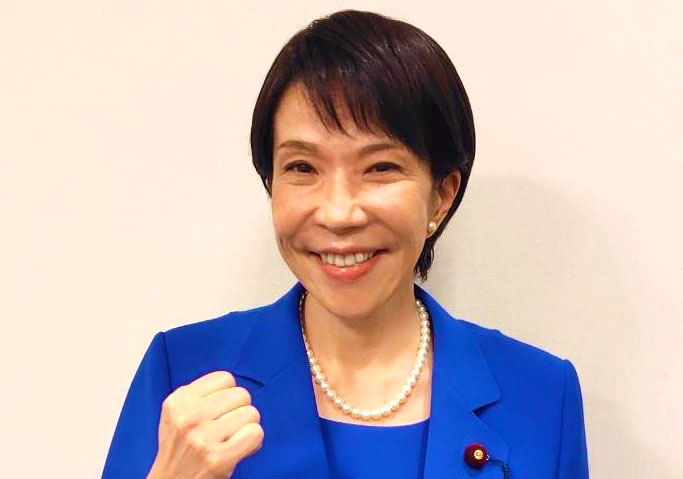
Talk about breaking the glass ceiling…
In a moment that reverberated across Japan’s male-dominated political landscape, Sanae Takaichi was formally sworn in as the nation’s 104th prime minister on October 21, 2025, etching her name into history as the country’s first woman to hold the office.
The 64-year-old conservative firebrand, a longtime protégé of the late Shinzo Abe, secured the post with 237 votes in the Lower House, four more than the required majority, defeating opposition leader Yoshihiko Noda’s 149 tally in a swift first-round victory.
Her ascension caps a whirlwind of intraparty maneuvering and coalition brinkmanship, offering a fragile lifeline to the scandal-plagued Liberal Democratic Party (LDP) amid its deepest crisis in decades.
Road to the top
Ms.Takaichi’s path to power began with her upset win in the LDP presidential election on October 4, where she edged out five rivals, including agriculture minister Shinjiro Koizumi, in a runoff by a decisive 185-156 margin.
Born in Nara Prefecture and a Kobe University graduate, Ms. Takaichi’s early career as a television presenter in the 1980s gave way to a storied political ascent.
Elected to the Lower House in 2005, she rose through Shinzo Abe’s inner circle, serving as economic security minister and internal affairs minister, while championing his signature policies on defense and economic revival. Often dubbed Japan’s ‘Iron Lady’ for her admiration of Margaret Thatcher, Takaichi embodies a blend of unyielding nationalism and economic assertiveness, vowing in her victory speech to work ‘boldly and tirelessly, unafraid of change’ to restore Japan’s global stature.
The backdrop to her triumph is one of turmoil for the LDP, which has governed Japan for nearly all of the postwar era but suffered humiliating defeats in the October 2024 general election and the July 2025 Upper House poll. These losses stripped the party of its majorities in both parliamentary chambers for the first time since 1955, fueled by voter fury over a slush-fund scandal and spiraling inflation that has eroded household budgets. Outgoing Prime Minister Shigeru Ishiba, who lasted just one year in office, resigned on October 21 alongside his Cabinet, citing the need for fresh leadership to navigate the ‘three-month political vacuum’ left by the party’s stumbles. Mr. Ishiba’s exit, announced amid mounting internal pressure from the party’s right wing, underscored the LDP’s desperate bid to unify and regain trust.
Ms. Takaichi’s confirmation hinged on a last-minute coalition pact with the right-leaning Japan Innovation Party (JIP), led by Hirofumi Yoshimura, which provided the slim margin needed to avoid a runoff. The alliance, sealed on October 20, marked a departure from the LDP’s long-standing partnership with the more centrist Komeito, now estranged after 26 years, signaling a sharper pivot toward hawkish policies on security and immigration.
Yet the coalition falls short of a full majority in the Lower House, forcing Ms. Takaichi to court opposition support on key votes and highlighting the fragility of her minority government. As she met with Emperor Naruhito to receive her formal appointment, Ms. Takaichi wasted little time assembling her Cabinet, appointing just two women to the lineup, a move that drew immediate scrutiny despite her historic milestone.
Critics, including sociologist Chizuko Ueno, argued that while the elevation boosts Japan’s dismal gender equality ranking (118th out of 148 nations per the World Economic Forum’s 2025 index), it falls short of transformative change for women in politics, where female Lower House members still comprise only 15.7% despite a record 73 elected last year. Takaichi has spoken personally about menopause to raise awareness on women’s health, but has stonewalled progressive reforms, opposing same-sex marriage, separate surnames for married couples, and changes to the male-only imperial succession.
What are Takaichi’s key policies?
On the policy front, Takaichi’s agenda echoes Abe’s ‘Abenomics’ playbook, promising aggressive fiscal stimulus and monetary easing to combat deflation’s stubborn return and tame inflation now pinching consumers.
A vocal China hawk, she advocates bolstering Japan’s military, revising the pacifist constitution, and deepening alliances, moves that could strain ties with Beijing while strengthening bonds with the U.S. and Taiwan. Taiwan President Lai Ching-te hailed her as a ‘steadfast friend,’ eyeing expanded cooperation in trade, security, and tech.
Her international debut looms large with a high-stakes meeting with U.S. President Donald Trump during his upcoming visit, followed by the APEC summit in South Korea, where she’ll pitch ‘Japan is Back!’ to global partners.
Markets reacted cautiously to the news, with the Nikkei dipping 1.2% on concerns over her criticism of the Bank of Japan’s recent rate hikes and potential disruptions to trade-sensitive policies.
Immigration, a hot-button issue amid a tourism boom and record foreign residents, also featured prominently in her campaign; she has called for deporting ‘economic migrants’ posing as refugees and cracking down on unruly tourists.
For many Japanese women, Takaichi’s breakthrough carries symbolic weight, even if her conservatism tempers expectations for sweeping gender reforms.
In her first address as prime minister, Takaichi struck an assertive tone: ‘Together, we will forge a strong, prosperous Japan for the nation and its people.’ Whether her iron resolve can mend a fractured mandate remains the defining challenge of her unexpected reign.