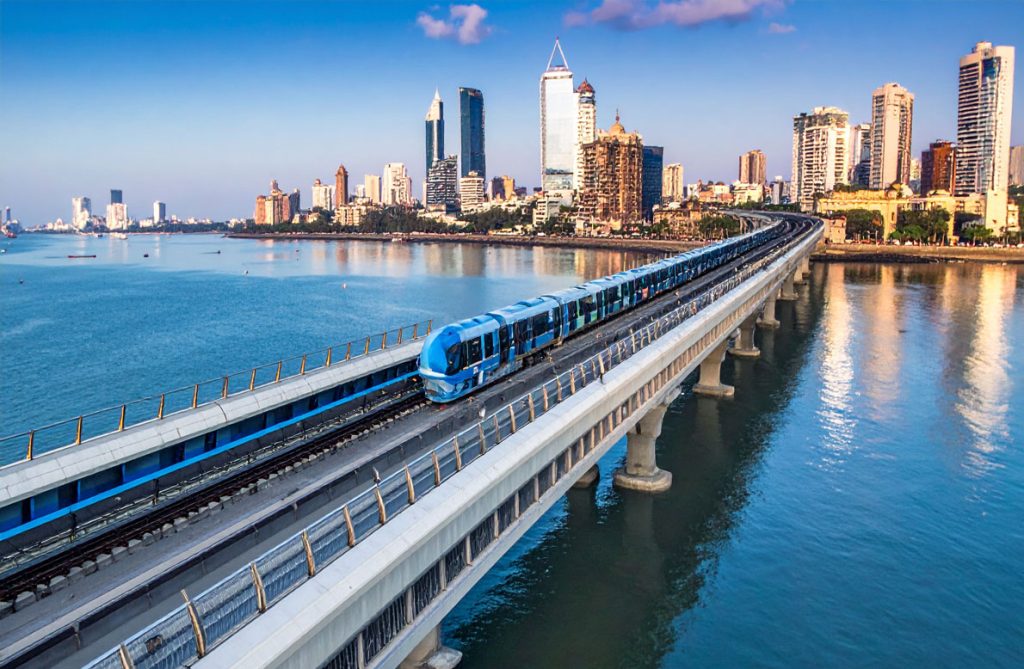
Just two weeks after its grand unveiling, Mumbai’s Aqua Line has swiftly woven itself into the fabric of daily life for over 160,000 commuters each weekday, transforming the city’s notorious north-south commute from a grueling two-hour ordeal into a swift under-60-minute glide beneath the bustling streets.
The fully operational underground marvel, Mumbai Metro Line 3, stands as India’s most ambitious subterranean rail project to date, a testament to engineering grit amid urban chaos.
Prime Minister Narendra Modi lit the ceremonial torch on October 8, 2025, inaugurating the line’s final 10.99-kilometer stretch from Acharya Atre Chowk in Worli to Cuffe Parade in South Mumbai’s business enclave. The event, synchronized with the launch of the Navi Mumbai International Airport, symbolized a dual leap for Maharashtra’s infrastructure ambitions. Passenger services roared to life the next morning at 5:55 a.m., with trains departing both terminals amid cheers from early risers eager to ditch the diesel fumes and pothole-pocked roads above.
Spanning 33.5 kilometers from the verdant Aarey JVLR depot in the north-central suburbs to the skyscraper-shadowed Cuffe Parade terminus, the Aqua Line burrows through 26 underground stations and one at-grade stop, threading Mumbai’s dense tapestry of colonial relics, financial powerhouses, and teeming residential pockets. Its path slices under the Mithi River via a 170-meter twin tunnel, a feat completed in 2020 after meticulous geological surveys navigated basalt rock and reclaimed marshlands.
The corridor’s 27 stations form a neural network of connectivity, linking icons like the Reserve Bank of India, Bombay Stock Exchange, and Mantralaya with cultural gems such as Marine Drive and the Gateway of India.
Key interchanges amplify its reach. Marol Naka dovetails with Metro Line 1’s Blue Line for eastern suburb hops; CSMT fuses with Central and Harbour suburban rails for long-haul treks; Churchgate and Mumbai Central sync with Western Line locals, easing the crush on platforms that once swallowed 7 million souls daily; and Mahalaxmi bridges to the Mumbai Monorail, funneling riders toward the iconic Race Course. Those going to and coming from the airport can rejoice too – with direct drops to Chhatrapati Shivaji Maharaj International’s T1 and T2 terminals, slashing cab fares and taxi snarls for the 50 million annual flyers.
Born from a 2004 master plan to unclog Mumbai’s veins, the project cleared central approval in 2012 and broke ground in 2016 under the Mumbai Metro Rail Corporation (MMRCL). A consortium of Japanese, Indian, and private funders poured in ₹37,276 crore, headlined by a ₹13,235 crore soft loan from the Japan International Cooperation Agency.
Seventeen tunnel-boring machines churned through 41 breakthroughs over eight years, deploying 15,000 workers who dodged monsoons, pandemics, and public outcry over Aarey forest tree-felling delayed the depot by two years until a 2022 relocation compromise.
Phased rollout tempered the wait. October 2024 brought the 12.7-km northern leg from Aarey to Bandra Kurla Complex alive with 10 stations; May 2025 extended it 9.77 km south to Acharya Atre Chowk, adding six more. The capstone phase, at ₹12,200 crore, unlocked 11 southern stations – Science Museum, Mahalaxmi, Mumbai Central, Grant Road, Girgaon, Kalbadevi, CSMT, Hutatma Chowk, Churchgate, Vidhan Bhavan, and Cuffe Parade, heralding full end-to-end service.