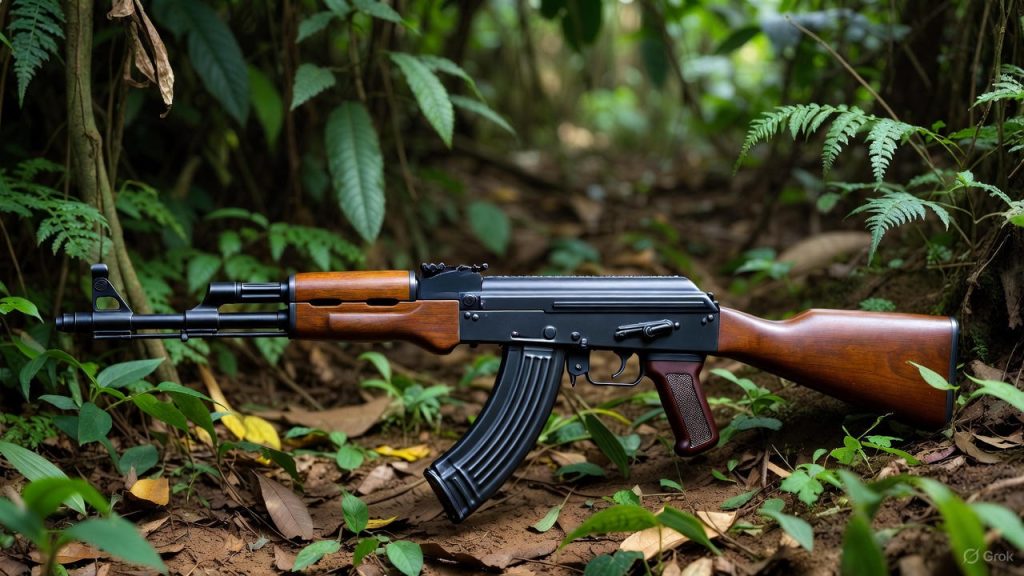
Leaders of a prominent Maoist faction operating across the tri-junction forests of Maharashtra, Madhya Pradesh, and Chhattisgarh, known as the MMC Special Zonal Committee, have extended a formal plea to authorities.
The group, affiliated with the banned Communist Party of India (Maoist), has proposed suspending its armed operations and coordinating a collective disarmament by February 15, 2026. The announcement, conveyed through an open letter to the chief ministers of the three states, arrives amid intensified government crackdowns and comes just months before the government’s deadline to eradicate left-wing extremism nationwide by March 31, 2026.
The letter, signed by MMC spokesperson ‘Anant,’ seeks time to facilitate internal consultations and the safe assembly of dispersed cadres to coordinate a surrender. It explicitly requested a cessation of anti-Naxal security operations during this period to prevent further casualties and allow for unhindered negotiations. ‘We seek this breathing space not out of hidden agendas, but to reach a collective resolution that paves the way for rehabilitation,’ Anant wrote, referencing recent high-profile defections, including that of a central committee member in neighboring Telangana, as evidence of waning morale within the ranks.
The latest development follows a string of setbacks for the Maoists, who have seen their influence erode significantly over the past decade. Official figures indicate that more than 2,200 insurgents have surrendered in Chhattisgarh alone since 2023, with over 450 neutralized in encounters.
Madvi Hidma, one of the most prominent Maoist commanders, was killed in an encounter a week ago, on November 18.
The MMC zone, spanning dense, mineral-rich forests that have long served as a logistical backbone for the broader Maoist network, represents one of the insurgency’s most fortified redoubts. A successful mass surrender here could swell the ranks of rehabilitated fighters by hundreds, dealing a substantial blow to the group’s operational capacity in central India.
Yet, the proposal has ignited cautious optimism tempered by skepticism among security experts and policymakers.Union Home Minister Amit Shah, who has spearheaded the anti-Maoist campaign, reiterated in a recent address that the government’s March 2026 target remains non-negotiable, emphasizing rehabilitation incentives like financial aid, job training, and land allotments for those who lay down arms.
Chhattisgarh Chief Minister Vishnu Deo Sai, whose state bears the brunt of Maoist violence, described the letter as a ‘welcome signal’ but stressed the need for verifiable commitments before any operational pauses.
The million-dollar question, however, lingers. Would approving this surrender effectively dismantle the Maoist movement in its entirety? Analysts are divided, but the consensus leans toward ‘no,’ at least not immediately or comprehensively.
Government data shows a 70% drop in Maoist-related incidents since 2010, but 2025 has still witnessed over 100 deaths, including security personnel and civilians.
The CPI (Maoist), founded in 2004 through the merger of several splinter groups, once commanded an estimated 10,000 armed cadres across nine states. Today, that number has reportedly dwindled to under 2,000, confined largely to remote pockets in Chhattisgarh’s Bastar division and the Andhra-Odisha border. While the MMC zone accounts for a critical mass, perhaps 40-50% of active fighters, other divisions such as the Dandakaranya Special Zonal Committee and the Andhra Pradesh State Committee maintain independent structures with their own leadership and arsenals.
Historical precedents underscore the challenges. Similar ceasefire overtures in the early 2010s fizzled amid mutual distrust, leading to renewed clashes. Moreover, the Maoists’ grievances, rooted in land rights, tribal displacement from mining projects, and economic marginalization, persist, potentially fueling recruitment if rehabilitation efforts falter.