In a candid exchange that has reverberated across global security circles, US President Donald Trump asserted during a primetime interview that Pakistan is among a handful of nations covertly conducting nuclear weapons tests.
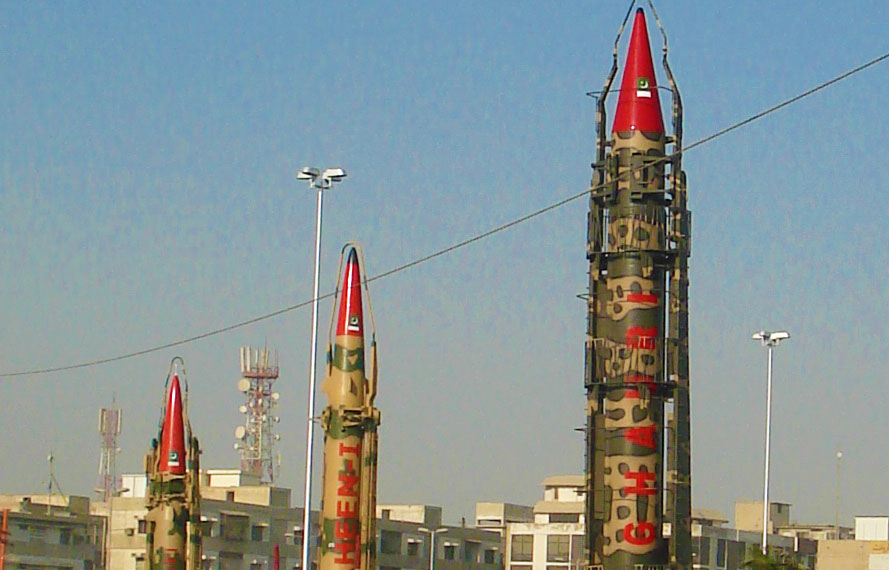
The remark, delivered amid discussions on revitalizing America’s own nuclear arsenal, has ignited fierce debate over its veracity and potential ramifications for South Asian stability. Speaking to CBS’s ’60 Minutes’ on Sunday evening, Mr. Trump justified his administration’s push to resume US nuclear testing, halted since 1992, by pointing to perceived provocations from adversaries. ‘Pakistan’s been testing,’ he stated flatly, grouping the South Asian nation with Russia, China, and North Korea.
‘They test way underground where people don’t know exactly what’s happening, you feel a little bit of vibration.’ The president framed these activities as a dangerous imbalance, arguing that the US must match such efforts to maintain deterrence.
The interview clip, which aired unedited on President Trump’s official channels, quickly went viral, amassing millions of views and prompting immediate scrutiny. Pakistani officials, while not issuing a blanket denial, emphasized the defensive posture of their program. In a briefing reported by BBC Urdu, Director General of Inter-Services Public Relations (DG ISPR) Lt. Gen. Ahmed Sharif Chaudhry addressed the claim indirectly, stating that Pakistan conducts weapon tests for defense, which are not public documents. Neither confirmation nor refutation was offered, leaving room for interpretation amid reports of recent hypersonic missile trials.
Independent verification paints a more nuanced picture. The Comprehensive Nuclear-Test-Ban Treaty Organization (CTBTO), which maintains a worldwide network of seismic, hydroacoustic, infrasound, and radionuclide sensors, has detected no anomalous activity consistent with nuclear explosions in Pakistan or elsewhere in recent months. ‘Our global monitoring system is designed to pick up even low-yield detonations in real time,’ a CTBTO spokesperson told international media, underscoring that no alerts have been triggered since Pakistan’s last declared tests in 1998.
Analysts suggest the US President’s comments may have stemmed from conflating nuclear device detonations with conventional weapons trials, such as Pakistan’s October unveiling of the Fatah-II guided multiple-launch rocket system or unconfirmed hypersonic developments.
Pakistan’s nuclear history adds layers to the controversy. The country, which joined the nuclear club through six underground tests in the Chagai Hills of Balochistan on May 28 and 30, 1998, in direct response to India’s Pokhran-II series, has since upheld a voluntary moratorium on further explosions. This self-imposed restraint aligns with Islamabad’s ‘minimum credible deterrence’ doctrine, focused on countering perceived threats from India without escalating to a full-scale arms race.
A September 2025 assessment by the Bulletin of the Atomic Scientists noted Pakistan’s arsenal at approximately 170 warheads, with ongoing modernization of delivery systems like the Shaheen-III missile, but no evidence of active explosive testing. Experts remain skeptical of the claim’s foundation. ‘Underground tests produce detectable seismic signatures that our instruments would capture,’ explained David Albright, president of the Institute for Science and International Security, in a statement to Al Jazeera. Others speculate the allegation could serve strategic ends, bolstering domestic support for Mr. Trump’s testing revival or signaling to allies like India, which has watched US-Pakistan ties warm under the current administration.
The fallout has been swift. In India, opposition voices have seized on the remarks to urge New Delhi to reconsider its own testing hiatus.
Meanwhile, Pakistani commentators decried the statement as inflammatory, warning it could exacerbate regional tensions without basis.
As of Tuesday morning, neither the White House nor Pakistan’s Foreign Ministry has elaborated further. The US Department of Energy clarified that any American tests would be subcritical, non-explosive simulations to verify warhead integrity, aiming to sidestep treaty violations. Yet, in an era of eroding arms control norms, President Trump’s words pointed to a precarious reality – accusations alone can shift geopolitical fault lines.