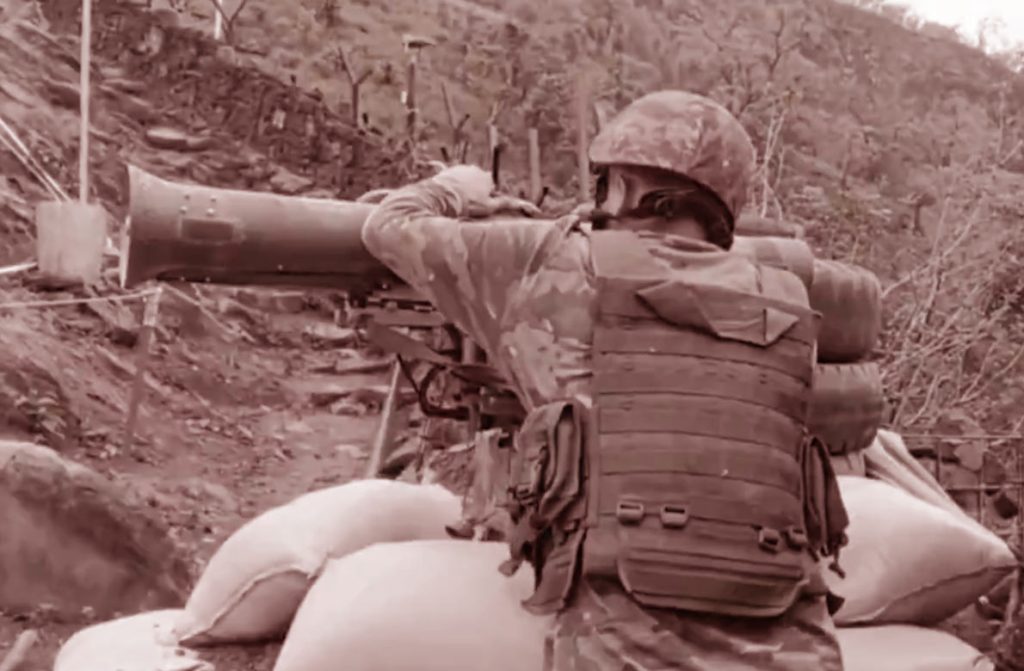
A fragile ceasefire between India and Pakistan, brokered through diplomatic channels and announced on May 10, has largely held, bringing a tentative calm to the Line of Control (LoC) and International Border after days of intense cross-border hostilities.
The escalation, rooted in a deadly terror attack in Indian-administered Kashmir on April 22, prompted India’s Operation Sindoor, targeting alleged terrorist infrastructure in Pakistan. Both nations’ armed forces held press conferences to outline their actions and perspectives, while diplomatic efforts, including US involvement, reportedly played a key role in de-escalation.
The Conflict
Tensions flared after a militant attack in Pahalgam, Jammu and Kashmir, killed 26 civilians, mostly Indian Hindu tourists. India accused Pakistan of supporting the attackers, a charge Pakistan denied.
On May 7, India launched Operation Sindoor, striking nine alleged terror camps in Pakistan and Pakistan-administered Kashmir, killing over 100 terrorists, including high-value targets linked to past attacks like the IC-814 hijacking and Pulwama bombing, according to Indian military officials.
Pakistan retaliated with Operation Bunyan Marsoos, reportedly targeting 26 Indian military and civilian sites, escalating the conflict into a four-day exchange of drone, missile, and artillery strikes.
What did the Indian Armed Forces say?
On May 11, a joint press conference in New Delhi by Lieutenant General Rajiv Ghai (Director General of Military Operations), Air Marshal AK Bharti, and Vice Admiral AN Pramod provided a detailed account of Operation Sindoor.
The Indian military reported destroying 11 Pakistani air bases and key terrorist infrastructure, including training camps in Bhawalpur and Muridke. ‘Our actions were precise, targeting terror hubs while minimizing civilian casualties,’ Lt. Gen. Ghai stated. The operation resulted in the deaths of five Indian soldiers, while Pakistan reportedly lost 35–40 personnel along the LoC between May 7–10.
The Indian side also accused Pakistan of violating the ceasefire hours after its announcement on May 10, citing drone incursions and shelling in Jammu and Kashmir. ‘Pakistan’s actions were a gross breach of trust,’ Foreign Secretary Vikram Misri said in a late-night briefing, emphasizing that Indian forces were instructed to respond robustly to any further violations.
By May 11 evening, the Indian Army noted that the situation had stabilized, with no further Pakistani provocations reported overnight.
What is Pakistan saying?
In Islamabad, Pakistan’s military, led by Lieutenant General Ahmed Sharif Chaudhry, addressed the media on May 11, outlining Operation Bunyan Marsoos.
The operation, described as a ‘wall of lead,’ was launched in response to India’s strikes on Pakistani air bases, including Nur Khan, Murid, and Rafiqui. Chaudhry claimed minimal damage, with only one aircraft sustaining ‘minor damage,’ and denied India’s claims of significant losses. He accused India of targeting civilian areas and spreading misinformation, including alleging Indian missile strikes on its own Punjab region to suppress Sikh populations—a claim India dismissed as baseless.
Pakistan’s Foreign Ministry reiterated its commitment to the ceasefire, stating, ‘Our forces are handling the situation with responsibility and restraint.’ Prime Minister Shehbaz Sharif, in a televised address, hailed the military’s response as historic and thanked allies, including the US, China, Saudi Arabia, and Turkey, for supporting de-escalation efforts. Mr. Sharif avoided addressing the alleged ceasefire violations.
US role in the Ceasefire
The ceasefire, effective from 5:00 PM IST on May 10, followed intense diplomatic engagement. US President Donald Trump announced the agreement on Truth Social, claiming it resulted from ‘a long night of talks mediated by the United States.’
US Secretary of State Marco Rubio and Vice President JD Vance engaged with Indian Prime Minister Narendra Modi and Pakistani Prime Minister Shehbaz Sharif over 48 hours, alongside other officials. Rubio noted that the agreement included plans for broader talks at a neutral site, though India clarified no such decision was finalized.
India’s Ministry of Information and Broadcasting emphasized that the ceasefire was negotiated directly between the Directors General of Military Operations (DGMOs) of both countries, with Pakistan’s DGMO initiating contact. ‘No third-party mediation was required,’ the ministry stated, downplaying US involvement. However, Pakistan acknowledged the US role, with PM Sharif thanking President Trump for facilitating the outcome. Sources suggest that US pressure, combined with interventions from allies like Saudi Arabia and China, helped both sides de-escalate the conflict.
What is the current situation?
As of May 12, the ceasefire appears to be holding, with the Indian Army reporting a ‘largely peaceful’ night across Jammu and Kashmir and border areas. Blackout measures in border states like Punjab, Rajasthan, and Jammu and Kashmir have been eased, and markets have reopened, signaling a return to normalcy.
However, both nations remain vigilant, with India’s Chief of Army Staff General Upendra Dwivedi granting field commanders authority to respond to any further violations.
The conflict has caused significant civilian tolls, with at least 21 civilian deaths reported in Indian-administered Kashmir and 36 in Pakistan-administered Kashmir. The reopening of Pakistan’s airspace on May 10 has alleviated disruptions to global aviation, which saw a sharp decline in flights over the region during the hostilities.