India has inked a ₹7,995 crore agreement with the United States to provide comprehensive five-year sustainment for the Navy’s fleet of MH-60R Seahawk helicopters.
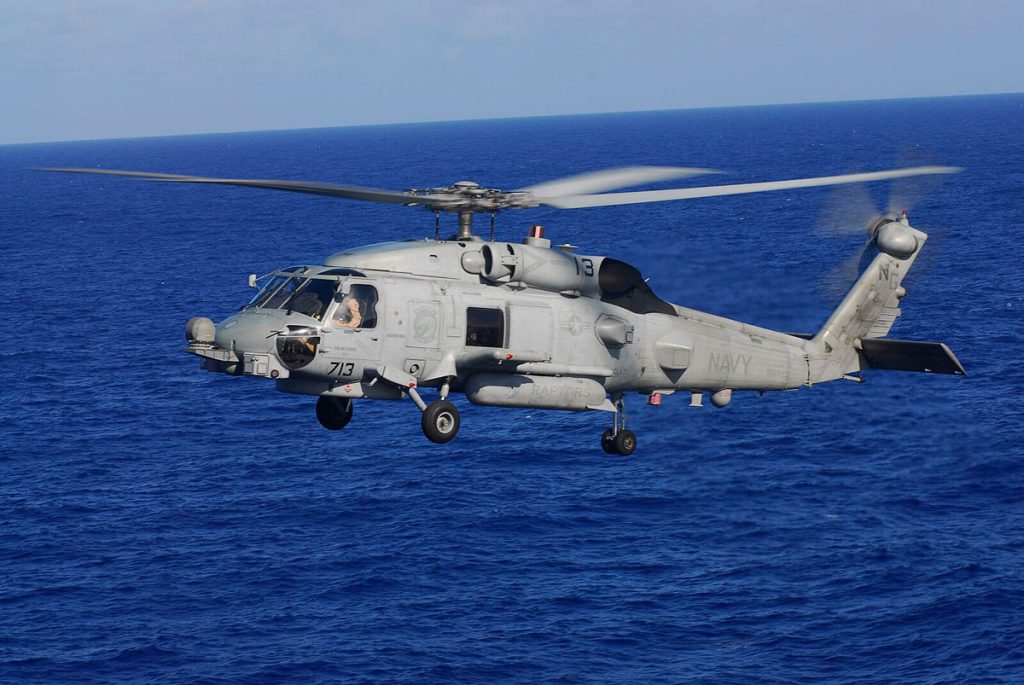
Signed on November 28 under the US Foreign Military Sales (FMS) framework, the deal, covering follow-on support and supply, promises to sharpen the edge of India’s anti-submarine capabilities, even as deliveries of the full 24-aircraft order near completion.
The MH-60R, a Lockheed Martin-built maritime powerhouse derived from the UH-60 Black Hawk, entered Indian service in March 2024 with the commissioning of INAS 334 squadron at INS Garuda in Kochi. The first three units arrived in 2021, transforming the Navy’s aging Sea King fleet into a modern force multiplier.
Equipped with cutting-edge avionics, multi-mode radars, dipping sonars, and precision weapons like Mark 54 torpedoes and AGM-114 Hellfire missiles, these twin-engine, all-weather birds excel in anti-submarine warfare (ASW), anti-surface strikes, and search-and-rescue missions. Operating from warships or shore bases, they extend the Navy’s reach against stealthy underwater threats from adversaries like China and Pakistan.
The current sustainment package, formalized in the presence of Defence Secretary Rajesh Kumar Singh, includes spare parts, specialized repairs, crew training, and the establishment of in-country maintenance hubs. It aligns with India’s Aatmanirbhar Bharat initiative, fostering local expertise through collaborations with firms like Hindustan Aeronautics Limited (HAL) and Bharat Electronics Limited (BEL). HAL has already integrated indigenous Identification Friend-or-Foe (IFF) systems, while BEL handles sensor fusion, reducing reliance on foreign logistics.
The original $2.6 billion procurement deal, struck in February 2020, was a cornerstone of the Quad partnership’s defense pillar, underscoring Washington’s commitment to a rules-based Indo-Pacific.
With the final helicopters slated for delivery by early 2026, this support contract arrives at a critical juncture. This is vital as the Indian Ocean sees intensified submarine patrols. India’s own Arihant-class assets now share waters with Chinese Type 093s, craving the need for robust ASW deterrence.
Yet, the pact unfolds against a backdrop of some economic. US President Donald Trump’s August tariffs on Indian exports, hiking duties to 50% on select goods, have strained bilateral trade talks. Undeterred, the Modi administration views the deal as a strategic hedge, blending procurement with self-reliance. ‘Defense cooperation transcends tariffs; it’s about shared security in a volatile region,’ said External Affairs Ministry spokesperson Randhir Jaiswal during a briefing.
Critics, however, flag the long-term costs. Opposition voices in Parliament, including from the Congress party, questioned the escalating FMS dependencies, urging faster indigenization of platforms like the Naval Utility Helicopter.
Environmental groups have also raised concerns over the ecological footprint of expanded naval ops in the ecologically sensitive Andaman Sea.
For the Indian Navy, commanding 140 warships and 220 aircraft, the MH-60R infusion, coupled with this sustainment lifeline, heralds a new era of blue-water prowess.