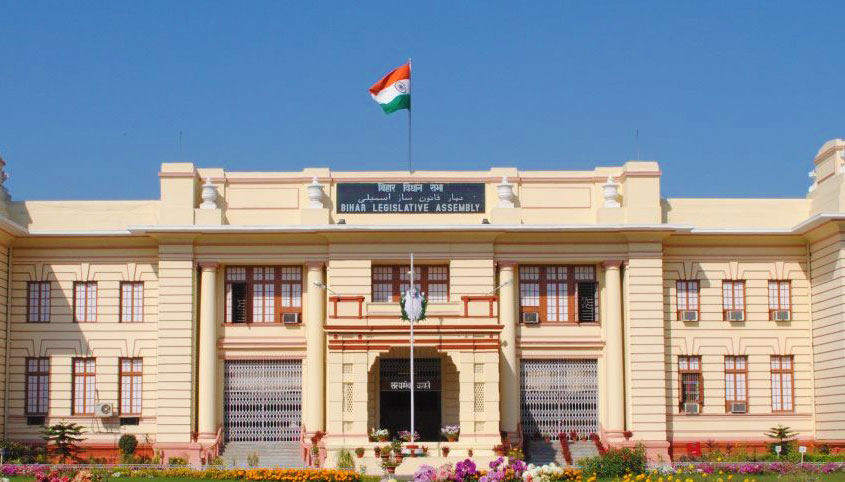
With just two weeks until the first ballot is cast, Bihar’s political machinery is in overdrive as the state hurtles toward its 2025 Legislative Assembly elections. Scheduled across two phases on November 6 and 11, these polls will decide the fate of 243 seats in the Bihar Vidhan Sabha, with results slated for November 14.
The incumbent National Democratic Alliance (NDA), led by Chief Minister Nitish Kumar’s Janata Dal (United) and the Bharatiya Janata Party (BJP), faces a fierce challenge from the Rashtriya Janata Dal (RJD)-helmed Mahagathbandhan, amid a flurry of new entrants shaking up the traditional duopoly.
The elections come at a pivotal moment for Bihar, a state long synonymous with economic migration and youth unemployment. Over 1.5 crore Biharis work outside the state, fueling campaigns that promise everything from industrial hubs to skill-training centers. ‘This isn’t just about seats; it’s about stemming the exodus of our sons and daughters,’ said RJD leader Tejashwi Yadav during a recent rally in Muzaffarpur, where he unveiled plans for 10 lakh government jobs if his alliance forms the next government.
A revamped voter roll and tightened security
The Election Commission of India (ECI) kicked off the process on October 6, building on a Special Intensive Revision (SIR) of electoral rolls completed in June. The overhaul scrubbed 68.5 lakh potentially bogus entries while adding 21.5 lakh new voters, including around 10 lakh first-timers aged 18-19. The final draft now lists approximately 7.3 crore eligible voters, a 5% dip from earlier estimates, trying to bolster the integrity of what could be Bihar’s most scrutinized polls yet.
Security measures are unprecedented, with over 70,000 personnel deployed across 38,800 polling stations. Enforcement agencies report seizing assets worth Rs 64.13 crore since the schedule’s announcement, including illicit liquor, unaccounted cash, drugs, and promotional freebies. ‘We’re leaving no stone unturned to ensure a free and fair process,’ said ECI spokesperson Jaydeb Ray, who highlighted provisions for postal ballots targeting the elderly, persons with disabilities, and service voters.
Electronic voting machines (EVMs) will now display candidates’ color photographs alongside symbols, a nod toreducing confusion in Bihar’s diverse electorate. The two-phase format splits the state geographically: Phase 1 covers 121 constituencies in the north and east, including volatile pockets like Purnia and Kishanganj, while Phase 2 encompasses the remaining 122 in the south and west, such as Patna’s urban belts. Nomination deadlines closed last week, with parties scrambling to field candidates amid last-minute alliances and withdrawals.
Alliances in flux: NDA’s Unity vs. Mahagathbandhan’s strains
The NDA, which clinched 125 seats in the 2020 elections, enters the fray with renewed cohesion after Nitish Kumar’sdramatic alliance shift in 2024. Comprising JD(U), BJP, Lok Janshakti Party (Ram Vilas) led by Chirag Paswan, Hindustani Awam Morcha (HAM) under Jitan Ram Manjhi, and Rashtriya Lok Morcha (RLM) of Upendra Kushwaha, the coalition controls 131 seats in the outgoing assembly.
Prime Minister Narendra Modi’s anticipated visit next week is expected to galvanize supporters, focusing on infrastructure wins like the Patna-Purnia airport and promises of Rs 5 lakh crore in central investments. Union Home Minister Amit Shah’s recent three-day tour underscored the NDA’s strategy – micro-targeting caste arithmetic and development narratives. ‘We’ve resolved Nitish Kumar as our chief ministerial face,’ affirmed JD(U) spokesperson K.C. Tyagi, dismissing seat-sharing hiccups with smaller allies like Paswan’s LJP(RV), which is pushing for 45 constituencies.
Opposing them, the Mahagathbandhan comprising RJD, Congress, and Left parties like CPI and CPI(ML) holds 111 seats and is banking on anti-incumbency after five years of NDA rule. RJD’s candidate list of 143 names, released on the eve of second-phase nominations, positions Mr. Yadav as the de facto opposition face, though Congress insists on a collective INDIA bloc decision.
The alliance’s manifesto slams the government on ’empty promises,’ vowing a caste-based census and women’sreservation in jobs. Yet, cracks are evident. Congress, contesting around 60 seats including strongholds like Valmiki Nagar and Araria, has voiced frustration over unresolved seat-sharing, particularly in Gaura Bauram, where it clashes with RJD picks. The Jharkhand Mukti Morcha (JMM) opted out entirely after missing nomination deadlines for its six promised seats, while CPI(ML) rejected RJD’s 19-seat offer, demanding a fairer split to avoid vote fragmentation.
Wild cards: New players and regional shifts
Bihar’s poll landscape is anything but binary this year, with independents and regional outfits poised to siphon votes. The All India Majlis-e-Ittehadul Muslimeen (AIMIM), under Asaduddin Owaisi, released 25 candidates targeting Seemanchal and Mithilanchal’s Muslim-majority belts like Kishanganj and Purnia, areas where it polled 3-5% in 2020.’We’ll be the voice of the marginalized,’ AIMIM Bihar proclaimed, potentially splitting the opposition’s 17% Muslim vote bank.
Prashant Kishor’s Jan Suraaj Party, launched in 2024 with populist pledges like legislator recalls and 90% fresh candidates, dropped its first 51 nominees on October 9, emphasizing anti-corruption drives. Though Kishor hasn’tconfirmed his own candidacy, the party’s Gandhi Maidan mega-rally drew lakhs, signaling a threat in urban youth demographics.
The Aam Aadmi Party (AAP) is contesting all 243 seats independently, naming 11 early picks for Patna and Begusarai, while the Bahujan Samaj Party (BSP) leads with early announcements in Dalit-heavy segments. Folk singer Maithili Thakur’s BJP nomination from Darbhanga’s Alinagar adds cultural flair, but controversies abound – LJP(RV)’s Seema Singh was disqualified from Marhaura over paperwork issues, and RJD’s Lalu Prasad Yadav faces probes into a viral video of his son Tej Pratap using a police-marked SUV during filings.
Key battlegrounds and what’s at stake
Watch for swing seats like Danapur (Patna), where RJD’s Ritlal Yadav eked out a 2020 win by razor-thin margins, and Purnia, spotlighted by PM Modi’s recent inaugurations.
Caste dynamics remain king: Yadavs (14%) and Muslims back RJD, while EBCs (18%) and upper castes tilt NDA.
Women’s turnout, at 58% in 2020, could surge with Mahagathbandhan’s free-education push.
Beyond Bihar, these polls preview national fault lines ahead of 2029 Lok Sabha battles, testing PM Modi’s development pitch against opposition revival. As posters blanket Patna’s streets and rallies echo Ganga’s banks, one thing is clear. Bihar’s voters, weary of promises yet hopeful for change, hold the power to redraw the map.