In Paskitan, where political fortunes often rise and fall, the voice of former Prime Minister Imran Khan came through the fortified walls of Adiala Jail on Tuesday, piercing the secrecy that had shrouded his fate for nearly a month.
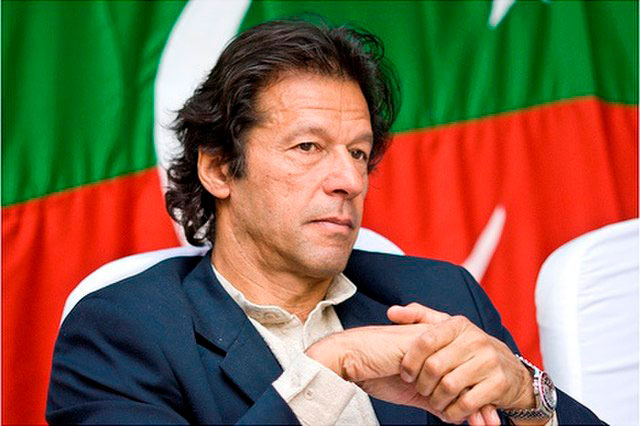
What began as whispers of despair, fueled by weeks of enforced silence, culminated in a supervised family visit that not only confirmed the 73-year-old cricketing icon and political firebrand is alive but also unleashed a torrent of accusations against the pillars of power that hold him captive.
Uzma Khanum, Mr. Khan’s sister and a practicing physician, emerged from the high-security prison in Rawalpindi after a tightly controlled 20-minute meeting, her face etched with a mix of relief and resolve. ‘He is physically healthy,’ she told reporters outside the jail gates, where barriers of razor wire and riot police separated her from a swelling crowd of Pakistan’s Tehreek-e-Insaf (PTI) supporters chanting ‘Azadi! Azadi!’
But health, she emphasized, is more than the absence of physical illness. ‘Imran is enduring severe mental torture,’ Ms. Khanum revealed, describing her brother as being ‘extremely angry’ over his prolonged isolation in a solitary cell, cut off from lawyers, aides, and even basic amenities mandated by prison protocols.
The visit marked the first verifiable contact with Imran Khan since early November, shattering a 47-day blackout that had ignited wild rumors across Pakistan’s fractious political landscape. From viral claims of his death in custody to unconfirmed reports of a secret transfer to an undisclosed location, the void had bred panic.
The former Prime Minister’s sons, Kasim and Sulaiman Isa, based in the UK, had publicly pleaded for ‘proof of life’ last week, accusing authorities of concealing ‘something irreversible.’ Their mother, Jemima Goldsmith, Mr. Khan’s ex-wife, amplified the alarm on X, noting that even phone calls had been severed, leaving the family in a ‘nightmare of uncertainty.’
For PTI loyalists, the episode was less a surprise than a stark affirmation of a broader crackdown. Imran Khan, ousted in a no-confidence vote in April 2022 and imprisoned since August 2023 on a litany of corruption and state security charges he dismisses as fabricated, remains Pakistan’s most potent opposition figure. His party, despite a drubbing in the disputed February 2024 elections, commands fierce allegiance among the youth and urban middle class, who view him as the antidote to entrenched elites.
Yet, from his ‘death cell, as Kasim Khan grimly dubbed it, Imran Khan’s message, relayed verbatim through his sister, painted a picture of deliberate dehumanization.
In a statement that PTI disseminated widely, Mr. Khan spared no one, least of all Army Chief General Asim Munir, whom he branded a ‘mentally ill’ tyrant whose ‘moral depravity’ has eviscerated Pakistan’s constitution and rule of law. ‘I and my wife have been jailed on Asim Munir’s orders in false cases, subjected to the worst mental torture,’ Imran Khan apparently declared, recounting four weeks in a sealed cell with no human interaction, severed from the outside world, and deprived of essentials like proper medical checkups.
The PTI leader lambasted the barring of court-mandated meetings with family and counsel as a violation of international human rights standards, insisting that psychological torment is ‘more severe than physical violence.’ Imran Khan’s ire extended to the treatment of his inner circle – his sister Noreen Niazi dragged on the streets for demanding visitation rights; cancer survivor Dr. Yasmin Rashid, a senior PTI leader, imprisoned out of ‘political vengeance’; and his wife, Bushra Bibi, held incommunicado to pressure him into submission. ‘Such acts reveal the mental level of this man,’ Imran Khan seethed, positioning his suffering as a sacrifice for a nation shackled by ‘mafias,’ from land grabbers to election riggers that exploit its people until they rise in revolt.
The outpouring came against a backdrop of simmering unrest.
On Monday, PTI announced mass protests outside Adiala Jail and the Islamabad High Court, defying Section 144 emergency restrictions on gatherings. Barricades and tear gas clouds loomed over Rawalpindi’s streets as supporters, many waving cricket bats in homage to Khan’s 1992 World Cup glory, vowed to ‘shut down’ the city until access is restored.
Pakistan’s independent Human Rights Commission voiced ‘serious concern’ over the detention conditions, while Defense Minister Khawaja Asif dismissed the uproar, claiming Khan enjoys ‘better facilities than most inmates.’
Yet, Imran Khan’s words carried a rallying cry beyond personal grievance. He praised Khyber Pakhtunkhwa Chief Minister Sohail Afridi for choosing ‘resistance over compromise’ in the face of the governor’s threats, urging PTI lawmakers to amplify opposition voices like those of Mahmood Khan Achakzai and Allama Raja Nasir Abbas. He warned against ‘double-game’ insiders, likening them to historical traitors Mir Sadiq and Mir Jafar, and decried Munir’s foreign policy as a catastrophe, from drone strikes on Afghan refugees that have inflamed militancy to overtures toward the West, which he said sacrificed national sovereignty.