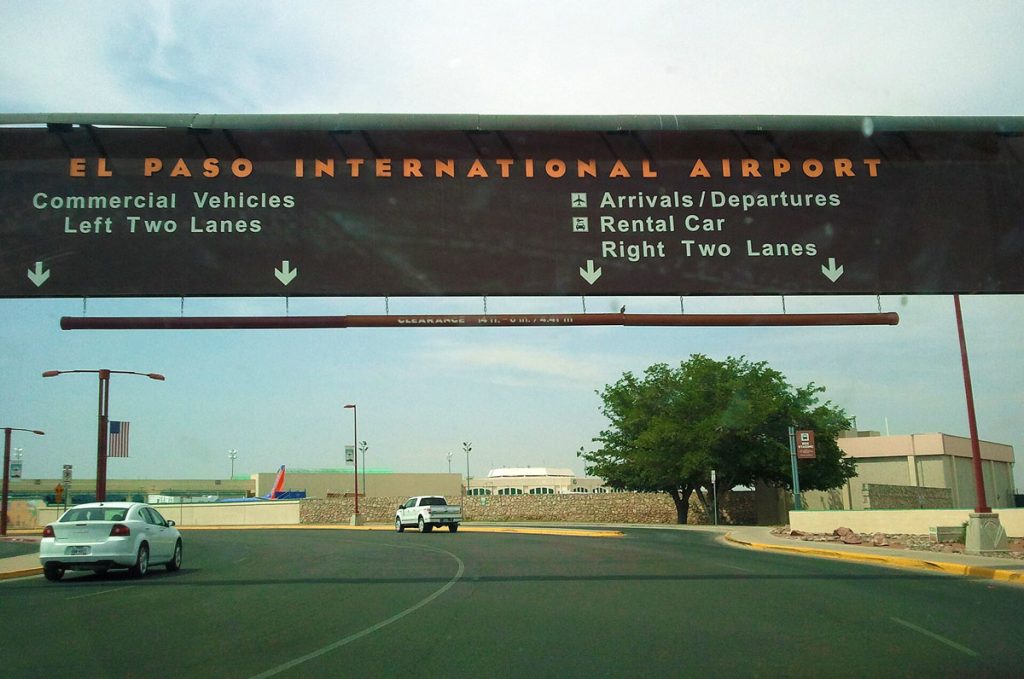
The Federal Aviation Administration (FAA) has reopened airspace over El Paso International Airport on Wednesday morning, just hours after announcing an unprecedented 10-day closure that cited ‘special security reasons.’
The short-lived restriction, which grounded all commercial, cargo, and general aviation flights, reportedly stemmed from a disagreement between the FAA and the Pentagon over military tests of anti-drone technology, according to multiple sources familiar with the matter.
Lack of coordination between government agencies?
The FAA issued the temporary flight restriction late Tuesday night, effective from 11:30 PM local time on February 10 until the same time on February 20. The order covered a 10-nautical-mile radius around the airport up to 18,000 feet, excluding Mexican airspace. It warned that violators could face interception or even lethal force, sparking widespread confusion and anxiety among travelers, airlines, and local officials.
But by early Wednesday, the FAA reversed course, saying that the closure had been lifted with ‘no threat to commercial aviation’ and that all flights would resume normally. The agency did not provide further details on the reversal, but the brief shutdown led to at least 14 flight cancellations at El Paso International Airport, disrupting passengers and medical evacuation operations.
Sources close to the situation revealed that the closure arose from Pentagon plans to test a high-energy laser system designed to counter drones operated by Mexican drug cartels. The technology, housed at Fort Bliss adjacent to the airport, raised safety concerns for civilian aircraft.
FAA officials reportedly acted without prior consultation with White House or Homeland Security leaders, aiming to pressure the Defense Department into resolving coordination issues.
Conflicting narratives emerged in the aftermath. The Trump administration attributed the incident to a ‘cartel drone incursion,’ with US Transportation Secretary Sean Duffy confirming that the threat had been neutralized.
However, industry and government insiders disputed this, pointing instead to the Army’s decision to proceed with tests despite lacking full FAA approval. One source noted that the same laser system had previously been involved in an incident targeting a party balloon, highlighting potential risks to non-threat objects in shared airspace.
Local leaders expressed frustration over the lack of transparency. Congresswoman Veronica Escobar (D-Texas) called the decision highly consequential and unprecedented, noting it caused significant concern in the community.
Representative Gabe Vasquez (D-N.M.) echoed these sentiments, criticizing the administration for opacity and demanding more information from the FAA.
El Paso International Airport, which served over 3.49 million passengers in the first 11 months of 2025, confirmed the initial grounding in a social media advisory but quickly updated travelers once the restrictions were lifted. Airlines like Southwest and American reported minimal long-term disruptions, though some passengers were stranded overnight.
The incident pointed to the ongoing challenges at the US-Mexico border, where drone incursions by cartels have increased in recent years. The Pentagon’s counter-drone initiatives, including electronic warfare and laser systems, are part of broader efforts to secure the region.