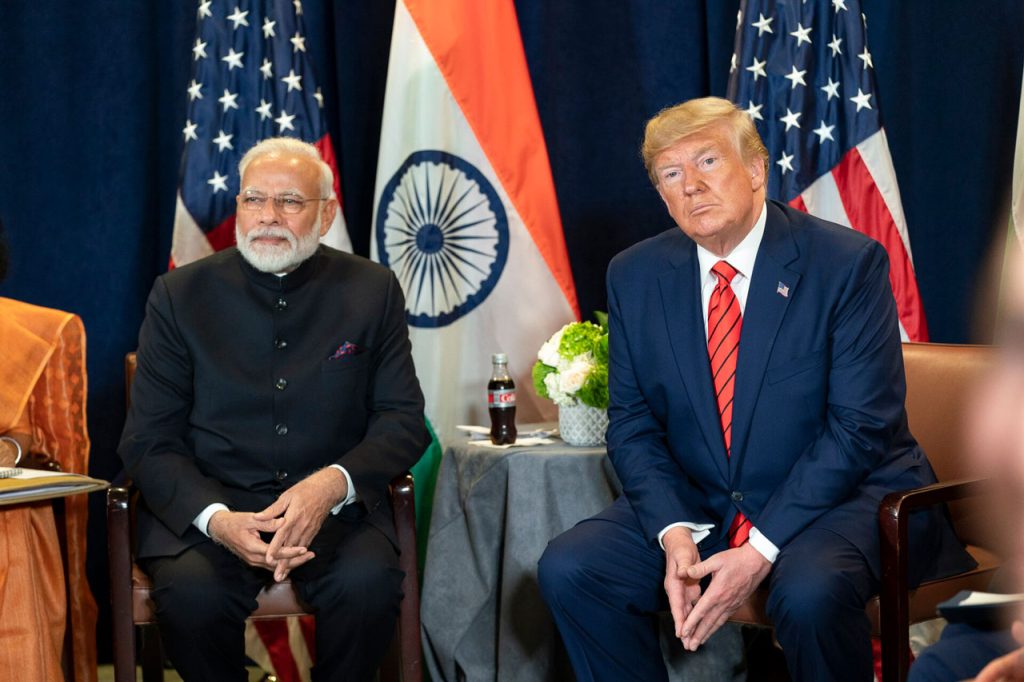
The United States and India unveiled a framework for an interim trade agreement on February 6, 2026, aiming to foster reciprocal and balanced economic ties. The development comes amid ongoing negotiations for a comprehensive Bilateral Trade Agreement (BTA), which were initiated following a leaders’ summit in February 2025.
While the deal sought to address long-standing trade imbalances, enhance supply chain resilience, and boost mutual investments, it has also sparked debates over its ambiguities and potential repercussions.
At the core of the agreement, India has committed to eliminating or reducing tariffs on a broad array of US industrial goods and select agricultural products. These include dried distillers’ grains (DDGs), red sorghum for animal feed, tree nuts, fresh and processed fruits, soybean oil, wine, and spirits.
In return, the US has agreed to lower its reciprocal tariffs on Indian exports from levels as high as 50% down to 18%, covering sectors like textiles, apparel, leather, footwear, plastics, rubber, organic chemicals, home decor, artifacts, and machinery. This tariff cut is expected to benefit approximately 55% of India’s exports to the US, potentially unlocking access to a market valued at over $30 trillion and providing a boost to labor-intensive industries.
Additionally, India has expressed an intention to purchase more than $500 billion worth of US goods over the next five years, spanning energy resources, information and communication technology, agricultural items, coal, aircraft parts, precious metals, and other products.
The framework also tackles non-tariff barriers, digital services taxes, and rules of origin to ensure benefits primarily accrue to the two nations, while promoting cooperation on digital trade rules and economic security.
Proponents, including US Trade Representative Ambassador Greer and Indian Commerce Minister Piyush Goyal, have described it as a win for American workers and Indian exporters alike, with the potential to stimulate private investment and economic growth. However, beneath the optimistic rhetoric lies a notable lack of transparency that has left stakeholders grappling with unanswered questions.
The full text of the agreement remains unpublished, leading to confusion over precise tariff lines, enforcement mechanisms, and safeguards for sensitive sectors. Concrete details on timelines for tariff reductions are absent, creating urgency for India to implement domestic reforms in areas like land acquisition, labor flexibility, power reliability, and dispute resolution to fully capitalize on the deal. This opacity has fueled perceptions that the agreement, negotiated under pressure, may not be as equitable as portrayed.
One of the most contentious points revolves around energy trade, particularly India’s oil imports from Russia. US President Donald Trump initially claimed that India had pledged to halt purchases of Russian oil, directly or indirectly, as part of the deal, with provisions for US monitoring and potential tariff reinstatement if violated. Yet, the joint statement makes no mention of such a commitment, and Indian officials have evaded direct confirmation, emphasizing energy security and market-driven decisions instead.
Critics, including strategic experts, view this as an overreach on India’s sovereignty, potentially tying trade concessions to foreign policy alignments. Opposition parties and analysts argue that without parliamentary scrutiny, such ambiguities could erode India’s autonomy in global affairs.
Agricultural implications further highlight the deal’s hazy contours. While India has protected core areas like dairy, genetically modified products, meat, and poultry, the tariff cuts on US imports such as DDGs and soybean oil raisefears among farmers of indirect GMO infiltration through animal feed, which could affect food chains, including milk, eggs, and meat.
Farmer groups like Samyukt Kisan Morcha have voiced strong opposition, warning of price undercutting in maize, soybean, nuts, and fruits that might harm domestic producers’ incomes and spark protests. Research bodies like the Global Trade Research Initiative (GTRI) have pointed out the asymmetry, suggesting India may be conceding more market access than it gains, potentially inflating its import bill and diminishing its trade surplus with the US.
The $500 billion purchase aspiration has also drawn skepticism for its feasibility, as it would require doubling India’s annual imports from the US, which is largely dependent on private sector choices beyond government mandates. Minister Goyal has downplayed it as a conservative target, citing existing orders and economic expansion, but without binding clauses, its enforceability remains unclear.
As both nations move toward finalizing the interim pact and advancing the full BTA, the deal’s success will hinge on resolving these grey areas through greater transparency and stakeholder engagement.