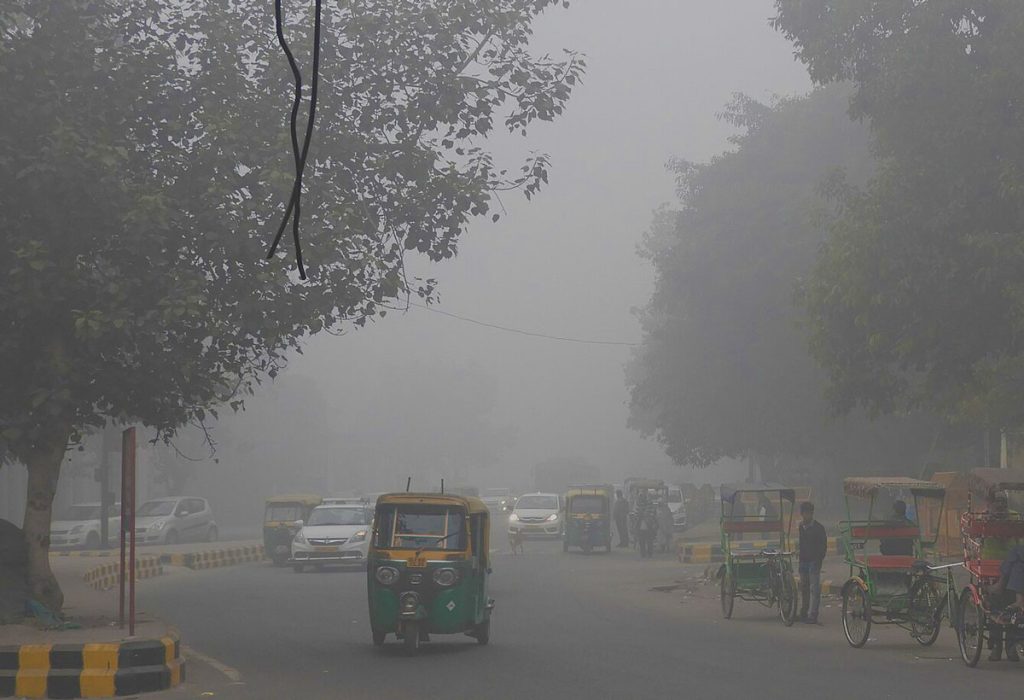
As winter tightens its grip across northern and western India, the annual air pollution crisis has intensified once again in 2025, turning skies hazy and prompting stringent emergency measures. While Delhi remains the hardest hit with hazardous air quality levels triggering the highest restrictions, cities in Uttar Pradesh are contributing significantly to the regional haze, and Mumbai contends with persistently poor but slightly improved conditions.
In the national capital, air quality has fluctuated between severe and hazardous categories throughout early December. Recent real-time data indicated that Delhi’s Air Quality Index (AQI) reached as high as 519, making it one of the world’s most polluted major cities.
Dense toxic smog has led to widespread disruptions, including flight delays amid low visibility and the invocation of Stage IV of the Graded Response Action Plan (GRAP) on December 13. Under these strict curbs, construction activities have halted, schools have shifted to hybrid or online modes for younger students, and many offices have encouraged work-from-home policies to reduce exposure.
Uttar Pradesh, particularly cities within the National Capital Region (NCR) like Ghaziabad, has seen similarly alarming pollution levels. Ghaziabad recorded an AQI of 429 recently, ranking it among India’s most affected urban centers. Other areas, including Lucknow and parts of the state enveloped in thick winter smog, have experienced reduced visibility and deteriorating air quality, exacerbated by seasonal factors such as crop residue burning in agricultural belts and temperature inversions trapping pollutants. The state’s proximity to Delhi amplified the shared regional burden, with multiple Uttar Pradesh cities frequently appearing in national pollution rankings.
However, Mumbai has reported some positive developments this December. Official data highlights a notable improvement in air quality compared to previous years, with AQI readings hovering in the moderate to poor range, around 137, as per recent central monitoring. Civic authorities attributed this to intensified efforts, including extensive road washing, dust suppression, and enforcement against pollution sources.
However, primary pollutants like PM2.5 remain elevated, posing ongoing health risks to residents.
Nationwide, India’s air quality emergency highlighted deeper systemic issues, from vehicular emissions and industrial activity to seasonal stubble burning.
Experts warn that prolonged exposure continues to contribute to significant public health burdens, with calls for stronger enforcement and long-term solutions growing louder. As meteorological conditions shift, slight improvements are forecast in some areas, but the crisis is prompting a public outcry on social media.