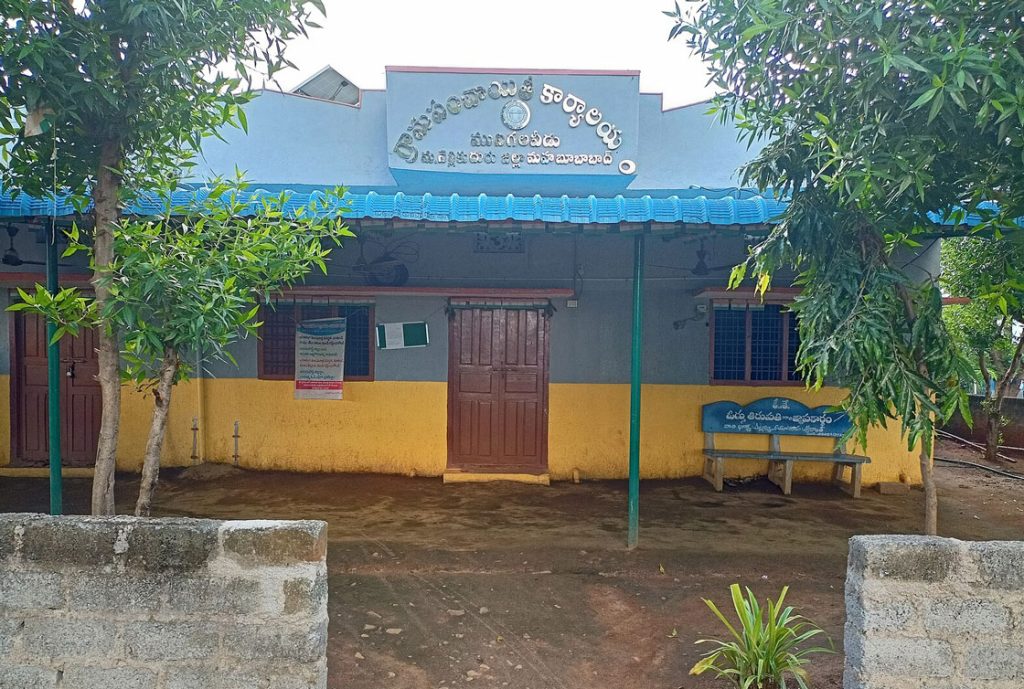
The three-phase Gram Panchayat elections in Telangana wrapped up on December 17 with robust voter participation and largely peaceful polling, as early trends and partial results indicated a commanding performance by candidates supported by the ruling Congress party.
Conducted on a non-party basis across thousands of villages, the polls saw over 12,700 Sarpanch positions and more than 112,000 ward member posts at stake in the state’s rural local bodies. The elections were held in three phases—December 11, 14, and 17 to elect leaders for approximately 12,728 Gram Panchayats.
High voter turnout
Voter enthusiasm remained strong throughout:
- First phase (December 11): 84.28% turnout
- Second phase (December 14): 85.86%
- Third and final phase (December 17): 85.77%, with over 43 lakh out of more than 50 lakh eligible voters casting ballots
Officials reported minimal incidents, crediting extensive security arrangements for the smooth conduct.
Party-backed performance
Although candidates contested without official party symbols, informal backing from political parties shaped the outcomes. Telangana Pradesh Congress Committee (TPCC) leaders hailed the results as a resounding endorsement of Chief Minister Revanth Reddy’s government, citing welfare schemes and increased reservations for Backward Classes as key factors.
In the first two phases, covering over 8,000 Gram Panchayats, Congress-supported candidates secured around 4,500 Sarpanch posts, while those backed by the opposition Bharat Rashtra Samithi (BRS) won nearly 3,500. Trends from the final phase suggest the Congress extended its lead, with party officials claiming dominance across rural Telangana.
The second phase alone saw results declared for all 3,911 contested Sarpanch posts and 29,917 ward member positions, signifying a notable generational shift in leadership as nine 21-year-olds, including seven women, emerged as Sarpanches.
Unanimous elections
Hundreds of positions were filled unanimously, reducing contested seats in the final phase to 3,752 Sarpanch posts (with 12,652 candidates) and 28,410 ward member posts (75,725 candidates). In this phase, 394 Sarpanches and 7,908 ward members were elected without opposition.
Counting for the third phase began immediately after polling ended on December 17, with results continuing to be tabulated as of this morning. State Election Commission officials expect full consolidation soon, paving the way for newly elected representatives to assume office and address local development priorities.
The outcome reinforces the Congress government’s influence in rural areas nearly two years into its tenure, while signaling challenges for the BRS in reclaiming ground lost since the 2023 assembly elections. Some analysts suggest the polls act as a barometer for grassroots sentiment ahead of future political contests in the state.