Resurrecting Andhra Pradesh’s ambitious capital project, Chief Minister Chandrababu Naidu’s administration has greenlit the acquisition of over 16,000 additional acres for Amaravati’s second development phase.
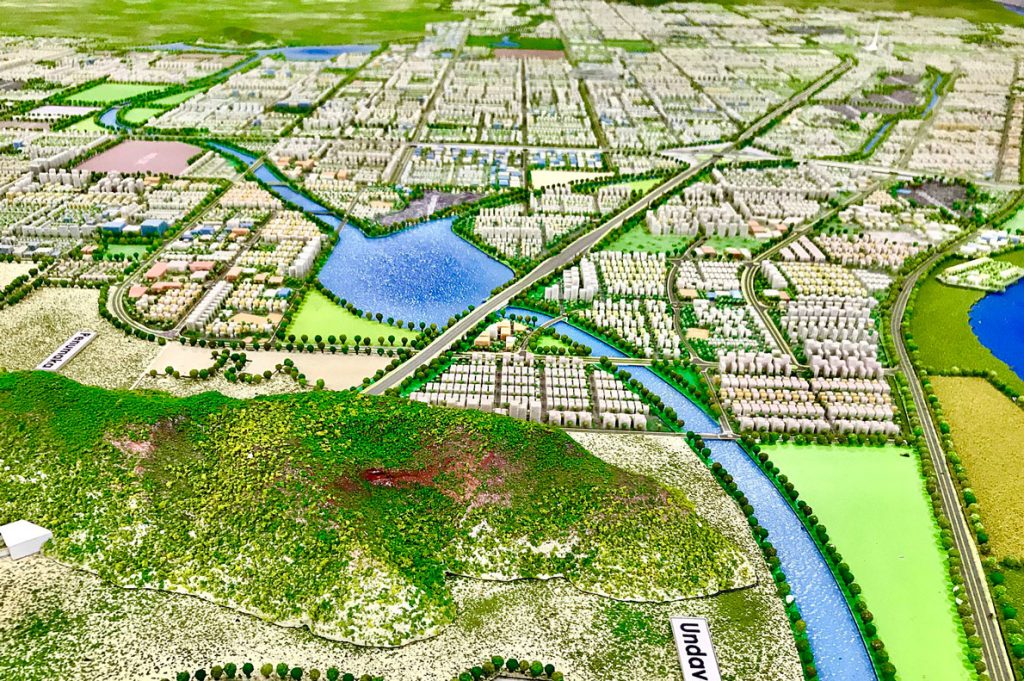
The Cabinet’s approval on Friday marks a revival of the greenfield city vision, first unveiled a decade ago. The decision, announced after a high-level Cabinet meeting chaired by CM Chandrababu, authorizes the Andhra Pradesh Capital Region Development Authority (APCRDA) to launch a new land pooling scheme across seven villages – Vaikuntapuram, Pedda Madduru, Endrai, Karlapudi, Vaddamanu, Harischandrapuram, and Peddaparimi. This latest phase targets 16,666.57 acres, with 7,562 acres from the first four villages and the rest from the latter three.
Officials described the acquisition as essential for infrastructure groundwork, including an inner ring road, a dedicated railway station, and an international sports city initially earmarked for 70 acres.
Chandrababu Naidu, who spearheaded Amaravati’s original blueprint during his 2014-2019 tenure, emphasized the expansion’s necessity during a Thursday dialogue with local farmers. ‘Without this, Amaravati risks shrinking into a mere municipal outpost, far from the Hyderabad-rivaling metropolis we aim for,’ he stated, highlighting the current 29-village core’s limitations.
The first phase pooled 34,000 acres from 29,000 farmers in 2015, supplemented by 16,000 acres of government endowment, forest, Waqf, and poramboke lands, totaling 50,000 acres. CM Chandrababu pledged swift resolution of lingering grievances from that era, including annuity payments and plot allotments, assuring, ‘Your sacrifices fueled this dream; we won’t let them fade.’
Buoyed by central government support, including a recent ₹7,500 crore loan nod, the Telugu Desam Party (TDP)-led coalition views this as momentum for Amaravati’s ‘unstoppable’ ascent.
Municipal Administration Minister P. Narayana revealed plans for smart industries to boost real estate values, alongside an international airport requiring another 30,000 acres from 11 peripheral villages.
However, not all voices cheer the revival.
Opposition from the YSR Congress Party (YSRCP), which had pivoted to a three-capitals model during its 2019-2024 rule, decried the move as a ‘repeat of past follies.’ Farmers’ groups and environmentalists warn of irreversible damage to the Krishna River basin’s fertile delta, one of South India’s richest agricultural belts.
A coalition of NGOs has demanded a comprehensive environmental impact assessment, arguing the project’s scale could exacerbate climate vulnerabilities in an already water-stressed region. The Chief Minister countered by touting inclusive growth – Participants in the pooling scheme stand to gain developed residential and commercial plots, annuities, and job quotas in upcoming projects. ‘This isn’t extraction; it’s elevation,’ the CM remarked, pointing to resolved disputes from the initial phase as proof of commitment.
With the Centre urged to formally designate Amaravati as the sole capital, bypassing the three-capitals impasse, the state eyes a 30-year master plan prioritizing resident welfare.