US President Donald Trump has formally endorsed a sweeping 28-point peace framework designed to halt Russia’s nearly four-year invasion of Ukraine.
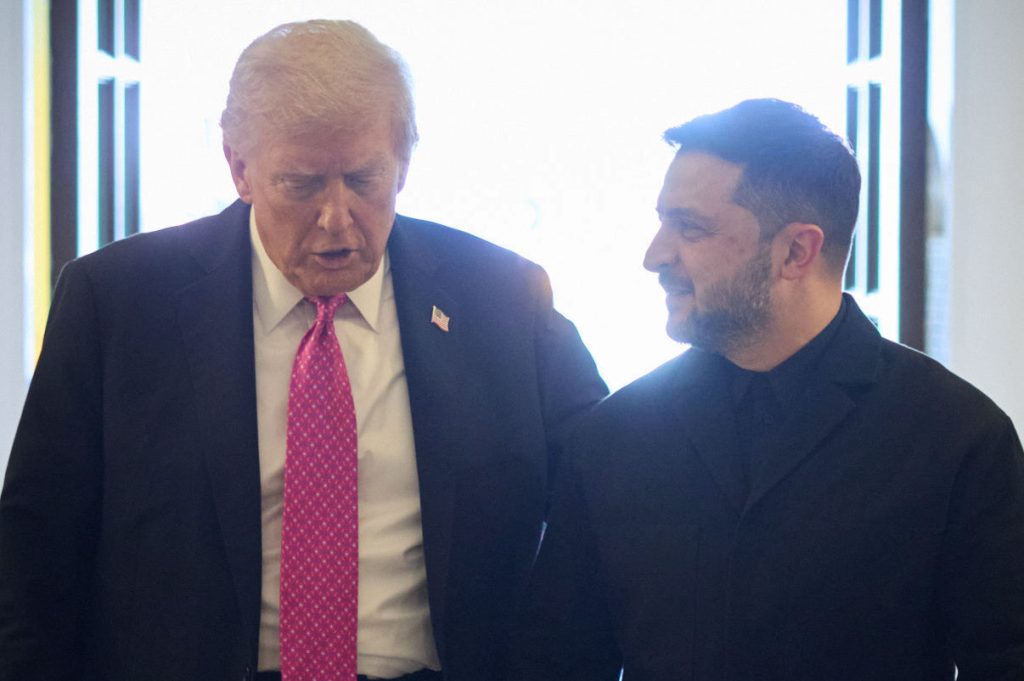
The US diplomatic maneuvering elicited cautious optimism from Moscow and Kyiv. Crafted through clandestine sessions between American envoy Steve Witkoff and Russian counterpart Kirill Dmitriev during a three-day summit in Miami last month, the proposal was presented to Ukrainian officials in Kyiv on Thursday by a delegation led by US Army Secretary Christine Wormuth.
What’s the plan?
Mr. Trump, who approved the outline earlier this week, hailed it during a Cabinet meeting as ‘the toughest, fairest deal yet, one that ends the killing and gets America out of Europe’s mess.’ The multifaceted document reportedly addresses territorial integrity, military postures, cultural sensitivities, and long-term security architectures, drawing partial inspiration from stalled 2022 Istanbul negotiations.
Central to the blueprint is Ukraine’s prospective handover of the Russian-claimed portions of the Donbas, encompassing Donetsk and Luhansk, formalizing de facto control lines established since 2014 and solidified by Russia’s 2022 offensive.
In tandem, Kyiv would commit to slashing its armed forces by approximately 50%, from an estimated 800,000 personnel to around 400,000, alongside restrictions on acquiring long-range strike systems and other NATO-compatible armaments.
The plan further mandates Ukraine’s neutrality for a 10-year probationary period, forestalling any NATO accession bid, while addressing Moscow’s cultural red lines through safeguards for Russian-language rights and the Orthodox Church’s operations in eastern regions.
On the quid pro quo front, the accord envisions phased Russian withdrawals from areas beyond Donbas, such as parts of Kherson and Zaporizhzhia, enforced by US-led monitoring mechanisms. It also pledges American security pacts for Ukraine, potentially including troop rotations and arms stockpiles, and broader European deterrence pledges to deter future incursions, with phased sanctions easing on Russia tied to compliance benchmarks.
Reactions to the plan
White House officials, speaking anonymously, stressed the framework’s evolutionary nature, noting that 12 of the 28 points remain under revision based on feedback from all stakeholders.
Ukrainian President Volodymyr Zelenskyy, fresh from a bruising Russian missile barrage on Ternopil that claimed 26 lives on Wednesday, acknowledged receipt of the draft in a measured Telegram update, committing his team to ‘rigorous review for a just resolution.’
Yet, behind closed doors, Mr. Zelenskyy’s aides have branded the territorial and disarmament demands as ‘tantamount to partition,’ echoing early-war ultimatums that Kyiv dismissed as existential threats. Defense Minister Rustem Umerov underscored Kyiv’s insistence on a verifiable ceasefire as a negotiation prerequisite, while privately signaling openness to demilitarization talks only if paired with ironclad invasion deterrents.
In Washington, the rollout blindsided even staunch Ukraine advocates on Capitol Hill; Sen. Lindsey Graham (R-S.C.), a Trump confidant, voiced qualms during a think-tank panel, insisting any viable pact must incorporate ‘crippling sanctions on Putin’s enablers’ and sustained US lethality enhancements for Ukrainian forces. House Foreign Affairs Committee Ranking Member Gregory Meeks (D-N.Y.) decried the opacity, demanding briefings to avert a ‘fire sale of sovereignty.’
The Kremlin, meanwhile, extended a guarded thumbs-up. Spokesman Dmitry Peskov, fielding queries on the Axios scoop that first unveiled the plan, affirmed ‘substantive alignment with our core positions’ but demurred on specifics, citing ongoing refinements post-Moscow’s Anchorage summit with Trump in August.
Foreign Minister Sergei Lavrov reiterated preconditions unchanged since 2024: territorial recognition, military caps, and geopolitical abstinence, hallmarks mirrored in the US draft. This gambit unfolds as Ukraine grapples with attritional winter fighting, where Russian advances in Donetsk have netted 200 square kilometers in the past month alone, per Institute for the Study of War assessments.
US aid, exceeding $200 billion since 2022, faces congressional headwinds amid Trump’s ‘peace dividend’ talk, which prioritizes fiscal restraint over indefinite proxy commitments. With Witkoff slated for follow-up shuttle diplomacy next week, the blueprint’s fate hinges on whether Zelenskyy can extract concessions amplifying US guarantees without alienating his war-weary public.