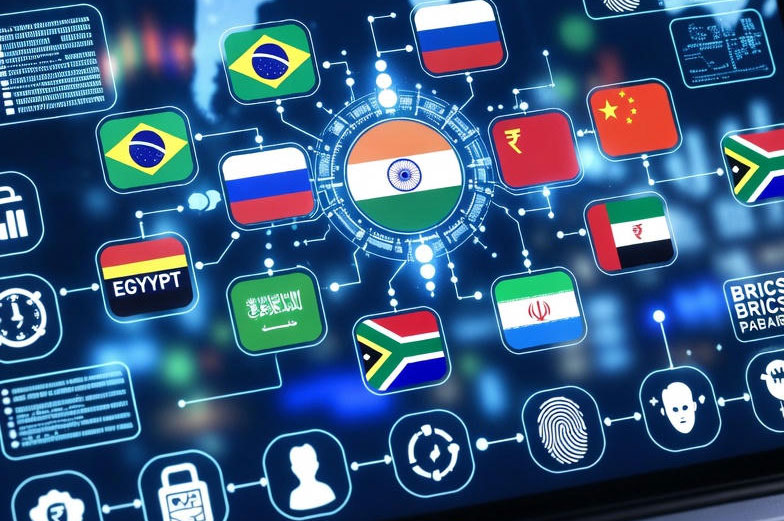
The BRICS bloc announced fresh strides in its ambitious cross-border payment system on November 17, 2025, with BRICS Pay entering the final testing phase ahead of a projected early 2026 debut.
The initiative, spearheaded by the BRICS Business Council, promises to link national payment infrastructures across Brazil, Russia, India, China, South Africa, and emerging partners, enabling direct settlements in local currencies and slashing transaction fees that currently siphon billions from developing economies.
The development follows a virtual ministerial huddle last week, where finance officials from the expanded BRICS+ group, now incorporating Iran and preparatory roles for nations like Belarus and Indonesia effective January 1, greenlit enhancements to the platform’s decentralized architecture.
‘This isn’t about confrontation; it’s about complementarity and resilience,’ Brazilian Finance Minister Fernando Haddad remarked during the session, echoing sentiments from the 2024 Kazan Summit where the BRICS Payment Task Force was formalized to drive interoperability.
The task force’s prototype, first showcased in Moscow last October, has since processed over 5,000 simulated transactions, demonstrating seamless integration with systems like India’s Unified Payments Interface and China’s Cross-Border Interbank Payment System.
At its core, BRICS Pay operates as a blockchain-inspired messaging layer that bypasses single points of failure, fostering a polycentric ecosystem free from the sanctions risks that have plagued members like Russia since 2014. Key innovations include multi-currency support to mitigate foreign exchange volatility, rigorous anti-money laundering protocols, and a distributed autonomous organization model for governance, ensuring equitable input from all participants.
Unlike the US-centric SWIFT network, which handles some 44 million daily messages but at a premium cost, BRICS Pay aims for near-instantaneous transfers at fractions of a penny per transaction, potentially unlocking $1 trillion in untapped intra-BRICS trade by the end of the decade.
The momentum builds on foundational efforts dating back to the 2014 Fortaleza Declaration, which birthed the New Development Bank and Contingent Reserve Arrangement as bulwarks against the dollar’s domination.
Recent expansions, including Iran’s full membership and swap agreements totaling $500 billion across members, have accelerated the push. South Africa’s Reserve Bank Governor Lesetja Kganyago highlighted the platform’s alignment with United Nations Sustainable Development Goals, particularly in bolstering financial inclusion for small businesses in underserved regions.
Yet, hurdles persist.
India’s cautious stance on full CIPS linkage and Brazil’s emphasis on Latin American extensions could temper rollout speed, though external pressures like looming US tariff threats may hasten alignment.
Economists project BRICS Pay could capture 15% of the bloc’s $6 trillion annual trade volume within two years, diverting flows from traditional corridors and invigorating local economies.
As the app that is geared toward merchants and consumers nears public beta, notifications for early adopters have surged, signaling broad buy-in from the private sector. With the 2025 BRICS Summit on the horizon in Rio de Janeiro, all eyes turn to whether this initiative will solidify as a true SWIFT rival or evolve into a hybrid bridge for global commerce.