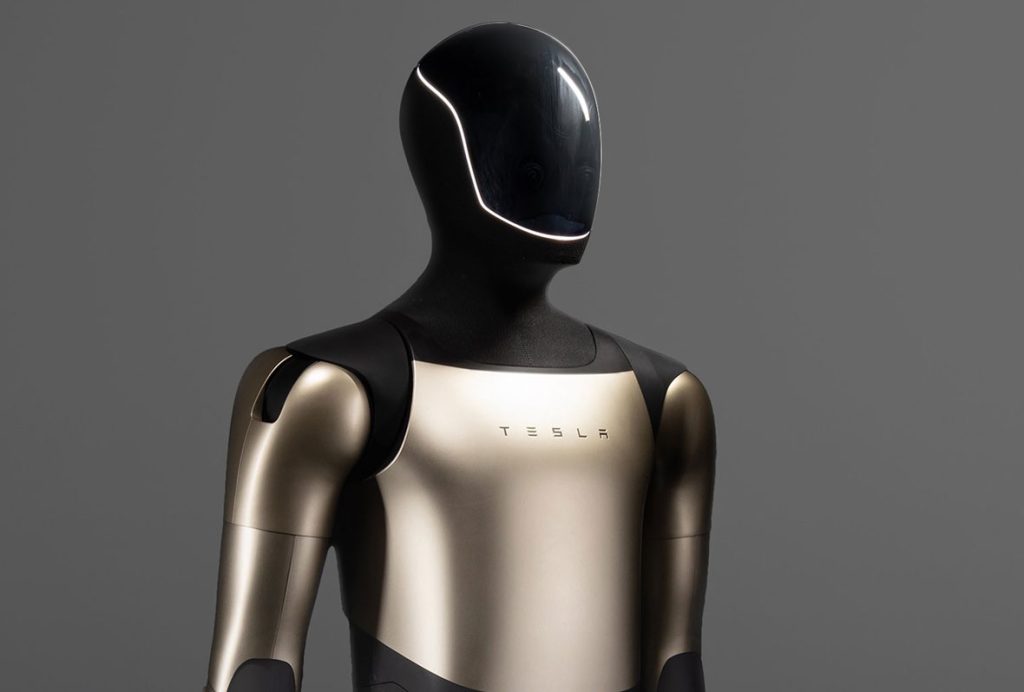
Tesla’s Optimus robot, 5 feet 8 inches tall and weighing around 125 pounds, engineered for versatility in both industrial and domestic settings, has received global attention.
Powered by the same neural networks that drive Tesla’s Full Self-Driving (FSD) software, the robot can carry loads up to 45 pounds and perform repetitive or hazardous jobs such as assembly line work or household chores like folding laundry and even preparing a meal.
Tesla’s boss, Elon Musk, has repeatedly emphasized that Optimus isn’t just a labor-saving device but it’s a tool for societal transformation, potentially generating trillions in long-term revenue while addressing global labor shortages.
Optimus to eliminate poverty and provide best medical care?
Mr. Musk said Optimus will eliminate poverty and provide a universal high income for all.
Central to Optimus’s evolution is its hand design, which Elon Musk described as the project’s toughest engineering hurdle.
The newer will boast 50 actuators, 25 per forearm and hand, enabling ‘superhuman’ dexterity for tasks ranging from delicate object manipulation to precision medical procedures. ‘Imagine a world where everyone has access to the best surgeons,’ Mr. Musk said. ‘Optimus will have the level of precision that is, frankly, beyond human.’
Industrial-scale production
Tesla has broken ground on a sprawling dedicated factory at Gigafactory Texas for its Optimus humanoid robot, signaling a critical shift from prototype testing to industrial-scale production. The move positions Optimus as a cornerstone of Tesla’s evolving mission to achieve ‘sustainable abundance’ through artificial intelligence and automation.
The new facility, spanning several acres adjacent to the existing vehicle assembly lines, is designed to churn out up to 10 million Optimus units annually once fully operational in 2027. This follows the initiation of pilot production at Tesla’s Fremont Factory in California, where early Version 3 (V3) prototypes are already undergoing rigorous real-world trials. These tests include sorting battery cells, transporting materials across factory floors, and even navigating uneven terrain like grass and gravel, tasks that demonstrate the robot’s growing adaptability beyond controlled environments.
With V3 slated for unveiling in Q1 2026, described by Elon Musk as ‘so real that you’ll need to poke it to believe it’s an actual robot,’ the stage is set for what could be Tesla’s most disruptive product yet.
Financially, Tesla is targeting a breakthrough cost of goods sold (COGS) of $20,000 per unit at scale, a figure Musk reiterated during the Q3 2025 earnings call. This affordability threshold, down from earlier estimates of $30,000, could democratize humanoid robotics, making Optimus competitive against pricier rivals like those from Figure AI or Boston Dynamics.
Internal goals include producing 10,000 to 12,000 units in 2025 for Tesla’s own factories, with external sales potentially starting in 2026. Mr. Musk envisions a ‘legion’ of robots expanding exponentially, outpacing even Tesla’s vehicle output within five years.
The hardware backbone for this leap includes the newly reviewed AI5 inference chip, optimized for edge computing in robots and vehicles. Elon Musk praised its potential to slash power draw to around 250 watts, a critical efficiency gain for battery-powered humanoids. ‘We wouldn’t use any other chip in our cars and robots even if they were free,’ he quipped, nodding to collaborations with NVIDIA while highlighting Tesla’s in-house edge.