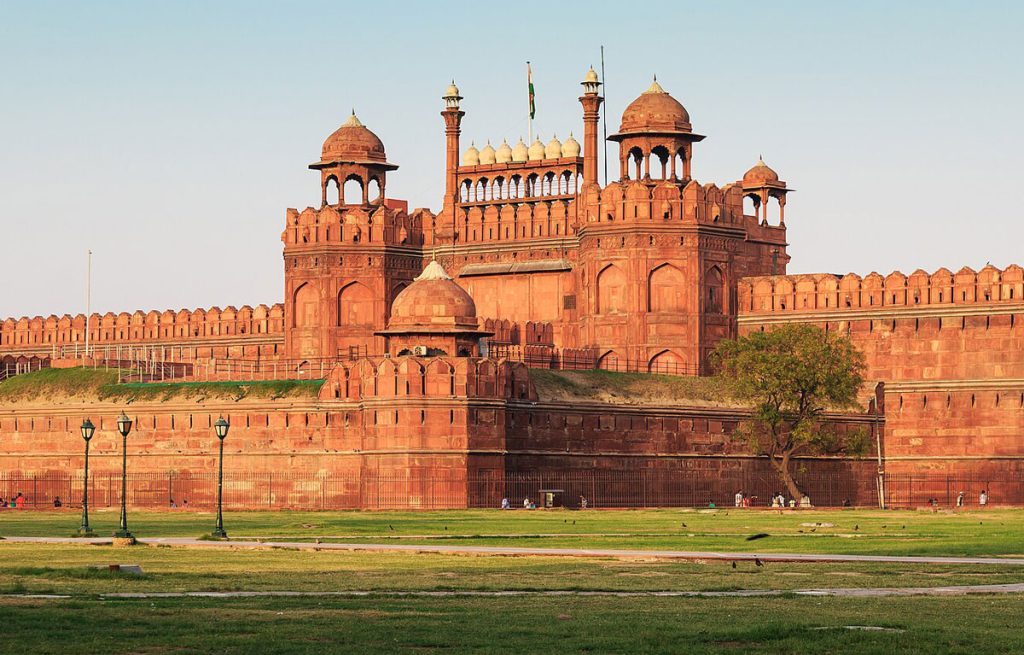
A powerful car bomb detonated near the iconic Red Fort on the evening of November 10, 2025, claiming the lives of at least 12 people and wounding over 20 others.
The blast, one of the deadliest incidents in the city in more than a decade, which authorities are probing as a potential terrorist operation, unfolded amid evening rush hour crowds in the bustling Chandni Chowk district, sending shockwaves through the densely packed old quarter lined with bazaars and heritage sites.
The explosion occurred at approximately 6:52 p.m. local time outside Gate No. 1 of the Lal Qila metro station, just steps from the towering Mughal-era fortress that symbolizes India’s independence struggle. Eyewitnesses described an earth-shattering boom that shattered nearby windows and ignited a fierce blaze, engulfing six passenger cars, two electric rickshaws, and an auto-rickshaw in flames.
Emergency responders from the Delhi Fire Service rushed seven tenders to the scene following frantic calls between 6:50 and 7:05 p.m., managing to douse the inferno by 7:29 p.m. The injured were swiftly transported to Lok Nayak Hospital, where medical teams battled to stabilize victims amid reports of severe burns and shrapnel wounds.
What we know about the blast thus far
Preliminary investigations point to a Hyundai i20 sedan packed with ammonium nitrate-based explosives as the source of the devastation, a substance commonly used in high-impact improvised devices.
Surveillance footage captured the vehicle maneuvering through traffic, pausing briefly at a signal before erupting in a fireball that lit up the twilight sky. Police suspect the driver, believed to be a masked individual, may have carried out a suicide mission, though officials have yet to confirm this angle definitively.
The probe has swiftly zeroed in on a network of radicalized professionals from Jammu and Kashmir, unearthing ties to Pakistan-based militant outfits such as Jaish-e-Mohammed and Ansar Ghazwat-ul-Hind. The car’s registered owner, Dr. Umar Un Nabi, a 32-year-old physician and academic from Pulwama district, emerged as the prime suspect. Nabi, who relocated to Delhi in March 2024 to teach at a Faridabad medical institution, was last in touch with his family on November 7, reportedly sounding preoccupied but otherwise unremarkable.
Security forces have collected DNA samples from the family to match against remains recovered from the blast site, while grilling them on Nabi’s recent activities. Nabi’s alleged accomplices include two fellow doctors, Muzammil Ahmad Ganai and Adeel Ahmad Rather, both arrested in connection with a massive explosives haul uncovered in Faridabad the day before the attack.
Delhi Police, invoking the stringent Unlawful Activities (Prevention) Act, have handed the case to the National Investigation Agency for a deeper dive into transnational links. Two additional men remain in custody for questioning, as forensic experts analyze charred wreckage and digital trails. The incident bears hallmarks of a coordinated plot, coming on the heels of heightened border skirmishes and a recent ambush in Kashmir that claimed 26 lives, fueling accusations of cross-border orchestration.
Prime Minister Narendra Modi, addressing the nation from Bhutan where he was on a state visit, decried the attack as a ‘cowardly conspiracy’ and pledged unyielding pursuit of justice. ‘The perpetrators and their backers will face the full force of the law—no mercy for those who seek to tear at our unity,’ he declared, cutting short his itinerary to oversee operations. Union Home Minister Amit Shah echoed this resolve, vowing a ‘meticulous examination of every lead’ and assuring heightened vigilance across urban centers.
Opposition voices joined the chorus of outrage. Congress leader Rahul Gandhi labeled the tragedy ‘a profound wound on our democracy,’ urging transparency in the inquiry. Delhi Chief Minister Arvind Kejriwal called for scrutiny of potential lapses in intelligence, terming it ‘a wake-up call for our security apparatus.’ President Droupadi Murmu, midway through an African tour, reached out to affected families with offers of support.
Globally, the assault drew swift condemnation and solidarity. US Ambassador Eric Garcetti monitored developments closely, issuing travel advisories for the vicinity, while envoys from France, the UK, and Japan extended heartfelt condolences. The European Union reiterated its ‘unwavering partnership’ against extremism, as Russian officials verified the safety of their expatriates in the area.