US President Donald Trump and Australian Prime Minister Anthony Albanese have unveiled a landmark $8.5 billion partnership aimed at fortifying Western supply chains for rare earth elements (REEs). The deal, signed amid Beijing’s latest export curbs on these indispensable metals, represents a bold bid to erode China’s near-total control over a market vital to everything from electric vehicles and wind turbines to fighter jets and semiconductors. Can this be a viable alternative to China?
As industry experts caution, the path to diversification is fraught with technical, economic, and temporal hurdles that could leave the alliance playing catch-up for years.
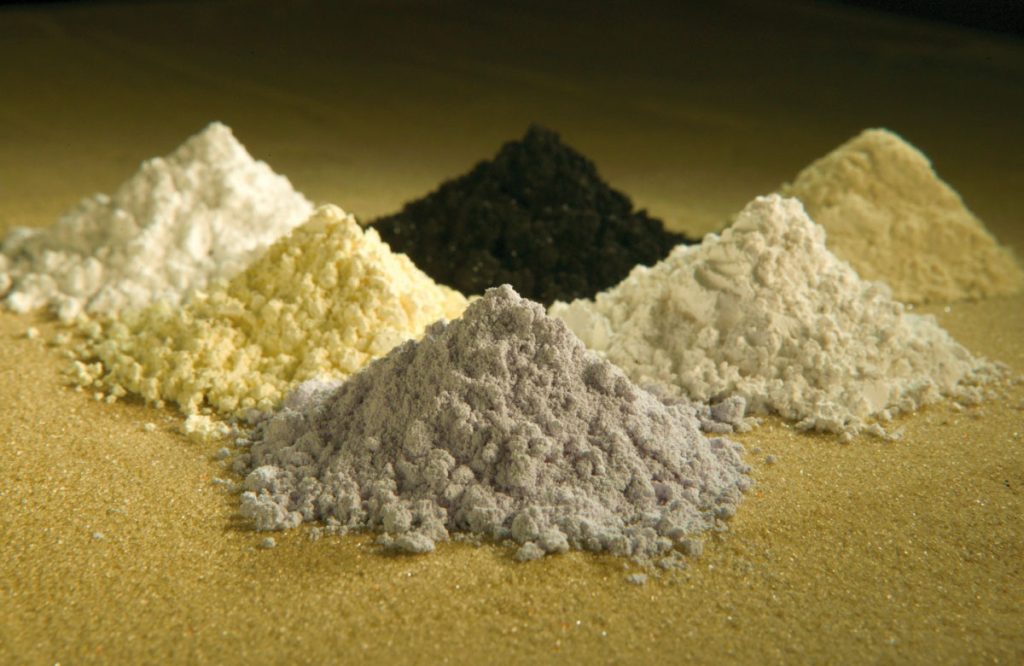
Rare earths, 17 chemically similar elements including neodymium, dysprosium, and praseodymium, are the unsung heroes of modern technology. They enable the powerful magnets in EV motors, the precision alloys in defense hardware, and the catalysts in clean energy systems. Global demand is exploding, projected to surge 40% by 2030 due to the green transition and AI boom.
But China, leveraging decades of state-backed investment, holds sway over 70% of mining, 90% of processing, and 93% of magnet production worldwide. Despite possessing only about 37% of known reserves, Beijing’s low-cost operations and laxer environmental standards have priced out competitors, turning REEs into a strategic lever in trade disputes.
The catalyst for the US-Australia pact was China’s new licensing requirements for exports of REE magnets containing even trace amounts of Chinese-sourced materials, effective December 1. This follows April’s restrictions on seven heavy REEs like dysprosium and terbium, key for high-performance magnets, in retaliation for US tariffs topping 54% on Chinese goods.
The moves have rattled markets, with Goldman Sachs estimating that a mere 10% disruption could erase $150 billion in US economic output. ‘This is China versus the world, they’ve pointed a bazooka at the supply chains of the free world, and we’re not going to have it,’ US Treasury Secretary Scott Bessent declared last week.
And therefore, the new understanding amid the trans-Pacific alliance. The framework commits each nation to at least $1 billion in funding over six months for a pipeline of ‘shovel-ready’ projects, unlocking an estimated $53 billion in Australian deposits. Priority targets include Arafura Rare Earths’ Nolans project in Australia’s Northern Territory, poised to yield up to 5% of global REE supply by 2027, and a joint US-Australia-Japan gallium refinery in Western Australia, potentially covering 10% of world needs for this semiconductor staple.
The US Export-Import Bank followed up with $2.2 billion in preliminary financing for seven Australian ventures, spanning firms like Northern Minerals and Latrobe Magnesium. Beyond cash, the pact introduces novel tools – a proposed price floor to shield Western producers from Beijing’s market-flooding tactics, streamlined permitting to slash project timelines, and collaborative R&D on recycling and geological mapping.
For Canberra, the deal bolsters its role as a ‘reliable supplier’ while navigating ties with top trade partner China, which ironically urged resource-rich nations to ‘play a proactive role’ in stabilizing chains without addressing its own quotas.
Australia brings formidable assets to the table. Home to 89 active REE exploration sites, more than any other country, it boasts 5% of global reserves and already processes 8% of supply via Lynas Rare Earths’ Mount Weld operations. Lynas, the world’s largest non-Chinese producer, recently inked a deal with US firm Noveon Magnetics to feed magnets into American defense pipelines. The US, meanwhile, is ramping up domestic MP Materials’ Mountain Pass mine, which hit record output this year, though it still ships concentrates to China for refining.
Yet realism tempers optimism. Building a full REE ecosystem from extraction to magnet fabrication demands 5-10 years minimum, as per the analysts at the Center for Strategic and International Studies. Australia’s challenges mirror the West’s with sky-high energy costs, a dearth of skilled metallurgists, and stringent environmental regs that jack up expenses 2-3 times over Chinese benchmarks. Processing, the real bottleneck, involves toxic acids and radioactive byproducts. Lynas’ Texas facility, for instance, faced community backlash over waste storage.
Beijing’s response? Flooding markets with a cheap supply, as seen in dysprosium prices dipping to $300/kg despite shortages. ‘We’d have to build an industry from scratch,’ warned University of Melbourne geologist John Mavrogenes, adding that the new alliance is still a decade away from matching capacity.
Meanwhile, recycling offers a partial fix, potentially covering 50% of demand by 2050, but current tech recoups just 1% of REEs from e-waste.
And while the pact deters Chinese asset grabs (past cobalt mine buys), enforcement remains tricky. The agreement’s market ripple was immediate. Australian miners like VHM surged 20% on announcement day, though gains moderated as investors eyed timelines. Broader implications loom for global trade. As Mr. Trump eyes a November tariff hike to 100%, this pact signals a pivot toward ‘friend-shoring’ – ally-led chains over fragile globals.
For now, the US and Australia have lit a fuse under diversification. Success hinges on sustained funding, tech breakthroughs, and dodging Beijing’s countermoves. In the REE race, the West is sprinting, but China’s marathon lead won’t vanish overnight.