Tensions in the Middle East reached a boiling point late Friday night as Iran launched a barrage of ballistic missiles and drones targeting Israel as part of ‘Operation True Promise III,’ a direct response to Israel’s unprecedented airstrikes on Iranian nuclear facilities and personnel earlier that day.
The Israeli operation, dubbed ‘Rising Lion,’ targeted key nuclear sites, including the Natanz uranium enrichment facility, and resulted in the deaths of senior military officials and nuclear scientists, escalating the long-standing conflict between the two nations.
Israel’s preemptive strikes
On June 12, 2025, Israel launched a series of airstrikes across Iran, targeting over 100 sites, including the heavily fortified Natanz nuclear facility, the Isfahan Nuclear Technology Center, and military infrastructure. Israeli Prime Minister Benjamin Netanyahu described the operation as a necessary measure to ‘roll back the Iranian threat to Israel’s very survival,’ citing intelligence that Iran was advancing a covert nuclear weapons program.
The strikes killed at least 78 people, including senior Islamic Revolutionary Guard Corps (IRGC) commanders such as Major General Mohammad Bagheri and Hossein Salami, as well as six prominent nuclear scientists, including Fereydoon Abbasi and Mohammad Mehdi Tehranchi, according to Iranian state media.
The International Atomic Energy Agency (IAEA) confirmed damage to the above-ground pilot uranium enrichment plant at Natanz but reported no increase in radiation levels, emphasizing that nuclear facilities ‘must never be attacked’ due to risks to regional and global security. Iran’s Atomic Energy Organization stated that no radioactive or chemical contamination occurred, though the strikes disrupted operations at Natanz and caused structural damage to underground facilities.
Iran retaliates
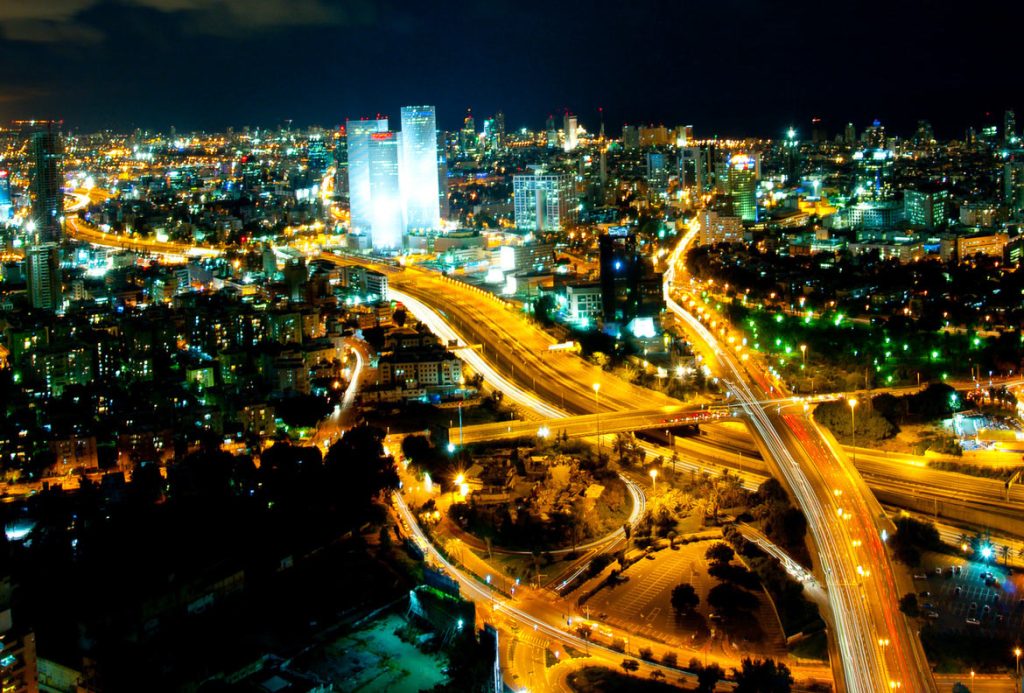
In retaliation, Iran launched ‘Operation True Promise 3’ on Friday evening, firing hundreds of ballistic missiles and over 100 drones toward Israel. Explosions rocked Tel Aviv and Jerusalem, with air raid sirens forcing residents into bomb shelters.
The Israel Defense Forces (IDF) reported intercepting most of the projectiles with its multilayered air defense systems, including the Iron Dome. However, some missiles struck civilian areas, killing at least one woman in a Tel Aviv suburb and injuring dozens, including two in critical condition.
Iran’s Supreme Leader, Ayatollah Ali Khamenei, condemned Israel’s actions as a declaration of war and vowed a ‘harsh and unwavering response.’ Iran’s Foreign Ministry stated that its armed forces would defend the nation’s sovereignty with full strength, describing Israel’s strikes as ‘acts of aggression.’ Iran’s UN ambassador, Amir Saeid Iravani, reported to the U.N. Security Council that 78 people, mostly civilians, were killed and over 320 injured in the Israeli attacks, accusing Israel of attempting to ‘kill diplomacy.’
International concerns
The international community expressed alarm over the escalating conflict. US President Donald Trump, denying direct US involvement in Israel’s strikes. Mr. Trump urged Tehran to pursue nuclear negotiations, stating, ‘It’s not too late for a deal,’ though planned talks in Oman on June 15 were thrown into uncertainty.
Russian President Vladimir Putin offered to mediate, condemning Israel’s actions while urging restraint.
NATO Secretary-General Mark Rutte and French President Emmanuel Macron called for de-escalation, with Macron postponing a UN conference on a two-state solution for Israel and Palestine due to the crisis.
Jordan’s Air Force intercepted missiles and drones in its airspace to protect civilian areas, while major airlines, including Emirates and Air India, canceled or diverted flights due to the closure of Iranian and regional airspace.
Strategic implications
Analysts warn that the strikes and counterstrikes risk plunging the region into a broader war. Israel’s operation aimed to disrupt Iran’s nuclear ambitions and military capabilities, but experts like Jeffrey Lewis of the Middlebury Institute question whether military action can fully eliminate Iran’s nuclear program, noting that no single facility or scientist holds the key to its success. Iran’s retaliatory missile barrage, while causing limited damage, signals its intent to respond forcefully, potentially targeting a wider range of Israeli infrastructure in future attacks.
The strikes come amid heightened tensions following Iran’s violation of nuclear non-proliferation agreements, as declared by the IAEA on June 11, 2025. Iran maintains that its nuclear program is for peaceful purposes, but Israel’s intelligence, supported by Western allies, claims Tehran is close to producing enough fissile material for multiple nuclear weapons.